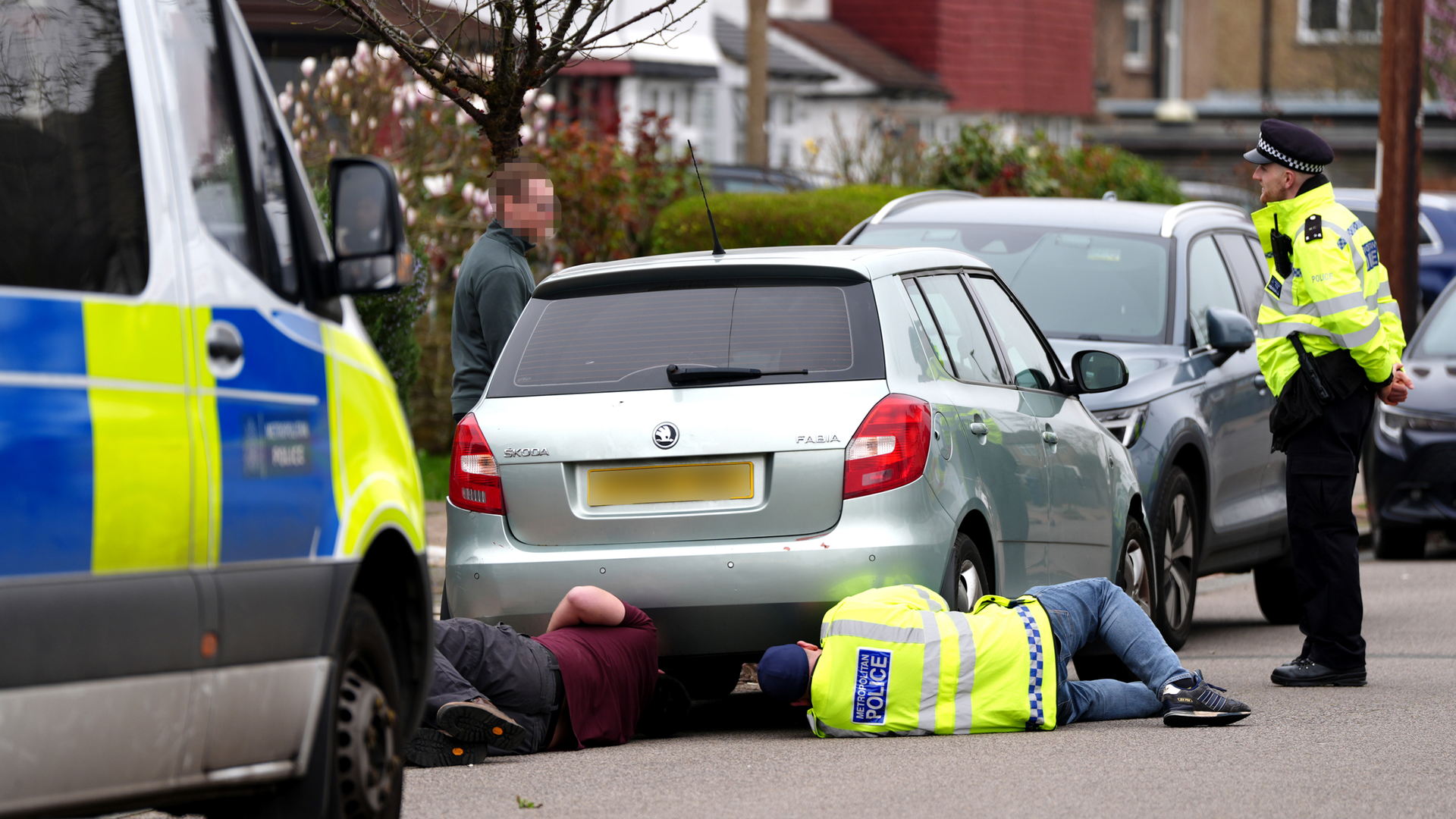
The recent emergency shutdown of two local schools following "online weapons threats" is not an isolated security glitch. It is a symptom of a systemic collapse in how educational institutions handle digital volatility. When administrators received alerts regarding images of firearms circulated on social media, they followed the standard post-Columbine playbook—immediate evacuation and indefinite closure. While physical safety is non-negotiable, the recurring nature of these disruptions suggests that schools are losing a war of attrition against anonymous agitators who have realized that a single post can freeze a multi-million dollar infrastructure.
Modern school security is currently built on a foundation of reactive panic. By the time a threat reaches the principal’s inbox, the damage to the educational environment is already done. This isn't just about the proximity of a weapon; it is about the weaponization of the internet to induce institutional paralysis.
The Architecture of a Digital Hoax
Investigating these specific threats reveals a pattern that goes far beyond a single disgruntled student. We are seeing the rise of "threat-as-a-service" dynamics, where templates for school shooting threats are traded in Discord servers and Telegram channels. These aren't always local actors. In several cases over the last year, threats that shuttered schools in the Midwest originated from IP addresses halfway across the globe, sent by individuals with no connection to the district other than a desire to see a reaction.
Local law enforcement agencies are often outmatched. A small-town police department has the tactical gear to handle a physical intruder, but they rarely have the forensic expertise to trace a proxied threat in real-time. This creates a vacuum. Administrators, terrified of being the one who ignored a "red flag," choose the nuclear option. They close the doors.
The cost is staggering. Beyond the loss of instructional time, these closures trigger a cascade of economic consequences. Parents lose wages as they scramble for childcare. Food programs that low-income students rely on are suspended. The psychological toll on children, who are forced to treat their place of learning as a potential combat zone, remains unquantified but deeply visible in rising anxiety rates.
The Failure of Algorithmic Moderation
We were promised that "AI-driven" monitoring tools would be our salvation. Dozens of tech companies now sell expensive "sentiment analysis" software to school districts, claiming these tools can scan student social media and flag potential violence before it happens. The reality is far messier. These systems frequently produce a deluge of false positives, flagging song lyrics or slang, while missing the coded language used in genuine extremist subcultures.
When a school relies on a dashboard to tell them if they are safe, they outsource their intuition. In the two schools recently closed, the threats were blatant enough to bypass any sophisticated filter—photographs of handguns with captions naming specific hallways. However, the investigation into these incidents often stops at the arrest. We rarely ask how the digital environment encouraged the behavior in the first place.
The internet provides a sense of "consequence-free" aggression. A teenager sitting in a bedroom can command the attention of the FBI, the local media, and thousands of terrified parents with three clicks. That power is intoxicating. Until the cost of making a threat outweighs the thrill of the disruption, the cycle will continue.
Hardening the Network Instead of the Perimeter
We have spent twenty years turning schools into fortresses. We have installed metal detectors, hired armed resource officers, and practiced active shooter drills until they became a macabre routine. Yet, the most recent closures prove that the perimeter is irrelevant if the threat is airborne—delivered via a 5G signal directly into the pockets of the student body.
True security now requires a shift from physical hardening to digital resilience. This does not mean more surveillance. In fact, aggressive surveillance often pushes the most dangerous conversations further underground into encrypted spaces where educators have zero visibility. Instead, the focus must shift to information verification protocols.
Most schools lack a dedicated digital communications officer who understands the mechanics of a viral hoax. When a threat appears on Snapchat, the typical response is a vague email to parents that often fuels more rumors than it quells. This information gap is where panic grows. A transparent, rapid-response verification system could allow schools to differentiate between a credible, localized threat and a recycled "copy-pasta" threat that has been circulating nationally for months.
The Liability Trap
The "why" behind these closures is often found in a lawyer’s office, not a police station. School boards operate under an immense shadow of liability. If a school stays open and an incident occurs, the legal and social fallout is terminal for the institution. If a school closes and the threat was a hoax, the only cost is a lost day of school and a bit of administrative headache.
This incentive structure guarantees that schools will continue to close at the slightest provocation. We have created a system where the safest path for an administrator is also the most disruptive for the community. To break this, state and federal guidelines need to provide "Safe Harbor" protections for administrators who follow a standardized, rigorous threat-assessment matrix. Without a shield against litigation, the default answer to any digital whisper will always be a padlock on the front gate.
The Counter Argument for Open Doors
There is a growing movement among security analysts who argue that closing schools for unverified online threats is a strategic error. By closing, the institution confirms to the attacker that their method works. It provides a blueprint for anyone wanting to cancel an exam, harass a teacher, or simply cause chaos.
"Operational Continuity" is a term usually reserved for banks and power plants, but it must be applied to education. This involves creating a "Yellow Alert" status where school remains in session under heightened security while a threat is being vetted, rather than a binary Open/Closed choice. This requires a level of trust between the school and the parents that has been eroded by years of opaque communication.
Beyond the Police Report
Law enforcement confirmed that "the investigation is ongoing," a phrase that usually means the trail has gone cold or the suspect is a minor whose identity is protected. But the investigation shouldn't just be about finding the kid with the smartphone. It needs to be an autopsy of the school's response.
- How long did it take to identify the source?
- Was the image a stock photo found on Google, or a unique picture?
- Did the school’s "security software" catch it, or did a student report it?
Answering these questions publicly—without compromising sensitive tactics—builds the collective intelligence of the community. It demystifies the threat. When parents and students understand how these hoaxes are constructed, they become less likely to propagate the panic that the "attacker" desires.
The Mirage of Total Safety
The harsh truth that no politician or superintendent wants to admit is that there is no such thing as a 100% safe school. In an open society, schools will always be soft targets. The goal should be to manage risk without destroying the very environment we are trying to protect. If a school is closed every time an anonymous account posts a picture of a gun, we are essentially conceding that the internet has the power to veto the right to an education.
We must stop treating digital threats as "extraordinary" events. They are now a baseline reality of the 21st-century educational landscape. Resilience is not measured by how many times we run and hide; it is measured by our ability to discern a real predator from a digital ghost and maintaining the courage to keep the lights on.
The next time a threat surfaces, the question shouldn't just be "Are we safe?" but "Are we being manipulated?" If the answer to the latter is yes, the most radical act of security is to stay in the classroom.
Audit your district's threat assessment matrix today to see if it distinguishes between viral hoaxes and actionable intelligence.