A single thumb-tap can start a war. Or, at the very least, it can ignite a diplomatic firestorm that threatens to consume the very person who lit the match. In the high-stakes theater of international relations, social media has transformed from a megaphone into a minefield. This isn't just a story about a deleted post; it is a chronicle of how geopolitical gravity eventually pulls even the most defiant voices back to earth.
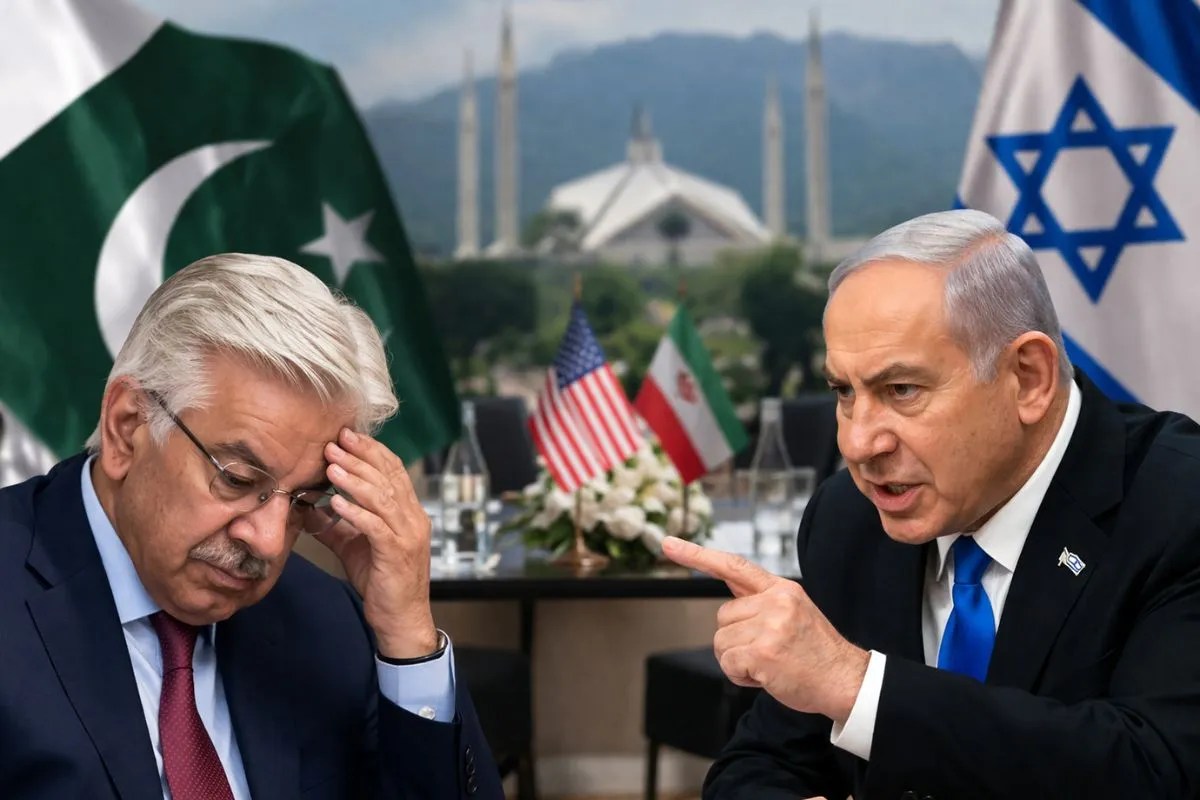
The digital ink was barely dry when the shockwaves hit. Khawaja Asif, Pakistan's Defense Minister, took to the platform formerly known as Twitter to deliver a stinging rebuke. He didn't use the measured, sanitized language of a career diplomat. Instead, he chose a word that drips with biological finality: "cancer." He was referring to Israel. For an alternative perspective, consider: this related article.
In the corridors of power in Islamabad, such rhetoric often plays well to a domestic audience. It is a predictable rhythm. A leader speaks, the base cheers, and the world moves on. But the world didn't move on this time. The friction between Pakistan—a nuclear-armed nation grappling with economic instability—and the global political machinery created a heat that the ministry could not ignore.
The Weight of the Unspoken
Think of a diplomat as a tightrope walker. On one side is the demand of the citizens who want fire and brimstone. On the other is the cold, hard reality of international credit lines, trade agreements, and the shifting sands of Middle Eastern alliances. When Asif hit "post," he wasn't just expressing an opinion. He was throwing a wrench into a delicate clockwork mechanism. Related reporting regarding this has been provided by TIME.
The term "cancer" wasn't just an insult. It was a categorical rejection. In the lexicon of statecraft, describing another entity as a terminal disease implies there is no room for negotiation, no possibility of coexistence, and only one eventual outcome. It is the language of totalities.
Then came the silence. Then, the disappearance.
The post vanished. It wasn't a technical glitch. It wasn't a hacked account. It was a calculated retreat. Imagine the scene in a dimly lit office, the blue light of a smartphone reflecting off the glasses of an aide. The realization sets in: the cost of keeping those characters online has surpassed the benefit of the political points they earned.
The Invisible Lever
Why would a man in charge of a nation's defense bow to digital pressure? To understand this, we have to look at the shadow cast by the United Nations and the evolving Map of the Middle East. We are living through a period where the old certainties are dissolving.
Pakistan finds itself in a precarious position. It is a country that has historically championed the Palestinian cause with a fervor that is central to its identity. Yet, it watches as its neighbors and traditional allies—nations like the UAE and Saudi Arabia—navigate their own complex dances with Israel. The Abraham Accords changed the chemistry of the region. Suddenly, the "cancer" rhetoric didn't just offend Israel; it complicated Pakistan's relationship with the very partners it needs for economic survival.
Consider the hypothetical local merchant in Karachi. He doesn't care about the Defense Minister’s tweets until those tweets affect the value of the rupee in his pocket. He doesn't care about diplomatic sparring until the international community tightens the screws on aid or trade. The "human element" here is the millions of people whose lives are dictated by the professional temperament of their leaders. When a minister deletes a post, he isn't just erasing text; he is performing an act of economic preservation.
The Anatomy of a Deletion
Digital footprints are supposed to be permanent, but in politics, they are often written in sand. The deletion of Khawaja Asif’s post is a rare, visible crack in the facade of state defiance. It reveals the "invisible stakes" that usually stay hidden behind closed doors.
Pressure. It comes in many forms. It might have been a quiet phone call from a Western capital. It might have been a stern "suggestion" from the military establishment, which often prefers a more pragmatic approach to foreign policy than the civilian wing. Or perhaps it was the realization that in the 2026 landscape of global finance, Pakistan cannot afford to be the outlier that uses the language of the 1970s.
Words have mass. When they are heavy enough, they can sink a ship. Asif’s "cancer" post was a lead weight.
The New Rules of the Game
We often think of power as tanks, jets, and silos. We are wrong. Power in the modern era is the ability to control a narrative without having to take it back. The moment you hit "delete," you have ceded power. You have admitted that the environment is stronger than your conviction.
This incident serves as a metaphor for the broader struggle within many nations. It is the tension between the "ideological self" and the "functional self." The ideological self wants to scream the loudest truth it knows. The functional self knows that screaming leads to isolation.
The retreat wasn't just about Israel. It was about the realization that Pakistan is part of a global ecosystem. You cannot poison one part of the stream and expect the water at your feet to stay clear. The "cancer" post was an attempt to define the "other," but the deletion was a definition of the "self"—a self that is currently too vulnerable to stand by its most aggressive impulses.
The Echo in the Silence
What remains after the post is gone? A void that is louder than the original statement. When a high-ranking official deletes a controversial stance, they provide their critics with a weapon more potent than the original insult: the proof of their own hesitation.
The story here isn't the tweet. The story is the hand that was forced to remove it. It tells us that for all the bluster of modern nationalism, the world is still governed by a set of unwritten rules regarding what can be said and who can say it.
As the digital dust settles, the screen is blank where the word "cancer" once sat. The minister moves on to the next briefing. The citizens return to their daily grind. But the invisible lines have been redrawn. The world now knows exactly where the breaking point lies, and exactly how much pressure it takes to make a lion of the podium become a ghost in the feed.
The cursor blinks on a new, empty draft. The next words will be chosen with far more fear than the last. That fear is the sound of the world reasserting its gravity, reminding those in power that while they may own their voices, they do not own the consequences.
The silence that follows a deleted post isn't peace. It's the sound of a lesson being learned in the most public way possible. It is the quiet, heavy realization that in the theater of nations, some words are too expensive to keep.