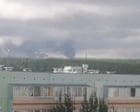
A long-range Ukrainian drone strike on the industrial hub of Nizhnekamsk in Russia's Tatarstan region has killed at least 13 people and injured 78 others. The attack hit 750 miles away from the nearest Ukrainian border. It marks one of the deadliest single incidents inside Russian territory since the war began.
When explosives hit the Taneco oil refinery and a nearby residential hostel, the illusion of geographic immunity for Russian citizens evaporated. This wasn't a skirmish near the border. This was deep inside central Russia.
The Target and the Toll
Nizhnekamsk isn't just another industrial town. It houses massive, sophisticated oil processing infrastructure. The Ukrainian General Staff confirmed that their forces targeted the Taneco refinery to degrade the financial and material engine feeding the Kremlin's military machine.
Yet, the human cost quickly overshadowed the industrial damage. Regional head Rustam Minnikhanov confirmed that a drone struck a hostel building, killing nine of the 13 victims instantly. Among the dead were migrant workers from Central Asia and at least one child. Local authorities declared a day of mourning across Tatarstan, while Russian investigators swiftly opened criminal terrorism cases.
At the exact same time, parallel drone strikes hit an industrial and petrochemical complex in Tobolsk within the Tyumen region of western Siberia. That location sits roughly 1,500 miles from the border. Kyiv's reach is expanding rapidly.
Why Long-Range Drones Keep Reaching Further
You might wonder how homemade or modified domestic drones travel 750 to 1,500 miles undetected past sophisticated air defense nets. The answer lies in attrition and route planning.
Russia's vast geography makes total airspace protection nearly impossible. Air defense batteries are concentrated heavily along the frontlines in eastern and southern Ukraine, as well as around major political centers like Moscow. Secondary industrial zones in central regions and Siberia often rely on thinner, fraying defensive coverage.
Kyiv's military command uses this gap deliberately. By continuously launching domestic long-range drones, they force Moscow into a painful dilemma. Russia must choose between stripping air defense systems away from active frontlines to protect domestic oil refineries, or leaving its internal infrastructure completely exposed to fire.
The Economic Strategy Behind the Smoke
President Volodymyr Zelenskyy has been remarkably blunt about the strategy. The goal isn't just symbolic retaliation. It's economic strangulation.
Russian oil export facilities, fuel depots, and high-octane refineries generate the liquid cash required to fund ongoing military operations. Every time a distillation tower catches fire in Tatarstan or Siberia, domestic fuel supplies tighten. Repairing these specialized petrochemical plants requires Western-derived technology or complex parts that are increasingly difficult to source under heavy international sanctions.
When refineries break down, domestic fuel prices climb, shortages loom, and the cost of maintaining war logistics skyrockets. The strategy shifts the economic burden of the conflict directly onto the Russian population.
What Comes Next for Both Sides
Moscow's response follows a predictable script. Diplomatic channels immediately urged international organizations to condemn the raids, framing them as reckless acts targeting civilian zones. Meanwhile, Russian aerial bombardment of Ukrainian towns continues unabated, destroying power grids, residential buildings, and humanitarian supply warehouses.
The UN reports that civilian casualties inside Ukraine continue to mount month after month. As long as the frontlines remain largely static, both leadership teams are betting heavily on vertical escalation from the air.
Kyiv maintains that these remote strikes are the only language Moscow understands, designed ultimately to force the Kremlin toward genuine peace negotiations. Until those talks materialize, the war will keep traveling eastward on the wings of long-range drones.

