The headline June 2026 U.S. retail sales growth of 0.2% suggests a consumer market stalling under macroeconomic weight. This interpretation is mechanically incorrect. Because the Department of Commerce reports retail sales in nominal terms, the metric is highly vulnerable to pricing volatility in volatile subsectors, particularly energy.
To understand the actual health of the consumer, we must deconstruct the June data through a structural framework. What appears to be a deceleration is, in reality, a massive reallocation of disposable income driven by two parallel forces: a sharp drop in energy costs and targeted promotional spending.
The Divergence of Headline and Core Retail Performance
The primary distortion in the June retail print stems from a 5.3% decline in gasoline station receipts, triggered by a temporary decline in average gas prices to $3.94 per gallon. When we isolate this volatility, the underlying demand profile changes completely.
Nominal Retail Sales (June 2026)
├── Headline Growth: +0.2%
└── Ex-Gasoline Retail Sales: +0.7%
This 50-basis-point divergence reveals that the consumer did not stop spending; instead, the drop in energy costs acted as an immediate tax cut, freeing up discretionary margins.
To formalize this relationship, we can define the consumer's monthly wallet allocation as:
$$C_t = S_{essential} + S_{discretionary} + \Delta Savings$$
Where essential spending ($S_{essential}$) is heavily influenced by energy and food costs. When energy prices drop, the nominal contraction in $S_{essential}$ does not signal economic weakness. Instead, it expands the disposable capacity for discretionary channels ($S_{discretionary}$), as evidenced by the 0.7% expansion in retail sales excluding gas stations.
The Three Pillars of June Consumer Reallocation
The June data highlights a stark division in retail channels. Rather than broad-based caution, consumer behavior settled into three distinct operational patterns.
1. The Promotional Liquidity Event (E-Commerce)
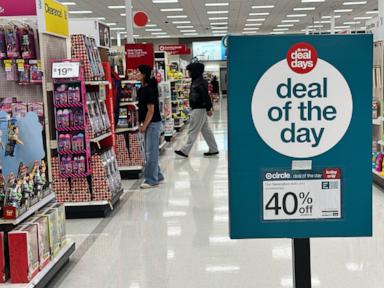
Online sales surged by 1.9%. This growth was not organic; it was highly concentrated around targeted summer promotional events, such as Amazon's Prime Day held from June 23 to June 26. Consumers are increasingly hoarding their discretionary capital, waiting for high-incentive events to execute purchases. This structural shift compresses retail margins as brands are forced to discount to capture volume.
2. High-Value Incentives (Automotive and Durable Goods)
Motor vehicle and parts dealers grew by 1.9%. This expansion was largely driven by aggressive manufacturer incentives and financing deals designed to move inventory. Consumers remain responsive to promotional value, but they are ignoring premium or full-price discretionary items when clear financial incentives are missing.
3. The Secular Retreat in Non-Essential Consumables
In contrast to online and automotive growth, apparel and accessory stores saw sales slip by 0.3%. This category lacks the strong promotional hooks of e-commerce events or the clear financing incentives of the auto sector, making it the first area where consumers cut back.
The Fading Tax Refund Tailwind
The deceleration from May's upwardly revised 1% sales growth to June's 0.2% is also a result of a predictable fiscal cliff: the exhaustion of annual tax refunds.
Fiscal Year Consumer Spending Cycle
[Q1: Refund Accrual] ──> [April/May: Peak Spending (+1% May)] ──> [June: Capital Depletion (+0.2% June)]
Tax refunds act as temporary liquidity injections, particularly for low-to-middle-income households. Once these fiscal transfers are spent, consumers must rely entirely on real wage growth.
While inflation cooled in June—with consumer prices dropping 0.4% month-over-month and the annual rate falling to 3.5%—this cooling has not yet translated into a meaningful expansion of real disposable income. Households are using the savings from lower prices to repair their balance sheets rather than increase their overall consumption.
Strategic Playbook for Retail Execs
The June data shows that consumers are not broke, but they are highly strategic. To capture wallet share in this environment, brands must shift from passive inventory management to active value engineering.
- Synchronize Inventory Cycles with Promotional Peaks: Brands must align their supply chains to peak during major promotional windows, rather than relying on steady-state demand.
- Optimize Value-Tier Portfolios: Companies should expand budget-conscious offerings to capture price-sensitive consumers who are trading down from mid-tier brands.
- Address the Non-Retail Shift: Retailers must recognize that the official retail sales figures exclude major service sectors like travel and hospitality. As consumers continue to prioritize experiences over physical goods during the summer, product brands must find ways to market their goods as essential additions to these experiential activities.