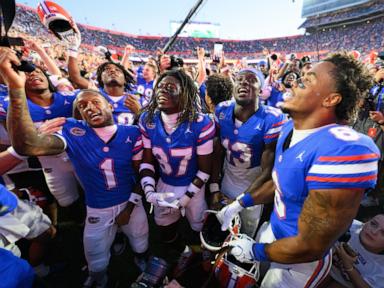
The air in Gainesville smells like crushed grass, stale popcorn, and a peculiar brand of nervous desperation that only autumn in the American South can manufacture.
For three hours every week, hundred-foot-tall concrete coliseums transform into pressure cookers. On the field, nineteen-year-olds with grass stains on their thighs and tape around their ankles throw their bodies into collisions that sound like splintering wood. In the stands, ninety thousand people in matching orange and blue scream until their throats bleed, tethering their entire emotional baseline to the erratic aerodynamics of an inflated pigskin.
We treat college football like a religion here, complete with holy days, sacred texts of statistics, and an unyielding faith in redemption. But right now, the high altar of the sport is undergoing a structural shift. The old rules are burning away.
Consider what happens when the postseason expands. For decades, the road to a national championship was a narrow, unforgiving corridor. If you stubbed your toe twice in September, your January dreams were dead. You could play in the toughest conference on earth, beat yourself black and blue against elite competition week after week, and still find yourself locked out in the cold while teams from quieter corners of the map celebrated.
That era is finished.
Look at the current mathematical projection sitting quietly inside the new twelve-team College Football Playoff bracket. If the season ended today based on the latest AP Top 25 poll, the landscape would look unrecognizable to anyone who grew up watching the old BCS machine churn. A staggering six Southeastern Conference teams would stamp their tickets into the tournament. Six. Half of the field, or close to it, hailing from the brutal gauntlet of the country's most unforgiving league.
And right there, planted squarely in the middle of the bracket, is the Florida Gators logo.
Imagine standing on the sideline inside Ben Hill Griffin Stadium on a crisp Friday night in December. The floodlights cut through the humidity, casting long, dramatic shadows across the turf. The university administration is already quietly drawing up logistics for a home playoff game. Think about that phrase for a second. A home playoff game. Not a neutral-site bowl game thousands of miles away in a sterile dome, but right here. On campus. Under the oaks. In front of students who skipped their economics lectures to line up outside the gates at dawn.
The logistics alone are staggering. Ticket offices are buzzing with frantic phone calls. Groundskeepers are nursing the grass. Local hotels are jacking up rates for a weekend in December that nobody budgeted for. But beneath the corporate scramble lies a raw, beating human heart.
Football in this conference is not an extracurricular activity. It is the pulse of the community.
When a program like Florida claws its way back into the national picture after years of agonizing near-misses, fan frustration, and coaching carousels, the atmosphere shifts from mere fandom to collective catharsis. You see it in the eyes of the old-timers who remember Steve Spurrier pacing the sidelines in a visor. You see it in the kids wearing oversized jerseys who weren't even born the last time the program hoisted a crystal trophy.
The numbers tell one story. The AP Top 25 places them firmly in the mix, a testament to surviving a meat-grinder schedule where every Saturday feels like a car crash. But numbers fail to capture the weight of a Tuesday practice in November. They do not measure the sound of a locker room after a heartbreaking loss, or the heavy silence on the charter flight home when the offensive line knows they missed a key block.
This new twelve-team reality rewards survival. It acknowledges the sheer brutality of playing an SEC schedule. In the past, running that gauntlet with two losses was a death sentence. Now, it serves as battle-hardening. By the time December rolls around, a team that survived Florida, Georgia, Texas, and LSU isn't just tired. They are forged in fire.
Critics of the expanded playoff often argue that we are watering down the regular season. They claim that losses should matter more, that the stakes are somehow diminished if you can lose twice and still play for a national title.
They are wrong.
The stakes have not vanished. They have multiplied. Every single weekend is an audition for survival in a bracket so crowded with talent that a single misstep drops you from a coveted first-round home game to an exhausting road trip in the freezing north.
Picture a December afternoon in Gainesville. The temperature drops into the fifties as the sun dips below the horizon. The smell of barbecue drifts from the tailgates lining Fraternity Row. Inside the stadium, the roar reaches a decibel level that rattles the press box windows.
This is what the sport was always meant to be. Not an abstract debate room populated by committee members in suits arguing over strength of schedule behind closed doors. Not a sterile formula calculated by computers in an undisclosed basement.
Just twenty-two players on a fifty-three-yard-wide strip of green, chasing something bigger than themselves under the lights, while a hundred thousand people hold their breath in unison.
The bracket is set on paper, ink drying on a digital screen. But the story is still being written on the grass.