The Middle East has been pushed into an era of absolute uncertainty following a massive, coordinated military strike by the United States and Israel that has effectively dismantled the upper echelons of the Iranian government. On February 28, 2026, the world woke to the news that Ayatollah Ali Khamenei, the Supreme Leader of the Islamic Republic since 1989, was killed in a precision strike on his compound in Tehran. This was not a mere skirmish or a "proportional" warning shot. It was the opening salvo of a campaign—codenamed Operation Epic Fury by the U.S. and Roaring Lion by Israel—aimed at nothing less than the total degradation of Iran’s military apparatus and the collapse of its clerical rule.
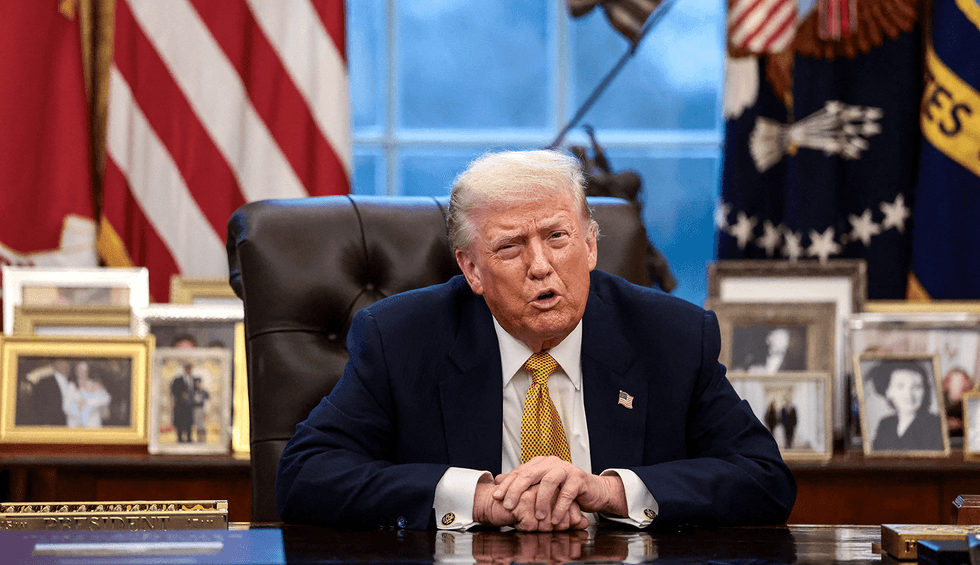
By the afternoon of March 1, the scale of the devastation became clear. President Donald Trump, speaking with the bluntness of a man who believes he has finally cut the Gordian knot of Western foreign policy, confirmed that 48 high-ranking Iranian officials are dead. The list includes not just the Supreme Leader, but also National Security Council secretary Ali Shamkhani and IRGC Commander-in-Chief Mohammad Pakpour. The strikes, which involved over 200 Israeli fighter jets and an undisclosed number of U.S. B-2 stealth bombers, targeted 500 sites across 24 provinces. Meanwhile, you can read related developments here: The Calculated Silence Behind the June Strikes on Iran.
The intelligence gamble of the century
The official justification for this escalation rests on the claim that Iran was months away from a deliverable nuclear weapon. Despite the 2025 "Operation Midnight Hammer" which allegedly "obliterated" Iran's nuclear sites, the White House now asserts that Tehran spent the last eight months secretly reconstituting its program. Critics and some intelligence veterans argue that the evidence for an "imminent" nuclear threat is thin, especially given that Omani mediators had reported significant progress in diplomatic talks just 48 hours before the bombs fell.
However, the strategy here isn't just about centrifuges. It is a psychological play. By hitting the "heart of Tehran"—the Pasteur district—for the first time in this long-running shadow war, the U.S. and Israel have signaled that the old rules of "gray zone" conflict are dead. The administration is betting that the Iranian people, exhausted by the economic collapse and the brutal suppression of the January 2026 protests, will see the smoke rising over the presidential office as a signal to finish what they started. To understand the complete picture, we recommend the recent analysis by USA Today.
A division of lethal labor
The mechanics of the strike reveal a sophisticated division of labor between Washington and Jerusalem. While the U.S. utilized its heavy-lift capabilities—Tomahawk missiles from the Fifth Fleet and B-2 bombers to crack hardened silos—the Israel Defense Forces (IDF) took the lead on the leadership "decapitation" strikes. This allowed the White House to maintain a degree of diplomatic distance from the assassinations while taking full credit for the "counter-proliferation" aspect of the mission.
The weaponry used also marked a shift in modern warfare. The U.S. Army deployed Task Force Scorpion Strike, utilizing low-cost one-way attack drones in mass quantities for the first time in a major state-on-state conflict. These "suicide drones" overwhelmed Iranian radar systems, clearing the path for more expensive standoff weapons.
The retaliatory firestorm
Tehran did not stay silent as its leaders were buried. Within hours of the first wave, the Islamic Revolutionary Guard Corps (IRGC) launched what they called the "sixth wave" of retaliatory strikes. Missiles and drone swarms have rained down on U.S. assets across the region, targeting Al-Udeid airbase in Qatar and the Fifth Fleet headquarters in Bahrain.
The human cost is already mounting beyond the military targets. In Israel, a missile strike on Beit Shemesh killed six civilians, while in southern Iran, a strike on Minab reportedly hit a primary school, resulting in mass casualties. The fog of war is thick, but the initial reports suggest more than 200 Iranians have died in the first 24 hours of the campaign.
The ghost of 2003
The parallels to the 2003 invasion of Iraq are impossible to ignore, and for many seasoned analysts, they are terrifying. The Trump administration is operating on the "untested proposition" that a decapitated regime will naturally give way to a pro-Western democracy. Yet, the IRGC is not just a military; it is a sprawling economic and ideological entity that has "wired" every facet of the Iranian state.
Even if the clerical leadership is gone, the "muscle and money" of the Guards remain. They are unlikely to surrender quietly. Instead, we are seeing the beginning of a fragmented, asymmetric resistance that could turn the entire Middle East into a combat zone for years.
Global fallout and the domestic front
The reaction has been swift and polarized. In Pakistan, thousands of protesters attempted to storm the U.S. Consulate in Karachi, leading to clashes that left nine dead. In the United Nations, the rhetoric has reached a fever pitch, with U.S. Ambassador Mike Waltz and Iranian diplomats exchanging direct threats in the Security Council.
Domestically, the U.S. is facing its own strain. The USS Ford has had its deployment extended yet again, and the Air Force is running low on spare parts for its aging F-15E fleet. The industrial base, already taxed by years of regional friction, is now being asked to sustain a high-intensity war of choice.
Operation Epic Fury is a gamble that the world can be reshaped by fire. If the regime falls and a stable transition follows, it will be hailed as the ultimate vindication of "Maximum Pressure." If it results in a failed state and a regional conflagration, it will be remembered as the moment the West walked into a trap of its own making.
The bombing is scheduled to continue throughout the week. The "hour of freedom" promised to the Iranian people has arrived, but it is a freedom born of fire, and the smoke is far from clearing.
Would you like me to track the diplomatic fallout in the UN Security Council or the movements of the U.S. Fifth Fleet in the Persian Gulf?