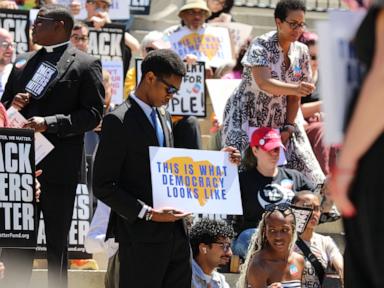
The ground just shifted completely under American politics, and it isn't a drill. If you think the battle over voting rights is a sleepy academic debate or a minor procedural squabble, you aren't paying attention. The U.S. Supreme Court just handed a massive victory to conservative mapmakers, effectively dismantling what remained of the Voting Rights Act of 1965 (VRA). By ruling in Louisiana v. Callais that states no longer have to consider race—and indeed, shouldn't—when drawing political boundaries, the high court slammed the door on a half-century of hard-won civil rights progress.
The political fallout was immediate. Right after the Callais decision, the Supreme Court intervened directly in Alabama, vacating a court-ordered map that had finally given Black voters a second congressional district. It's a devastating blow to organizers who spent years fighting for fair representation. But instead of throwing up their hands, a multiracial coalition of civil rights leaders, activists, and local organizers is launching a aggressive counter-offensive. They are calling it the beginning of a second Reconstruction period.
If you want to understand how our elections will look for the next decade, you have to look at what's happening on the ground right now. The old playbook is dead. The new strategy is about survival, raw political power, and a refusal to be erased.
The Weaponization of Colorblindness
For decades, Section 2 of the VRA was the ultimate weapon against racial gerrymandering. If a state line-drawer tried to dilute the voting strength of Black communities by slicing them up ("cracking") or packing them all into a single district ("packing"), civil rights groups could sue and win. That's exactly how Black voters in Alabama secured a second opportunity district for the 2024 elections, leading to the historic election of Representative Shomari Figures. For the first time in history, Alabama had two Black representatives in its congressional delegation.
The Supreme Court just wiped that progress off the map.
The conservative majority's logic is simple but brutal. They argue that using race to fix past racial discrimination is itself a form of racism. By adopting this extreme version of "colorblindness," the court has made it incredibly easy for partisan legislatures to dismantle majority-Black districts. Lawmakers can now carve up Black communities, claim they are doing it purely for partisan advantage rather than racial animus, and walk away clean.
President Donald Trump praised the shift, calling it a major win for equal protection that returns the VRA to its original intent. But on the ground in the American South, the reality looks completely different. In the blink of an eye, Alabama and Louisiana reverted to a single majority-Black district. Tennessee lawmakers sliced up greater Memphis into three separate, sprawling districts. Florida and Texas are moving fast with their own aggressive line-drawing.
We aren't just talking about a couple of seats in Congress. We are talking about the systematic removal of nonwhite voices from every level of government.
The Ground Game for a Second Reconstruction
Civil rights veterans aren't waiting around for the courts to save them. The judicial route is basically a dead end under the current Supreme Court line-up. Instead, the focus is shifting to building deep, localized political infrastructure that can withstand hostile maps.
Jared Evans of the Louisiana-based Power Coalition for Equity and Justice isn't sugarcoating the threat. He notes that the current push will target state house and senate seats next, before moving down to the local county and city council levels. It's an attempt at total erasure.
The response? Organizers are focusing heavily on three specific areas to combat the ruling.
1. The Fight for Federal Pre-Clearance
Representative Terri Sewell, who represents Selma, Alabama, is leading a push to reform and reintroduce the John R. Lewis Voting Rights Act. The core goal is to bring back "pre-clearance"—the rule struck down in the 2013 Shelby County v. Holder decision that forced states with a history of discrimination to get federal approval before changing election laws. The new strategy involves building a modern-day data formula that documents current voter suppression so clearly that even a conservative Congress can't ignore it.
2. Bypassing Racial Maps with Coalition Voting
Since mapmakers can now legally dilute Black voting percentages, organizers are shifting toward building multiracial, working-class coalitions. If a district drops from 52% Black to 38%, winning requires locking in deep alliances with Latino voters, Asian American communities, and progressive white voters who share identical economic concerns. It's harder work, but it's the only viable path forward in a post-VRA landscape.
3. Flooding the Courts with Intentional Discrimination Claims
Even though the Callais ruling gutted the standard Section 2 results test, it left a tiny window open. Justice Sonia Sotomayor pointed out in her recent dissent that states still cannot intentionally discriminate against Black voters in violation of the 14th Amendment. It's a much higher legal bar to clear, but groups like the ACLU and the NAACP Legal Defense Fund are already pivoting their lawsuits to focus entirely on proving racial animus and intentional bias.
What This Means for Your Vote
The immediate effect of these rulings is total chaos for the average voter. Look at Alabama. People had already cast absentee ballots in the state's primary elections using the court-approved two-district map. After the Supreme Court stepped in, Governor Kay Ivey set a special election schedule for August 11, voiding those previously cast congressional ballots.
This is a classic voter fatigue tactic. When you change the dates, change the district lines, and cancel previously cast ballots, people get confused. They get tired. They stay home.
If you live in a state undergoing rapid redistricting, you cannot rely on old information. You need to check your voter registration status every single month. You need to verify your specific congressional and state legislative district numbers before every election cycling, because the lines are moving constantly.
The conservative network entrenched in state legislatures knows exactly how powerful your voice is. That's why they are bending over backwards to shrink the electorate. The only response that works is an aggressive, sustained turnout that breaks through the gerrymandered lines. The courts won't protect your representation anymore. You have to defend it yourself at the ballot box.