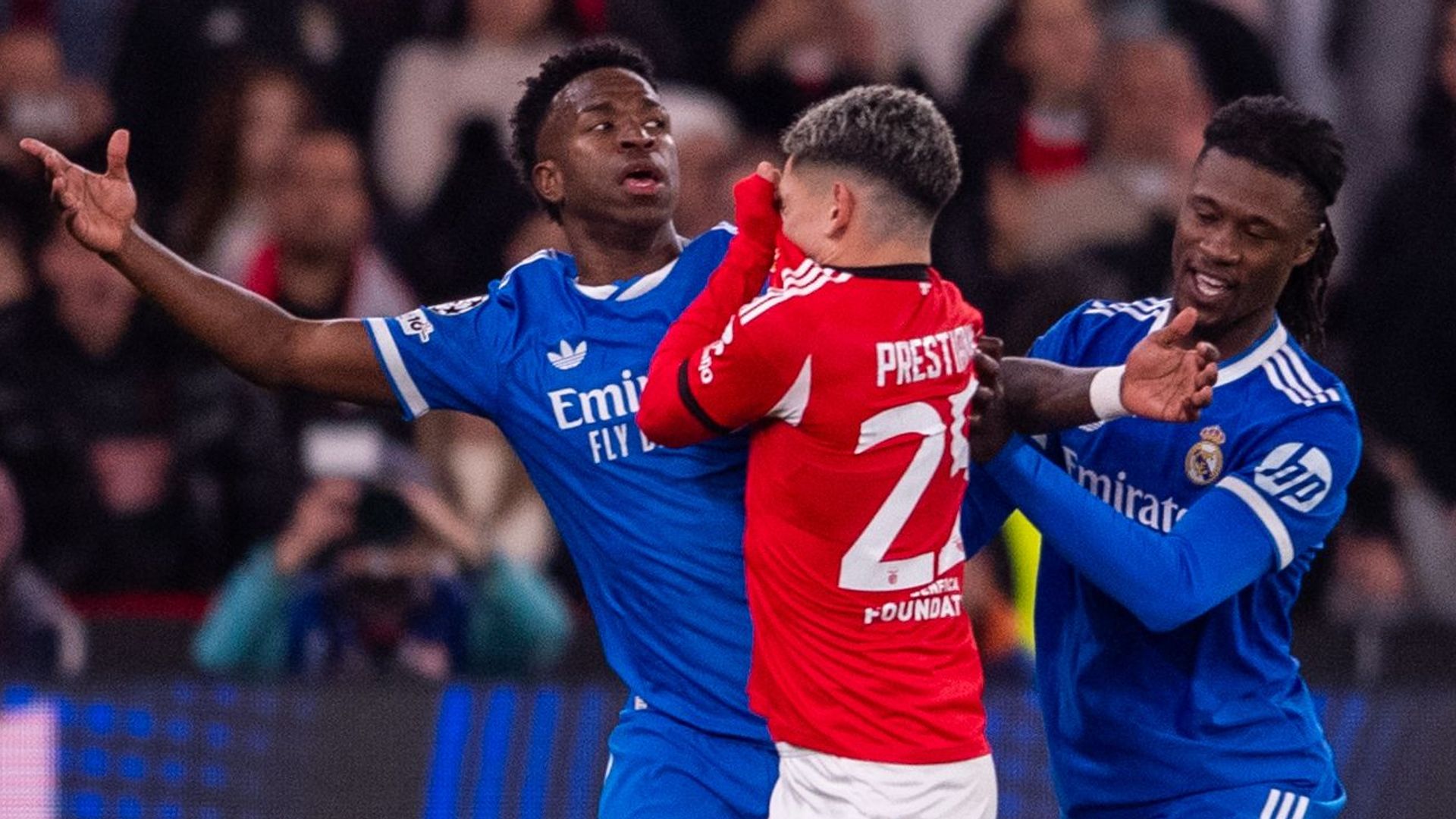
The era of the "hand-over-mouth" whisper in elite football is over. FIFA has signaled a drastic shift for the upcoming World Cup, moving to treat the act of covering one’s mouth during a confrontation with an opponent or official as a red-card offense. This isn't just about optics. It is a desperate attempt to reclaim the narrative of the game from the shadows of unprovable insults and racial abuse. For years, players have utilized this simple physical gesture to create a private, un-mic’d vacuum in the middle of a stadium filled with eighty thousand people. By shielding their lips, they effectively strip the sport of its disciplinary accountability. FIFA’s new mandate intends to strip that shield away.
The End of the Tactical Whisper
The logic behind the ban is straightforward but the implications are messy. In the modern game, cameras track every muscle twitch. Lip-reading has become a standard tool for tabloid media and disciplinary committees alike. Players reacted by evolving. They began instinctively raising a hand to their mouth whenever emotions boiled over, ensuring that whatever vitriol they spewed remained between them and their target.
This became a massive headache for governing bodies. When a player claims they were racially abused or subjected to a heinous personal slur, but the cameras only show a hand covering a moving jaw, the case hits a brick wall. There is no evidence. There is only "he said, she said." By making the gesture itself a dismissible offense, FIFA is removing the technicality that allows players to hide their words. If you cover your mouth during a heated exchange, you are gone. The assumption of guilt is now baked into the gesture itself.
Why the Technical Solution Failed
Referees have long struggled with the limits of their own hearing. A stadium roar can drown out even the most aggressive verbal assault occurring five feet away. For a decade, the push was for better technology—more microphones, higher-definition cameras, and forensic lip-readers. But technology cannot see through a palm.
The "tactical cover" became a loophole. It allowed players to maintain a public persona of professionalism while privately dismantling an opponent's mental state with protected insults. This discrepancy created a vacuum in the rulebook. Officials knew something was being said, and the victim's reaction often confirmed the severity, but without visual or auditory proof, the referee's hands were tied. This new rule flips the script. It stops being about what was said and starts being about the act of hiding the speech.
The Problem of Natural Movement
Critics of the move argue that the rule is too blunt. Football is a game of high-intensity physical exertion. Players often cover their mouths to cough, to catch their breath, or to mask a tactical instruction from a nearby opponent.
"If I'm telling my teammate to shift to a 4-4-2 while a winger is standing three feet away, I'm going to cover my mouth," says one veteran coach who spoke on the condition of anonymity. "Now, if a referee misinterprets that as a confrontation, I lose a player? It’s absurd."
FIFA’s counter-argument is that the rule specifically targets "confrontational settings." If you are in the face of an opponent or an official, your hands must remain down. This distinction is where the chaos will live. The margin between a heated tactical instruction and a confrontation is razor-thin in the 89th minute of a knockout match.
Lip Reading as a Disciplinary Standard
By banning the hand-cover, FIFA is essentially endorsing lip-reading as a primary form of evidence. This is a dangerous path. Even professional lip-readers admit that their accuracy is not absolute, especially when a player is shouting, grimacing, or moving quickly.
Consider a hypothetical example. A player shouts a phrase that looks identical to a slur when viewed from a specific camera angle, but is actually a colloquialism in their native tongue. Without the hand-cover, the footage is clear, but the interpretation remains subjective. We are moving from an era of "no evidence" to an era of "contested visual evidence." It solves the problem of the hidden mouth but creates a new problem of linguistic interpretation.
The Cultural Divide on the Pitch
The World Cup brings together players from every corner of the globe. Gestures that are innocuous in one culture can be aggressive in another. In some regions, covering the mouth is a sign of modesty or shock. In others, it is a direct sign of conspiratorial intent.
Referees are being asked to act as amateur psychologists and cultural anthropologists. They must decide, in a split second, whether a player’s hand moved to their face out of habit, fatigue, or a desire to hide a slur. The pressure on officials is already at a breaking point with the introduction of VAR. Adding a subjective "intent-based" red card for a hand gesture is like throwing a match into a powder keg.
The Economic Impact of the Red Card
A red card at a World Cup isn't just a tactical setback; it's a financial catastrophe for a national federation. It alters the trajectory of a tournament. If a star player is sent off because they reflexively covered their mouth during a spat, the backlash will be nuclear.
Sponsors pay hundreds of millions for the "clean" image of the World Cup. FIFA is under immense pressure to ensure the product remains marketable. Racism and verbal abuse are bad for the brand. If the only way to purge the game of those elements is to ban the "privacy" of the players, FIFA is clearly willing to take that gamble. They are betting that the threat of a red card will force players to self-censor.
Accountability or Overreach
This is a move toward total transparency. The pitch is being treated like a glass house where every word must be available for public scrutiny. While the goal of eliminating abuse is noble, the method is authoritarian. It assumes that players have no right to private communication during a match.
The fallout will likely be seen in the first few matches of the tournament. We will see a player, frustrated and exhausted, cover their mouth to vent a private frustration, only to find themselves walking toward the tunnel. The first time a major star is sent off for this, the rule will be tested in the court of global opinion.
The Expected Workaround
Players are nothing if not adaptable. If they can't cover their mouths with their hands, they will find other ways to hide their words. We may see players turning their backs to the main camera banks or pulling their jerseys up over their faces. The game of cat and mouse between the players and the broadcasters will simply enter a new phase.
The underlying issue isn't the hand. It's the culture of the sport. As long as players feel the need to use psychological warfare to gain an edge, they will find the gaps in the surveillance. FIFA can ban the gesture, but they cannot ban the intent.
The referees now hold a weapon that is arguably too powerful for the crime it's meant to prevent. A red card is the "death penalty" of a football match. Equating a hand gesture—even one used to hide an insult—with a leg-breaking tackle or a denial of a goal-scoring opportunity feels like a massive shift in the philosophy of the game’s laws. It prioritizes the "purity" of the broadcast over the natural flow of human emotion on the field.
The stadiums in the next World Cup will be the most monitored spaces on earth. Every angle is covered, every sound is captured, and now, every gesture is regulated. The players are no longer just athletes; they are performers in a high-stakes drama where the script must be audible and visible at all times. If you want to keep a secret on that pitch, you better learn to speak without moving your lips.
The whistle blows. The hand goes up. The card comes out. That is the new reality of the world's game.
Don't look for a middle ground. FIFA has decided that privacy is a luxury the modern game can no longer afford. Keep your hands at your sides and your mouth in full view of the lenses, or prepare for an early exit.