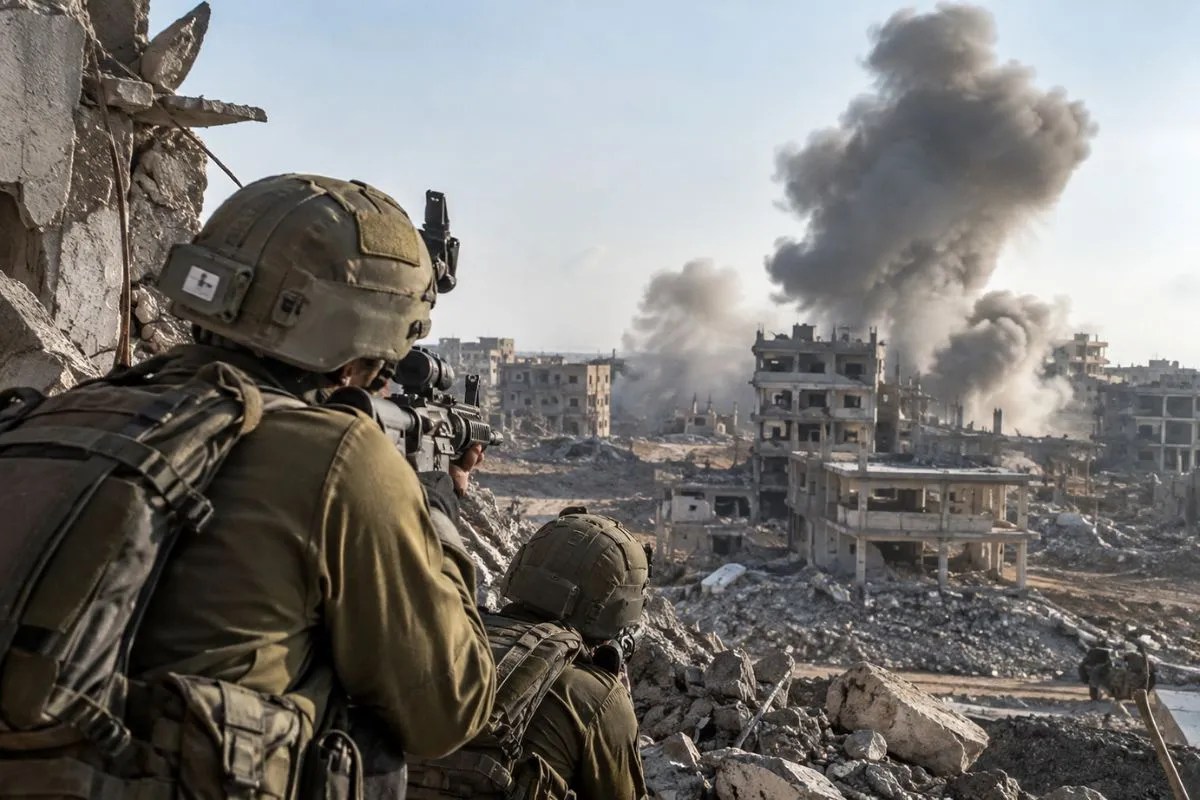
War reports often blur into a steady stream of statistics and tactical jargon until a single name stops you in your tracks. When the Israel Defense Forces announced the targeted killing of Muhammad Suleiman Buyaq in Gaza, it wasn't just another routine operational update. Buyaq wasn't a footnote in the military hierarchy. Israeli intelligence tied him directly to the horrific logistics and execution of the October 7 attacks that forever altered the geopolitical reality of the Middle East. If you want to understand how modern asymmetric warfare actually operates, you have to look closely at how commanders like Buyaq function within underground networks and why dismantling these specific nodes takes months of painstaking intelligence work.
The official military statement laid out a precise narrative. Buyaq operated inside the central zones of the Gaza Strip, coordinating tactical units and managing the brutal operational pipeline that enabled the cross-border assault. Intelligence officers tracked his movements for weeks, waiting for the exact moment when a strike could neutralize him while minimizing broader operational friction. But headlines and press releases miss the grueling reality on the ground. Modern conflict management isn't just about dropping precision munitions; it's a relentless game of digital and human surveillance where a single intercepted communication can spell life or death for a high-value target.
The Anatomy of Underground Command
Tracking a commander like Buyaq means fighting an enemy that refuses to play by conventional military rules. Traditional armies rely on visible supply chains, standardized command structures, and electronic signatures that light up radar screens. Hamas operates entirely differently. Decades of siege and bombardment forced their leadership deep underground, turning the subterranean tunnel network into a sprawling metropolis of command bunkers, weapons caches, and escape routes.
Buyaq's role relied heavily on this subterranean architecture. When you operate beneath civilian infrastructure, you exploit a terrifying tactical advantage. Intelligence agencies spend billions on satellite imagery and signals intelligence, yet finding a specific individual hidden fifty feet beneath a residential neighborhood remains one of the toughest challenges in modern military history. You cannot simply blast every block and expect the leadership structure to collapse. It requires a delicate mix of HUMINT, cyber surveillance, and rapid tactical execution once the target surfaces or makes a critical error in communication security.
To grasp the weight of this development, consider what happens when a logistics commander is taken off the board.
- Supply lines fracture immediately because operational knowledge often sits in the heads of specific individuals rather than centralized databases.
- Local cells experience communication blackouts while scrambling to verify who survived and who betrayed positions.
- Morale shifts dramatically among lower-ranking operatives who realize that underground shelter does not equal absolute immunity.
Why October 7 Connections Still Dictate Every Move
The shadow of October 7 hangs over every single tactical decision made in the region today. For the Israeli security apparatus, hunting down everyone involved in planning, funding, or executing that day's operations is an absolute institutional mandate. Buyaq's inclusion on the target list stems directly from his alleged role in directing forces toward civilian communities during the initial breach.
Critics often ask whether eliminating individual commanders actually alters the strategic trajectory of a deeply entrenched militant organization. History suggests a complicated answer. Organizations like Hamas maintain institutional depth, meaning a dead commander is often replaced within days by a younger, sometimes more radical deputy. Yet the loss of someone with Buyaq's specific institutional memory and operational connections creates immediate friction. You can replace a body, but you cannot instantly replace years of localized coordination and trust built within clandestine cells.
The Human Cost and the Informational Fog
Reporting on these events forces you to cut through layers of propaganda from every sides involved. Military spokespersons naturally frame every targeted strike as a clean, surgical blow against terror infrastructure. On the flip side, local reports and humanitarian organizations emphasize the staggering civilian toll that accompanies dense urban combat. The truth usually lies in the messy, violent middle.
When strikes hit urban centers, civilian casualties remain an unavoidable and devastating reality of modern warfare fought in densely populated areas. Analysts sitting thousands of miles away often debate the legalities and ethics of these operations with clinical detachment, ignoring the stark terror experienced by families caught in the crossfire on both sides of the border. Every tactical success claimed by military command comes paired with a compounding humanitarian crisis that deepens the generational trauma of the region.
What Happens Next in the Strip
The elimination of Muhammad Suleiman Buyaq won't end the conflict on its own. It's a single tactical data point in a much wider, grinding war of attrition. As intelligence agencies continue hunting down remaining figures linked to the October 7 attacks, the psychological pressure on underground leadership intensifies. Every successful strike forces surviving commanders deeper into isolation, making communication harder and operational efficiency slower.
Yet, as long as the underlying political and territorial disputes remain entirely unresolved, tactical assassinations will only serve to reset the clock rather than solve the root crisis. You can dismantle networks piece by piece, but peace requires an entirely different kind of strategy—one that current leadership on all sides seems entirely unwilling to pursue. The war grinds on, leaving a trail of ruined cities and shattered lives in its wake, with no clean end in sight.