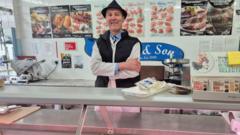
The lights just went out at a local institution. After 137 years of serving the same community, a family-run butcher shop has finally locked its doors for the last time. It’s a story we’ve heard before, but that doesn't make it any less of a gut punch. When people ask, "Where will I get my steak pies now?" they aren't just talking about pastry and gravy. They’re talking about the loss of a neighborhood's heartbeat.
Small businesses like this aren't just shops. They’re time capsules. 137 years means this business survived two World Wars, the Great Depression, the rise of industrial supermarkets, and the soul-crushing shift toward online grocery delivery. It saw generations of the same family grow up behind the counter. It saw customers come in as children holding their mother's hand and return decades later with their own grandkids. You don't get that at a self-checkout kiosk. Building on this theme, you can also read: Why the Green Party Victory in Manchester is a Disaster for Keir Starmer.
The Real Cost of Convenience
We’ve traded quality for the illusion of speed. Most people buy their meat in plastic-wrapped Styrofoam trays under fluorescent lights. It’s easy. It’s fast. But it's hollow. A local butcher knows exactly where the cattle came from. They know the farmer. They know the cut. Most importantly, they know you.
When a shop like this closes, the supply chain gets a little more anonymous. We lose the specialized knowledge of a trade that takes years to master. Trimming a brisket or prepping a perfect rack of lamb isn't something you learn from a corporate handbook. It’s an art form passed down through physical labor and repetition. Observers at The New York Times have provided expertise on this matter.
The closure of a century-old butcher shop is a symptom of a larger cultural rot. We claim to value "local" and "artisanal," yet our spending habits often tell a different story. If we don't support these pillars of the high street, they disappear. And once they’re gone, they never come back. You can't just "reboot" a 137-year-old legacy.
Why Those Steak Pies Were Different
The cry of "Where will I get my steak pies?" is the ultimate tribute. In the UK, and specifically in the North and Scotland, the butcher’s steak pie is a sacred object. It’s the centerpiece of New Year’s Day. It’s the reliable Saturday lunch.
Supermarket pies are mass-produced in factories. They’re filled with thickeners and "meat-like" chunks. A family butcher’s pie is different. It usually uses the offcuts of the high-quality steaks they sell over the counter. The gravy is a family recipe. The crust is often made in-house or sourced from the bakery next door. It’s a closed loop of local economy that keeps money within the town instead of shipping it off to a corporate headquarters in another country.
The Economic Domino Effect
When a cornerstone business closes, the surrounding shops feel it immediately. The person who went to the butcher also stopped at the greengrocer. They grabbed a coffee at the local cafe. They visited the hardware store.
Take that anchor away and the foot traffic drops. The street gets quieter. Eventually, the greengrocer struggles. Then the cafe. It’s a chain reaction that turns vibrant town centers into ghost towns filled with betting shops and "To Let" signs.
According to the British Meat Processors Association, the number of independent butchers has plummeted over the last few decades. In the 1990s, there were around 15,000. Now? We’re looking at fewer than 5,000. That’s not just a change in shopping habits; it’s an extinction event for a middle-class trade.
High Stakes for the Next Generation
You might think this is just nostalgia. It’s not. There are practical, hard-nosed reasons to care about the survival of the local butcher.
- Food Security: Local shops rely on local farmers. If the big supermarkets have a supply chain hiccup (like we saw during the pandemic), the local butcher often still has meat because their cows are only twenty miles away.
- Waste Reduction: Butchers use the whole animal. Supermarkets want uniform shapes that fit in a box. This leads to incredible amounts of food waste that small-scale butchery avoids.
- Customization: Try asking a supermarket employee to butterfly a leg of lamb or give you a specific thickness of pork chop. They usually can't. They don't have the tools or the permission to deviate from the pre-packed norm.
If you’re lucky enough to still have a local butcher, stop treating them like a luxury for special occasions. Buy your mid-week chicken there. Get your bacon there. The price difference is often smaller than you think, especially when you account for the fact that supermarket meat is often pumped with water to increase the weight.
Go find a local shop today. Ask the butcher what’s good this week. Buy something you’ve never cooked before and ask them how to prepare it. That interaction is worth more than any "loyalty points" a grocery app can give you. If we want to keep the steak pies, we have to pay for them while the ovens are still hot.