Luca did not check the charts until his coffee machine finished its second, agonizingly slow hiss. It was 6:14 AM in a damp apartment just outside Brussels. Outside, the sky was the color of wet slate. Inside, the glowing blue glow of his laptop screen illuminated a small stack of unpaid electricity bills and a half-eaten croissant.
He clicked the bookmark he had opened ten thousand times before. In other updates, we also covered: Why the Roman Space Telescope Changes Everything We Know About the Cosmos.
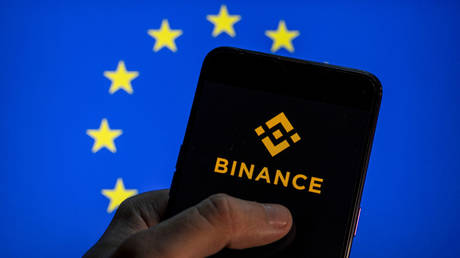
Instead of the usual chaotic waterfall of green and red numbers, a stark, white banner stretched across the top of the homepage. It was written in the bloodless, terrifying prose of corporate lawyers. It notified users that due to shifting regulatory frameworks, accounts registered within the European Union would no longer have access to trading, derivatives, or deposits.
Poof. Ars Technica has analyzed this fascinating issue in extensive detail.
Just like that, the digital financial ecosystem that Luca had spent four years navigating, learning, and relying on to pay his rent was locking its doors. The world’s largest cryptocurrency exchange was pulling the plug on Europe.
To the bureaucrats sitting in the massive, glass-fronted offices of the European Parliament a few miles away, this was a triumph of governance. It was the natural result of implementing sweeping new frameworks designed to tame the wild west of digital finance. It was a press release. It was a line item in a compliance report.
But to Luca, and to millions of ordinary people across the continent, it felt like an eviction notice served by an invisible landlord.
The Friction of the Electronic Border
We often talk about the internet as a borderless collective, a smooth digital plane where geography matters less than your Wi-Fi speed. That is a lie. The physical world always catches up. When a massive global financial platform decides to pack up its bags and leave a market of 450 million people, it does not happen because of a glitch in the code. It happens because the friction of local laws becomes heavier than the profit of staying.
Consider the sheer scale of what happens when a digital giant retreats. This is not like a local supermarket closing down, where you simply walk two blocks further to buy your milk. When the largest liquidity pool on the planet vanishes from a region, the market splits. On one side stands the global playground, fast, volatile, and infinitely liquid. On the other side sits Europe, ring-fenced by protective barriers that are meant to keep citizens safe but often end up keeping them isolated.
The technical mechanics behind this exit are rooted in a massive legislative effort to standardize rules for digital assets. For years, every European country had its own messy patchwork of guidelines. France had one set of rules, Germany had another, and Italy often seemed to ignore the phenomenon entirely until it couldn't. The new framework aimed to fix this by creating a single, unified rulebook. If you play by the rules, you get a passport to operate across the entire bloc.
It sounds reasonable. It sounds organized.
But for a sprawling, hyper-global entity that grew up in the regulatory shadows, adapting to these hyper-specific demands proved to be a bridge too far. The requirements around capital reserves, data storage, and strict oversight meant rewriting the entire corporate DNA. Confronted with the choice between changing everything or cutting the cord, the corporate giants looked at their spreadsheets and chose the exit.
A Language Made of Ice
The disconnect between regulators and everyday users comes down to a fundamental misunderstanding of why people sought out these alternative financial spaces in the first place.
Politicians talk about consumer protection. They talk about preventing money laundering, stopping illicit flows, and ensuring market integrity. These are noble goals. Nobody wants their life savings stolen by a shadowy hacker or dissolved in a fraudulent scheme.
But walk into a small cafe in Athens, or a shared workspace in Lisbon, or a cramped apartment in Warsaw. Talk to the people who actually use these platforms. You will hear a completely different language.
They do not talk about systemic risk. They talk about survival.
In many parts of Europe, the traditional banking system feels less like a public utility and more like a hostile gatekeeper. Young people face staggering unemployment rates. Traditional investments like real estate have soared so high they are completely invisible over the horizon. The local bank offers interest rates that are a bad joke, failing to even glance at the rate of inflation.
For Luca, the exchange was not a casino. It was a laboratory. It was a place where he could take a few hundred euros earned from freelance graphic design and try to build a buffer against an economy that felt stacked against his generation. He understood the risks. He had lost money on bad trades before. He knew the market could be cruel.
What he did not expect was that the protection offered by his government would manifest as a total shutdown.
The tragic irony of extreme consumer protection is that it frequently drives the most vulnerable users into darker, less regulated corners. When the main highway closes, people do not stop traveling. They take the dirt roads. They find decentralized, unverified platforms operating out of jurisdictions that no one can trace. They use virtual private networks to mask their identities, exposing themselves to even greater dangers of fraud and theft without a single legal safety net to catch them if they fall.
The Architecture of the New Isolation
Let us look at what this looks like under the hood. When a major financial platform decides to exit a massive market, it does not happen overnight, but the effects are immediate.
- Liquidity Starvation: The volume of buyers and sellers dries up. Prices become more volatile, and executing a simple transaction becomes far more expensive.
- The Compliance Chasm: Smaller, domestic startups try to fill the void, but they are buried under the exact same mountain of paperwork that scared away the global giants.
- The Innovation Brain Drain: Developers, builders, and entrepreneurs realize that building a tech company in Europe means fighting a multi-front war against compliance costs. They pack their laptops and move to Dubai, Singapore, or El Salvador.
This is the hidden cost of safety. It creates a quiet, orderly graveyard where nothing dangerous happens, but nothing new grows either.
The traditional financial elite view this as a victory. They see the retreat of alternative platforms as a vindication of old-world banking. They want you to believe that the traditional account with its monthly maintenance fees, its three-day processing times for cross-border transfers, and its endless layers of bureaucratic interrogation is the only legitimate way to participate in the global economy.
But the desire for something different cannot be regulated out of existence. It is a human instinct to seek out autonomy, to want a direct connection to the global engine of value without needing permission from a regional middleman.
The Quiet After the Storm
By noon, the rain in Brussels had stopped, leaving behind sticky, humid air that smelled of wet asphalt. Luca sat at his desk, staring at his balance screen. He had successfully withdrawn his funds to a cold storage device, a small USB-like piece of plastic sitting on his desk. His capital was safe, but his access to the global market was severed.
He looked out the window at the tram rattling down the street below. Passengers were pressed against the glass, staring blankly at their phones, heading to offices where they would trade their time for currency that lost value a little more every single day.
The regulators had won their battle. The lines had been drawn, the flags planted, and the perimeter secured. The continent was safe, orderly, and locked down.
Luca picked up the small plastic drive, slipped it into his pocket, and closed his laptop. The screen went completely dark, reflecting nothing but the quiet room and a young man wondering which country he would have to move to next just to feel connected to the rest of the world.