The coffee shop was too loud, which is exactly why they chose it. Espresso machines hissed. Mugs clattered against formica. In a corner booth, a man we will call David sat with his hands wrapped around a lukewarm paper cup.
David is a hypothetical composite, a stand-in for the half-dozen real, terrified public servants who have sat across from investigative journalists in damp diners and dark parking structures over the last few decades. He worked deep within a federal agency. He had seen something wrong. Not just a minor bureaucratic oversight, but a systematic abuse of power that bypassed the oversight of Congress and the eyes of the public.
He wanted to tell the truth. But he also had a mortgage. He had a daughter who needed braces, a pension he had spent twenty-two years building, and a profound, bone-deep fear of federal prison.
Across from him sat a reporter. No recording devices were on the table. No notebooks were open. There was only a quiet conversation, a shared understanding, and a promise.
"If you give me these documents," the reporter said, her voice barely carrying over the grind of the coffee beans, "your name will never leave my mouth. I will protect you. No matter what."
David believed her. He slid a thumb drive across the table, hidden beneath a folded napkin.
Six months later, the story broke. It led the evening news. It sparked congressional hearings. It forced a change in policy that protected thousands of ordinary citizens. But back in Washington, in the marble corridors of the Department of Justice, someone was angry. They wanted a scalp. They did not want to debate the ethics of their program; they wanted to find the leak.
And so, the machinery of the state began to grind.
The Knock on the Virtual Door
When the government wants to find a whistleblower, they rarely start by knocking on the whistleblower's door. They do not know whose door to knock on. Instead, they go to the person who holds the keys. They go to the newspaper.
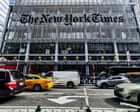
This is not a hypothetical scenario. This is the reality behind the legal battle initiated when the New York Times filed a motion to quash subpoenas issued by the Justice Department.
To understand what a motion to quash actually is, ignore the dry legal terminology for a moment. Think of it as a physical hand reaching out to grab a private diary, and another hand slamming down to block it. It is an assertion of a boundary. A line in the sand.
The Justice Department had quietly issued subpoenas demanding the phone records and email logs of several reporters. They did not just want the stories. They wanted the metadata. They wanted the digital footprints. Who did the reporters call at 2:00 AM on a Tuesday? How long did the conversations last? Which IP addresses connected to their secure dropboxes?
For a journalist, metadata is not just a collection of ones and zeros. It is a map of trust. If the government can force a telephone company or an internet provider to hand over a reporter's logs, the promise of confidentiality is dead.
Think about the vulnerability of that position. Imagine knowing that every phone call you make, every text you send, and every meeting you schedule is being mapped out by prosecutors with the full weight of the federal government behind them. It changes how you breathe. It changes how you work.
The Invisible Shield
We often hear about the First Amendment as if it is a physical shield, a magical piece of parchment that automatically deflects the arrows of government overreach. It is not. It is only as strong as the people willing to stand in front of it.
In the United States, there is no federal shield law. While dozens of states have protections that allow journalists to protect their sources, the federal system is a patchwork of shifting policies and judicial precedents. Journalists rely on what is known as reporter's privilege. It is the legal theory that the press cannot function as an independent watchdog if it is turned into an investigative arm of the government.
Consider what happens if this privilege disappears.
The phone stops ringing.
It is that simple. If a whistleblower like David knows that a federal prosecutor can simply sign a subpoena and unmask his identity within forty-eight hours, he will never walk into that coffee shop. He will keep his head down. The abuse of power will continue. The public will remain in the dark.
The Justice Department often argues that national security or the execution of justice requires these leaks to be plugged. They paint a picture of chaos, where state secrets are tossed into the wind. It is a compelling argument on its face. The state has a duty to protect its secrets.
But who protects the public from the state?
This is the central tension of the entire debate. It is a balancing act on a high wire, with no net below. When the government becomes both the player and the referee, the independent press is the only entity left on the sidelines pointing out when the rules are being broken.
Inside the Legal War Room
The decision to file a motion to quash is not made lightly. It is expensive, time-consuming, and puts a news organization in direct conflict with prosecutors who have unlimited taxpayer funding.
Inside the legal department of a major newspaper, the atmosphere during these moments is tense. Lawyers pore over decades of case law, looking for a crack in the government's armor. They look at cases from the Nixon era, the Obama administration's record-breaking leak prosecutions, and the aggressive tactics of the Trump Justice Department.
They argue that the government has not exhausted other means of finding the information. They argue that the subpoenas are overly broad, a fishing expedition designed to intimidate rather than to investigate a specific, egregious harm.
But the real argument is much simpler. It is about the preservation of an ecosystem.
Imagine a forest where the water source is slowly poisoned. At first, the trees at the edge die. Then the birds leave. Eventually, the entire forest turns to dust. Confidential sources are the water of investigative journalism. Without them, the stories dry up. The investigations cease. We are left with nothing but press releases, staged photo opportunities, and carefully managed public relations campaigns.
Why This Matters to You
It is easy to look at this fight and see it as an elite dispute between powerful institutions. On one side, the Gray Lady of journalism; on the other, the Department of Justice. It feels distant. It feels like a drama played out in wood-paneled courtrooms by people in expensive suits.
But the consequences of this battle knock on every door in the country.
Consider the major revelations of the last fifty years. The Pentagon Papers. Watergate. The systemic abuse of prisoners at Abu Ghraib. The secret surveillance of American citizens after 9/11. None of these stories came from official press conferences. They did not come from government spokespeople handing out glossy folders.
They came because someone, somewhere, decided that their loyalty to the public interest was greater than their loyalty to their employer. They came because a reporter was able to look them in the eye and promise anonymity.
If the Justice Department wins these battles, the message to every future whistleblower is clear: You are on your own.
The government will find you. They will look through the reporter's phone. They will track your location. They will ruin your life.
When we allow the government to breach the wall between reporters and their sources, we are not just allowing them to police their own ranks. We are giving them the power to decide what we are allowed to know. We are handing over the keys to our own reality.
The motion to quash is more than a legal filing. It is a defense of the quiet spaces where truth is told in whispers. It is a fight to keep those spaces quiet, safe, and open. Because once those whispers stop, the silence that follows will be absolute.