You bought a $100,000 stainless steel triangle because you believed the hype. You read the social media posts where Elon Musk promised your electric pickup could cross rivers, lakes, and seas. Then you found a button on your massive touchscreen labeled Wade Mode. It sounds adventurous. It sounds invincible.
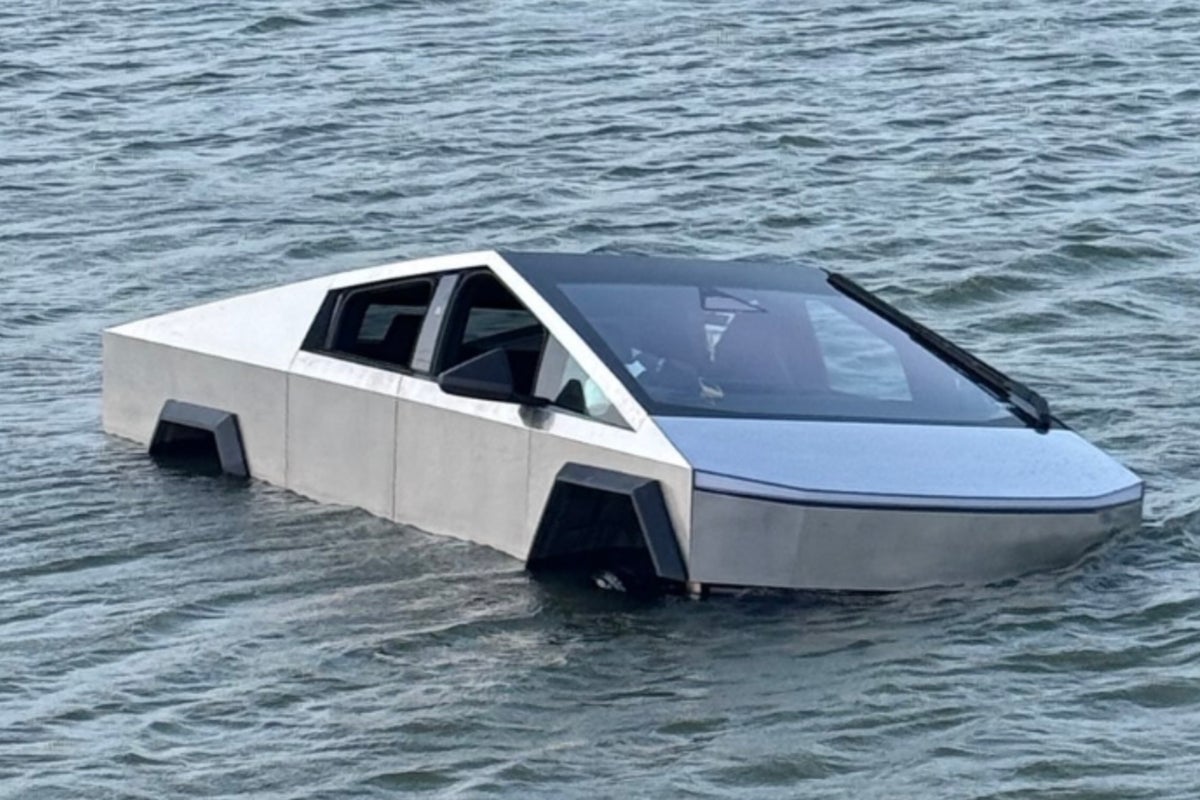
So you do what Jimmy Jack McDaniel did on a Monday evening at Grapevine Lake in Texas. You drive right down the Katie’s Woods Park boat ramp and plunge straight into the deep water.
Then reality hits. The truck shudders. The screens go dark. Water starts seeping through the doors. You and your passengers scramble out into the murky lake as seven thousand pounds of expensive engineering turns into a very shiny anchor.
When the Grapevine Police Department arrived around 8 p.m., they did not just bring a tow truck. They brought a jail transport van. McDaniel learned the hard way that treating an electric vehicle like a speedboat will not just destroy your warranty. It can land you behind bars.
The Absolute Absurdity Of The Charges
When you drive a truck into a lake intentionally, the legal system gets creative. The local authorities did not just hand over a standard traffic ticket. McDaniel was booked into the Grapevine Jail facing a bizarre, hilarious, and completely legitimate cocktail of charges.
First, he was charged with operating a vehicle in a closed section of a park or lake. That part makes sense. You cannot drive trucks where people launch boats.
But Texas authorities did not stop there. Because McDaniel insisted he was using the vehicle to navigate the water, police threw the maritime book at him. He was cited for having no valid boat registration. Let that sink in. A Tesla owner is sitting in a Texas jail cell because his pickup truck lacked a watercraft sticker.
To top it off, police tacked on numerous water safety equipment violations. If you tell a cop your vehicle is a boat, you better have life jackets, a throwable flotation device, and a sounding device on board. McDaniel had none of those. He just had a dead battery pack and a very long swim to shore.
The Grapevine Fire Department’s Water Rescue Team had to deploy to pull the heavy EV out of the shoreline mud. Local police later issued a dry, public reminder noting that just because a vehicle can physically roll into freshwater does not mean it is legal, or safe, under Texas law.
What Wade Mode Actually Does
The real tragedy here is that the owner manual explicitly tells you not to do this. A lot of people see the marketing and assume Tesla engineered some secret amphibious propeller system under the chassis. They did not.
Wade Mode is a highly specific, temporary setting designed for emergency situations. Think flash floods or unavoidable creek crossings on an off-road trail. It is not a party trick for a boat ramp.
When you turn on the setting, two specific mechanical adjustments happen.
- Suspension Lift: The air suspension pumps up to its maximum ride height. This gives you every millimeter of ground clearance possible to keep the body above the waterline.
- Battery Pressurization: The vehicle uses air pressure to seal off the massive battery pack. By pressurizing the enclosure, it creates a positive pressure barrier that helps block water from seeping into critical electrical connections.
[Image diagram showing how a vehicle battery pack is pressurized to repel water during wading]
Here is the kicker: it takes up to 10 minutes for the system to fully pressurize before you can even enter the water. Once activated, it only stays on for a maximum of two hours. It is a ticking clock.
More importantly, the maximum safe water depth is roughly 32 inches. That is measured from the bottom of the tire. It means the water should never even clear the top of your wheels. If the water gets deep enough to make the truck float, you lose all traction, your tires spin uselessly, and your expensive toy becomes a drifting metal box.
The False Promises and the Reality Check
It is easy to mock the drivers who pull these stunts, but they did not pull these ideas out of thin air. They listened to the CEO.
Back when the vehicle was first announced, Elon Musk claimed on social media that the truck would be waterproof enough to serve briefly as a boat, specifically stating it could cross rivers, lakes, and even seas that were not too choppy. He later doubled down, teasing an upcoming "mod package" that would allow the vehicle to traverse at least 100 meters of open water.
People bought the truck expecting a James Bond vehicle. They forgot that corporate social media posts are not engineering specifications.
If you open the official digital owner manual, the tone changes drastically. Tesla’s legal team clearly wrote the manual to protect the company from the CEO's mouth. The text states flatly that you must gauge the depth of any body of water before entering. It explicitly warns that soft, muddy, or uneven underwater surfaces can cause the heavy truck to sink instantly, rapidly increasing the water level around the frame.
The most damning line in that manual? Any damage caused by water ingress is completely excluded from the warranty. If you drive into a lake and ruin your drive units, you are looking at a repair bill that can easily reach tens of thousands of dollars. You pay for it entirely out of pocket.
This Is Not An Isolated Incident
McDaniel is just the latest addition to a growing club of owners who found the limits of the vehicle's waterproofing.
Just last year, an owner in Truckee, California, flipped on the water settings and drove straight into a local river. The California Highway Patrol had to drag the vehicle out of the current, later posting a blunt public reminder that the setting is not a submarine mode.
Before that, another owner sank their vehicle in Ventura Harbor while attempting to launch a jet ski. The truck lost traction on the wet, slimy ramp, slipped into the deep harbor water, and required a massive joint rescue effort from the local fire department, Harbor Patrol, and the US Coast Guard to fish it out.
Even overseas, an owner imported one into Europe and immediately drove it into a lake in Slovakia to test the viral internet claims. It ended exactly the same way: stranded, waterlogged, and stuck in the mud.
The physics do not lie. The vehicle weighs between 6,600 and 6,900 pounds depending on the motor configuration. When you drive that much weight onto soft sand, mud, or lake silt, it sinks like a stone. Once the frame bottoms out on the lake bed, the tires lose all effective bite, and you are completely trapped.
Your Next Steps Before Driving Near Water
If you own one of these trucks, or any off-road vehicle with water-fording capabilities, you need to change how you think about water crossings. Stop treating your vehicle like an amphibious stunt car.
First, never enter any body of water where you cannot see the bottom. Silt and mud will trap a heavy vehicle faster than deep water will.
Second, if you absolutely must cross a flooded street or a shallow creek, stop the vehicle completely. Turn on the wading setting and wait for the dashboard to confirm that the battery pack is fully pressurized. Do not rush it.
Third, keep your speed under 2 to 3 miles per hour. Rushing into water creates a bow wave. That wave pushes water up over the hood and into sensitive upper air intakes or cabin seals, instantly frying components that were never meant to get wet.
Finally, remember that water safety laws apply to everyone. If you intentionally drive an unregistered vehicle into a public lake, expect the police to treat you like an illegal boater. Keep your truck on the tarmac, buy a cheap plastic kayak if you want to get on the lake, and leave the boat ramps for actual boats.