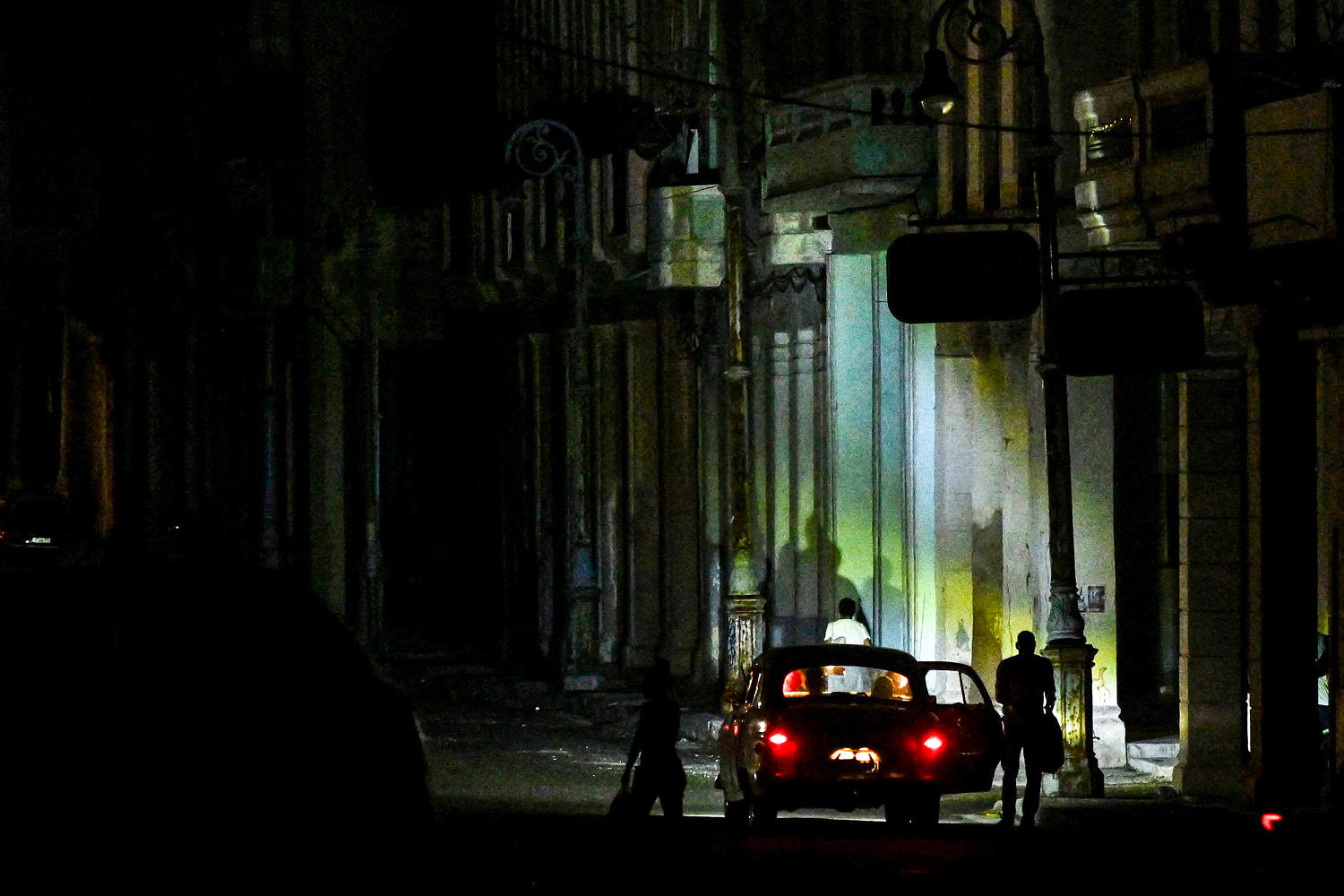
The standard narrative regarding Cuban healthcare has become a tired exercise in administrative finger-pointing. You have seen the headlines. They focus on the blackouts, the lack of sutures, and the fuel shortages that turn ambulances into lawn ornaments. The "lazy consensus" blames the embargo or the failure of a centralized state. While those factors exist, they are surface-level symptoms.
The real story isn't that a system is "breaking." The story is that we are witnessing the terminal velocity of a healthcare model that prioritized prestige over plumbing. For decades, the global medical community held Cuba up as a "low-cost, high-output" miracle. We were told that you could produce world-class health outcomes with a fraction of the GDP. Meanwhile, you can read related developments here: The Henrietta Lacks Settlement Myth and the End of Medical Altruism.
It was a lie of omission.
What we are seeing now in Havana’s hospitals isn't a temporary dip in service. It is the natural consequence of treating medicine as a geopolitical branding tool rather than a sustainable infrastructure. If you want to understand why doctors are performing surgeries by candlelight, you have to stop looking at the fuel tanks and start looking at the structural arrogance of "Preventative-Only" ideology. To explore the bigger picture, we recommend the recent article by Medical News Today.
The Myth of the "Efficiency Miracle"
Western academics love to cite Cuba’s infant mortality rates and doctor-to-patient ratios as proof that high-tech spending is unnecessary. This is the first premise that needs to be dismantled.
Cuba’s "miracle" was built on a foundation of human capital exploitation that would be illegal in any other functioning economy. You can maintain impressive stats when you can force doctors to live in the neighborhoods they serve for subsistence wages and "export" your best surgeons to Venezuela or Brazil in exchange for oil.
When that oil stops flowing, the "human capital" model collapses because it has no internal equity.
I have seen systems try to replicate this "lean" approach. They strip away the "waste" of redundant power systems, high-end diagnostics, and pharmaceutical stockpiles in the name of "efficiency." But medicine is not a lean startup. It is an energy-intensive, resource-heavy industry. When you try to run a 21st-century medical mandate on a 19th-century energy grid, you aren't being "resourceful." You are being negligent.
The Electricity Fallacy
The competitor piece laments the power outages. It frames them as an external shock to the system. This is a fundamental misunderstanding of how a hospital must function.
A hospital that depends on a national grid is a death trap. In any developed nation—or even in developing nations with their priorities straight—a hospital is its own micro-grid. It should be the last building to go dark. The fact that Cuban hospitals are "hard hit" by outages proves that the infrastructure was never designed for resilience; it was designed for appearance.
- Logic Check: If a system cannot maintain a functional diesel generator for its ICU, it is not a "healthcare system." It is a triage center.
- The Nuance: The shortage isn't just about "fuel." It’s about the total absence of a decentralized energy strategy.
Imagine a scenario where a hospital is designed as a modular, off-grid entity. In that world, a national blackout is a nuisance, not a mass-casualty event. Cuba’s failure is a warning to every Western health administrator currently obsessed with "centralizing" services to save a few bucks. Centralization is just another word for a single point of failure.
Stop Asking for More "Aid"
The "People Also Ask" section of this debate is usually filled with questions about how much more aid or "solidarity" is needed to fix the shortage.
That is the wrong question.
Adding more bandages to a hospital that has no running water or electricity is like trying to fix a sinking ship by repainting the deck. The problem isn't a lack of supplies; it’s the collapse of the logistics chain that makes those supplies useful.
If you ship a million vials of insulin to Havana tomorrow, half will spoil because the cold chain is broken. The other half will sit in a warehouse because there is no fuel for the trucks.
The actionable, uncomfortable truth? The "status quo" of sending medical shipments is a performative gesture that allows the international community to feel good while the underlying rot continues. We should be talking about the total privatization of hospital energy and logistics, but that would require admitting that the state-run "miracle" is dead.
The Doctor Export Trap
The most brutal truth about the Cuban medical crisis is that the country’s best "product" is its people. For years, the government has traded doctors like commodities.
This created a "brain drain" that was state-sanctioned. When the competitor writes about "doctors being hard hit," they miss the fact that the most capable doctors have already been leveraged for foreign currency. Those left behind are working in conditions that would break a saint.
We see this in the private sector too. Companies "leverage" their best talent to the point of burnout to hit quarterly targets, then act surprised when the mid-level management tier collapses. Cuba is just doing this on a national scale. They sold the engine of their system to pay for the paint job, and now they’re surprised the car won’t start.
The Resiliency Delusion
We are told that these shortages are a "test of resilience" for the Cuban people.
Stop calling it resilience. It’s a hostage situation.
Resilience is having a backup plan. Resilience is building a system that can withstand a 48-hour blackout without losing a neonatal ward. What is happening in Cuba is forced improvisation.
When a surgeon uses a cell phone flashlight to finish an appendectomy, that isn't a "triumph of the human spirit." It’s a systemic crime. If you find yourself applauding the "creativity" of doctors in these conditions, you are part of the problem. You are romanticizing a failure of basic governance.
The Logistics of the Last Mile
If you want to actually fix a failing health system, you don't look at the doctors. You look at the mechanics.
The "Last Mile" of healthcare is where people live or die. It doesn't matter if you have a 1:150 doctor-to-patient ratio if the doctor doesn't have soap. The obsession with "ratios" is a metric used by people who have never set foot in a rural clinic.
I’ve seen NGOs dump millions into high-tech imaging equipment in areas that can't provide 220V of steady power. The equipment becomes a very expensive shelf. Cuba is currently a graveyard of such "good intentions."
- The Truth About Supplies: You don't need "more" supplies. You need a supply chain that isn't controlled by a singular, sluggish bureaucracy.
- The Reality of Fuel: Fuel shortages are a choice. It is a prioritization of the military and the tourism industry over the surgical theater.
The Western Mirror
The reason we should care about the "outages" in Cuba isn't just out of pity. It’s because the Western medical "landscape"—to use a term I despise—is moving toward the same fragility.
We are moving toward hyper-centralization. We are moving toward "Just-in-Time" inventory for life-saving drugs. We are moving toward a total dependence on a digital grid that is one cyberattack away from a total blackout.
Cuba isn't an anomaly. It's a preview.
It’s what happens when you prioritize "access" metrics over "utility" metrics. It’s what happens when you treat the medical professional as a replaceable unit of labor rather than a high-stakes decision-maker.
The doctors in Havana aren't "hard hit" by a shortage. They are the victims of a system that believed its own propaganda for too long. They believed you could have a first-world medical system without a first-world energy policy.
They were wrong.
If you are a hospital administrator, a policymaker, or just someone who thinks "government-run" is a synonym for "efficient," look closely at those darkened wards. They didn't get that way overnight. They got that way one "efficiency" cut at a time, one "centralized" decision at a time, and one ignored generator at a time.
Stop looking for a way to "fix" the Cuban hospital. Start looking for a way to ensure your own hospital doesn't become one.
Build the micro-grid. Stockpile the "redundant" supplies. Pay the talent enough to stay. Or get used to the dark.
Every system is "world-class" until the lights go out. After that, you're just a person in a white coat with a flashlight and a lot of regrets.
Do not ask for more aid. Ask for a new map.