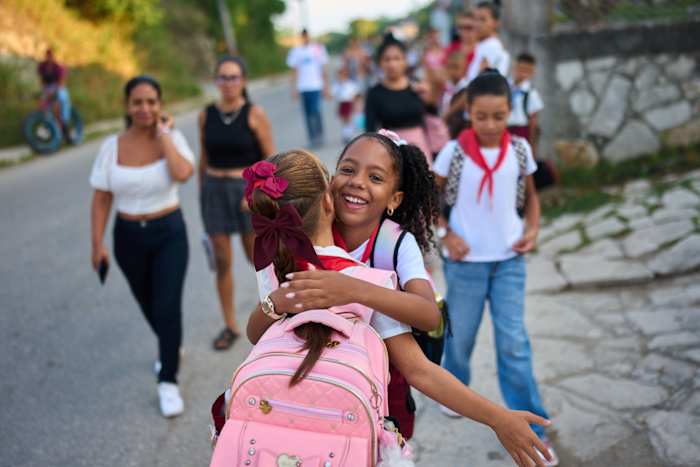
Getting an education shouldn't require riding a borrowed horse or carrying a labeled rechargeable fan just to survive a classroom. Yet that is the harsh reality for families across Cuba as more than 10,000 schools open their doors for roughly 1.4 million children. The country is staring down its worst infrastructural crisis in decades, crippled by rolling blackouts spanning over twenty hours a day, a severe lack of fuel, and an acute teacher shortage.
When the previous academic term had to wrap up a full month early in June, it signaled just how deeply the island's systems were fracturing. Now, the new school year is underway under conditions that officials themselves label as heroic. But behind the official rhetoric lies a desperate scramble for survival where ordinary citizens patch together the remnants of a broken public system.
The Reality of a 27 Percent Teacher Shortage
Education has long served as a crown jewel of the 1959 revolution, but today that foundation is cracking under the weight of mass emigration and rock-bottom salaries. Teacher coverage has plummeted to roughly 73 percent nationwide.
To keep urban classrooms functioning, the government had to reassign more than 3,000 educators from eastern provinces straight into Havana. Education Minister Naima Trujillo Barreto has publicly appealed to university students, working professionals, and retirees to step up and fill the empty desks.
You're looking at a system relying heavily on improvisation. Communities are pooling resources just to keep schools operational. Parents and local private sector entities are expected to bridge massive gaps in school nutrition, with state media reporting that some facilities have a mere 15-day supply of food on hand.
Zero Fabric and Twenty-Hour Blackouts
If finding a teacher is difficult, finding a uniform is practically impossible. Primary school uniform production meets a measly 12 percent of total demand. Without electricity to power textile workshops or fuel to transport raw materials across provinces, the government waived traditional uniform mandates, allowing kids to wear comfortable clothes as long as they tie on their symbolic red or blue kerchiefs.
Daily life feels like an endurance test. Children brush their teeth by the flickering light of cellphones because the power grid has failed again. Families sleep outside or crowd near open windows when indoor temperatures soar past ninety degrees and rechargeable fans die in the middle of the night. Parents send their kids to school with tiny, named fans, hoping a neighbor's generator can juice them up for the next grueling heatwave.
Transportation has taken a hit too. With school buses grounded due to a crippling lack of fuel, families resort to makeshift solutions. Some hitch carts to borrowed horses, navigating daily humiliation and logistical nightmares just to ensure basic attendance.
Surviving the Collapse
Blame is tossed around endlessly between Washington and Havana. Officials point straight at tightening U.S. sanctions and a severe oil embargo designed to strangle the regime. Critics and independent observers highlight decades of centralized economic mismanagement and infrastructural neglect.
No matter where you place the blame, the burden falls entirely on parents and teachers. They aren't worried about geopolitical chess matches. They're worried about whether their children can learn basic math while sitting in sweltering, unlit classrooms with empty plates.
The start of this school year proves that the desire to learn remains resilient, even when the state apparatus behind it is running on fumes.
For a closer look at how families are coping on the ground, check out this Cuba School Year Report.
http://googleusercontent.com/youtube_content/1