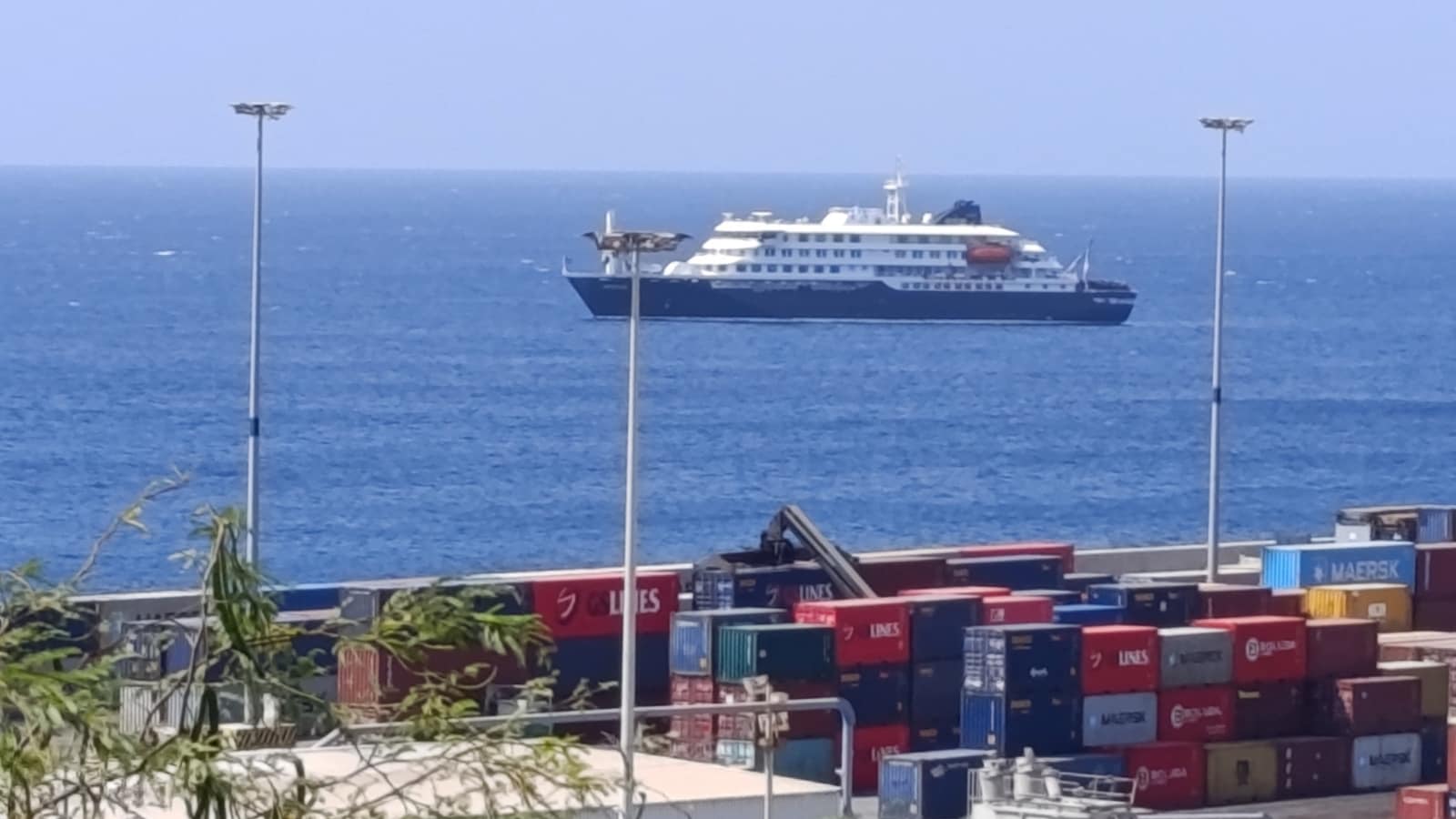
The European Centre for Disease Prevention and Control (ECDC) has officially designated every individual aboard a hantavirus-impacted vessel as a high-risk contact. This move signals a significant shift in how international health bodies manage localized outbreaks on commercial liners. By bypassing the usual tiered risk assessments—where only cabin mates or close dining partners are monitored—authorities are treating the entire ship as a single, closed-circuit biological unit. This decision is not merely a precaution. It is a tactical admission that current maritime ventilation and communal living standards cannot contain a pathogen once it enters the passenger manifest.
Hantaviruses are typically associated with rodent droppings, and while human-to-human transmission is historically rare for most strains, the risk profile changes in the pressurized, recycled environment of a modern cruise ship. The ECDC is moving to prevent a repeat of past maritime disasters where slow classification led to continental spread. If you were on that deck, you are now a person of interest to public health.
Beyond the Rodent Vector
The standard narrative regarding hantavirus focuses on rural environments, dusty barns, and direct contact with deer mice or rats. In those settings, the virus is an accidental invader. However, when the virus makes the jump to a luxury liner, the epidemiology enters a different phase. The "high-risk" designation applied to all passengers suggests that the ECDC is investigating more than just a single contaminated pantry or a rogue stowaway in the hull.
They are looking at the mechanics of the ship itself.
Cruise ships operate on complex HVAC systems designed to balance comfort with energy efficiency. These systems frequently recirculate air to maintain temperature. If viral particles become aerosolized—potentially through cleaning activities that disturb contaminated areas—the ventilation system becomes a delivery mechanism. When a health agency blankets an entire ship with a high-risk label, they are essentially stating that the physical boundaries between "safe" and "unsafe" zones on the vessel have been compromised.
The Latency Nightmare for Port Authorities
Public health officials are currently fighting a battle against time and biology. Most hantavirus strains have an incubation period ranging from one to eight weeks. This creates a massive window of invisibility. A passenger can disembark, pass through three international airports, and return to their suburban home before the first fever strikes.
By the time the symptoms—fatigue, fever, and muscle aches—transition into the life-threatening pulmonary or renal stages, the individual has already interacted with hundreds of people. The ECDC’s aggressive stance is an attempt to "freeze" the network. By labeling everyone high-risk, they trigger mandatory reporting requirements across EU member states, ensuring that local doctors don't mistake these symptoms for a common seasonal flu.
Infrastructure Failures and Maritime Accountability
The cruise industry has spent billions trying to scrub its image following the high-profile viral outbreaks of the last decade. Yet, this hantavirus incident exposes a lingering vulnerability in maritime law and ship maintenance. Most of these vessels are registered in "flag of convenience" nations where health inspections are less rigorous than those performed in EU or US ports.
The Maintenance Gap
To understand how a rodent-borne virus ends up on a multi-million dollar ship, you have to look at the dry-dock cycles. Ships are massive, porous cities. When they undergo repairs or sit at anchor in secondary ports, they are vulnerable to infestations.
- Pest Control Logs: Investigating these logs often reveals a reactive rather than proactive approach.
- Supply Chain Contamination: Pallets of food and linens stored in unsecured warehouses before being loaded are primary entry points for rodents.
- Structural Aging: Older ships have more "dead spaces" within the walls where pests can thrive undetected by even the most diligent cleaning crews.
The ECDC’s decision to classify every passenger as high-risk places the legal burden back on the cruise operators. It forces a level of transparency that the industry usually avoids. If every passenger is a high-risk contact, the ship's insurance liabilities skyrocket, and the operator must account for every movement made during the voyage.
The Reality of the High Risk Designation
For the passengers, this label is life-altering. It is not just a suggestion to wash your hands. It often involves legal orders for self-quarantine, daily temperature checks reported to government portals, and a complete ban on further travel.
The standard medical protocol for a high-risk hantavirus contact involves:
- Immediate Isolation: Minimizing contact with family members to prevent any potential (though rare) secondary transmission.
- Symptom Mapping: Detailed logs of respiratory health and kidney function indicators.
- Aggressive Blood Work: Serial testing to catch the viral load at the earliest possible stage.
This is a heavy-handed approach, and it’s one that sparks debate among civil liberties advocates. However, from the perspective of an epidemiologist, the math is simple. The cost of over-monitoring 2,000 people is negligible compared to the cost of a localized outbreak turning into a regional health crisis.
Why Air Travel is the Next Friction Point
The ECDC is currently coordinating with aviation authorities to track the "scatter" of the passenger list. Because many passengers fly home immediately after a cruise, the risk is exported instantly. The high-risk designation allows the ECDC to flag passports in the Schengen Information System, alerting border agents that an individual may require medical screening before boarding a flight. This level of data integration is the new frontline of bio-defense, but it relies entirely on the speed of the initial classification.
Chasing the Source in a Floating City
The investigation is now moving into a forensic phase. It is no longer enough to know that the virus was present; investigators must find the "Patient Zero" of the infestation. Was it a specific shipment of dry goods from a port in South America? Was it a breach in the ship's waste management system?
The industry analyst’s perspective here is cynical but necessary: companies often prioritize aesthetics over deep-structure hygiene. Gold-plated fixtures and gourmet buffets mask the reality of a hull that is essentially a steel box moving through environments where biosecurity is difficult to maintain.
The Cost of Silence
Historically, cruise lines have been slow to report illnesses for fear of "scaring the guests." This delay is exactly what the ECDC is trying to penalize. When a ship waits three days to report a cluster of symptoms, they give the virus a three-day head start in a perfectly designed laboratory for transmission. The "high-risk for all" rule is a signal to the entire industry that the days of quiet, localized management are over.
If a ship carries a threat, the entire ship is the threat.
Practical Defense for the Modern Traveler
If you are currently booking travel or are on a vessel, you cannot rely solely on the ship’s crew for your safety. Bio-surveillance starts at the individual level.
Check the CDC Vessel Sanitation Program (VSP) scores. These are public records. If a ship consistently scores in the low 80s or 90s, it indicates systemic failures in pest control and food storage.
Monitor ventilation. If your cabin air feels stagnant or carries a musty odor, it’s not just a comfort issue; it’s a filtration failure.
Sanitize your own environment. High-touch surfaces in communal areas—buffet handles, elevator buttons, and gym equipment—remain the primary exchange points for any pathogen.
The ECDC’s broad-spectrum warning is a wakeup call for a maritime industry that has become too comfortable with the "contained" nature of its environment. No ship is an island. In a globalized economy, a single infected rat in a loading dock can trigger a continent-wide health alert, turning a luxury vacation into a government-mandated quarantine.
The maritime industry must now reconcile its desire for high-volume tourism with the hard reality of biological risk. As ships get larger and passenger counts climb into the thousands, the "high-risk" blanket will become the standard response to any breach. The era of treating passengers as individuals during an outbreak is dead; you are now part of a collective risk pool, and your freedom of movement depends entirely on the cleanliness of the person in the cabin three decks below you.
Check your symptoms. Report your history. The oversight is only going to get tighter.