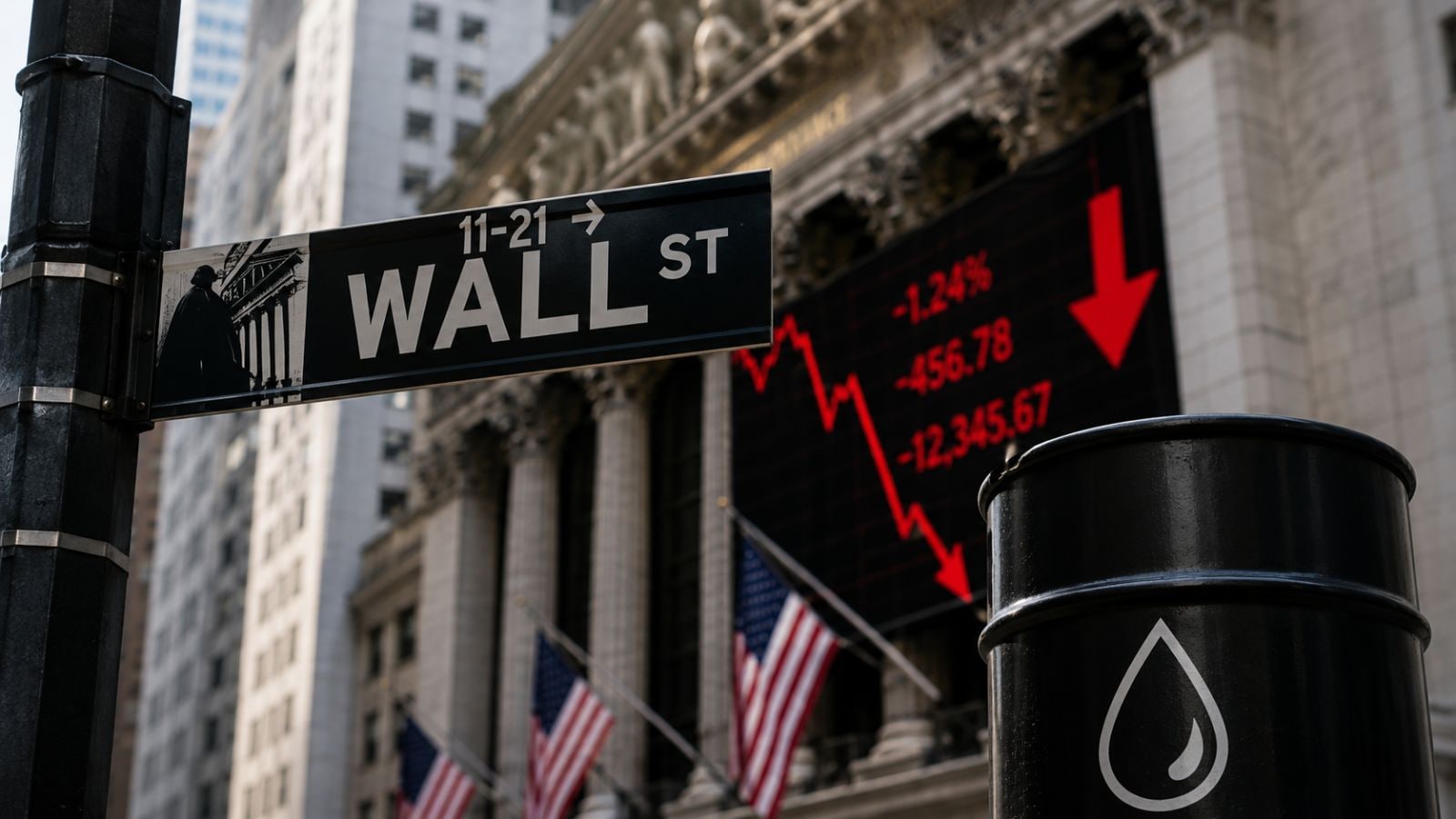
Standard market commentary treats a drop in crude oil below $100 a barrel after an election as a simple victory of peace optimism over conflict fear. That reading confuses headline velocity with structural price formation. When West Texas Intermediate (WTI) and Brent crude slide beneath $100 following electoral shifts and diplomatic signals around the U.S.-Iran conflict, traders are repricing a geopolitical risk premium alongside crowded pre-election positioning, rather than confirming an immediate, permanent return of physical barrels.
This analysis sets out a four-part framework to evaluate post-election crude selloffs: For an alternative look, see: this related article.
- The Risk Premium Decomposition Framework separates physical supply/demand fundamentals from option-like war premiums embedded in front-month futures.
- The Electoral Feedback Loop traces how retail fuel costs shape voter behavior, legislative posture, and executive de-escalation incentives.
- The Chokepoint and Logistics Transmission shows why maritime transit risk, tanker insurance, and refinery margins lag or diverge from headline crude ticks.
- The Tactical Playbook for Energy Consumers and Operators converts price swings into staged procurement, hedging, and inventory rules while acknowledging model limits.
Why Headline Peace Hopes Overstate Supply Relief
Competitor reporting typically links a sub-$100 print directly to "peace hopes" as if negotiations had already unlocked shut-in production or cleared shipping lanes. In commodity markets, price action around binary political catalysts rarely moves in a straight line from war pricing to peacetime equilibrium.
Consider a trader who bought December futures in late October expecting post-election military escalation in the Persian Gulf. When diplomatic channels open or political leaders signal preference for a negotiated off-ramp, that trader does not need a signed treaty to exit; reducing the probability of a tail-risk shock is enough to trigger profit-taking and stop-loss cascades. Related coverage regarding this has been provided by Financial Times.
Known Facts Versus Educated Hypotheses
Separating verified market mechanics from inference prevents false certainty during high-volatility sessions:
- Known fact: Crude benchmarks fell sharply around early November 2026 amid U.S. midterm election dynamics, executive comments on ending conflict, and diplomatic mediation efforts tied to the Iran war that began in late February 2026.
- Known fact: Psychological round numbers such as $100 per barrel cluster option strikes, algorithmic triggers, and risk-limit rules, often magnifying intraday swings once breached.
- Educated hypothesis: A substantial portion of a sudden post-election drop reflects position unwinds and compressed implied volatility rather than a durable shift in global crude balances.
- Educated hypothesis: Talks or conditional proposals around maritime transit can lower near-term war premiums without resolving underlying sanctions, security guarantees, or lingering regional attacks.
The Risk Premium Decomposition Framework
To judge whether a sub-$100 oil price is durable or fragile, decompose observed futures prices into three conceptual components rather than treating crude as a single homogeneous signal.
Base Fundamental Value
Base fundamental value reflects current global liquid fuels supply, commercial and strategic inventories, refinery utilization, and underlying industrial and transport demand. Even during acute conflict episodes, physical flows can adapt through rerouting, stock draws, or demand destruction at high prices. When inventory data or agency assessments point to looser balances—such as rising crude stocks or shifting supply/demand surpluses—the baseline anchors lower.
Geopolitical Option Value
Geopolitical option value acts like an insurance premium on worst-case supply disruptions, such as severe chokepoint closures or damage to major export terminals and energy infrastructure. Because escalation risks are asymmetric—a major disruption can spike prices rapidly while diplomatic progress unfolds incrementally—traders price probabilities across scenarios. Any credible sign of restraint or talks reduces the probability weight on severe supply shocks, compressing the option premium fast.
Positioning and Liquidity Skew
Positioning and liquidity skew capture how leveraged funds, commodity trading advisors, and physical hedgers are skewed entering an event. Ahead of major elections or deadlines, traders frequently build directional longs to protect against weekend or post-vote escalation. When the catalyst resolves without the feared escalation—or introduces a counter-narrative of diplomacy—crowded positioning unwinds all at once, pushing price temporarily below fundamental or medium-term levels.
The Electoral Feedback Loop in Energy Markets
Shallow coverage treats elections and oil prices as two separate stories colliding by coincidence. In practice, energy costs and electoral politics form a two-way feedback loop with measurable policy consequences.
First, elevated crude feeds into retail gasoline and diesel costs, directly touching household budgets and freight expenses. Voters feel pump prices on a weekly basis, turning geopolitical supply shocks into domestic affordability issues.
Second, electoral outcomes alter the political calculus for executives and lawmakers. Shifts in congressional control or post-election assessments of voter frustration over energy costs can increase pressure for diplomatic off-ramps, restrain appetite for prolonged escalation, or shift scrutiny toward war funding and energy policy.
The first limitation of this feedback loop is timing lag. Political signals can move futures screens within minutes, whereas formal diplomatic agreements, sanctions adjustments, or security arrangements take weeks or months and remain vulnerable to sudden reversals.
A second limitation is domestic asymmetry. A U.S. political shift affects U.S. policy levers directly, but regional actors, non-state groups, and third-party mediators operate on their own incentives and security calculations. Markets that assume a domestic vote guarantees regional calm misprice tail risk.
Chokepoints, Spreads, and Downstream Lag
A common analytical error is assuming that lower front-month crude immediately lowers delivered fuel costs across every region and product grade. Several transmission channels break or slow that link.
Chokepoints and Freight Economics
Maritime corridors such as the Strait of Hormuz carry a large share of seaborne crude and petroleum trade. When shipping faces threats, interdictions, or heightened hazard zones, shipowners demand higher war-risk insurance and charter rates, and vessels may take longer routes or face delays. Even if headline crude dips on diplomatic hopes, elevated freight and insurance costs can keep landed crude differentials wide until safe passage is credibly restored.
Benchmark Spreads and Refinery Cracks
Different crude grades and refined products respond unevenly to supply shocks. Regional benchmarks such as Brent and WTI can diverge when transit bottlenecks or export constraints hit one basin harder than another, shifting the Brent-WTI spread. Meanwhile, refined products like diesel and jet fuel depend on regional refining capacity, maintenance schedules, and product inventories—meaning a drop in crude does not automatically compress tight middle-distillate crack spreads.
Retail and Corporate Pass-Through
Downstream fuel prices and corporate logistics bills adjust with a lag. Refiners and fuel retailers work through existing inventory bought at higher prices, hedge books smooth short-term swings, and freight carriers often reset fuel surcharges on weekly or monthly schedules rather than tick-by-tick. Households and logistics managers therefore see relief gradually, and only if crude stays lower long enough to cycle through the supply chain.
Tactical Playbook for Operators and Buyers
Practitioners managing fuel budgets, freight contracts, or commodity exposure should treat a post-election drop below $100 as a re-pricing window, not a guaranteed bottom or top.
- Audit current exposure and hedge ratios. Separate near-term operating fuel needs (the next 30 to 90 days) from multi-quarter commitments so you know how much of your budget is floating versus locked.
- Stagger procurement instead of going all-in. Split purchasing or hedging tranches across multiple sessions rather than deploying full budget on a single sharp down-day driven by headline volatility.
- Track physical spreads alongside futures. Monitor regional benchmark spreads, physical differentials, and diesel/jet crack spreads rather than relying solely on front-month WTI or Brent headlines.
- Define explicit invalidation triggers. Set objective rules for when to add protection—such as a decisive reclaim above $100, renewed attacks on tankers or energy infrastructure, or a breakdown in mediated talks—so emotion does not override risk limits.
Every hedging or procurement rule carries trade-offs. Locking in prices after a sharp drop protects against a sudden diplomatic collapse and renewed price spikes, but sacrifices upside if peace talks advance and supply loosens further. Leaving exposure unhedged captures further declines if risk premiums keep compressing, but leaves balance sheets exposed to abrupt headline reversals. No single rule eliminates basis risk, liquidity gaps, or geopolitical shocks.
Strategic Action
For corporate energy buyers and logistics operators, the highest-value move now is to lock in a baseline layer of near-term fuel and freight costs on post-election dips while keeping dry powder to scale in if diplomatic talks produce concrete de-escalation milestones. Pairing partial downside protection with pre-committed escalation triggers lets teams absorb headline whipsaws without betting the entire budget on either uninterrupted peace or renewed supply shocks.