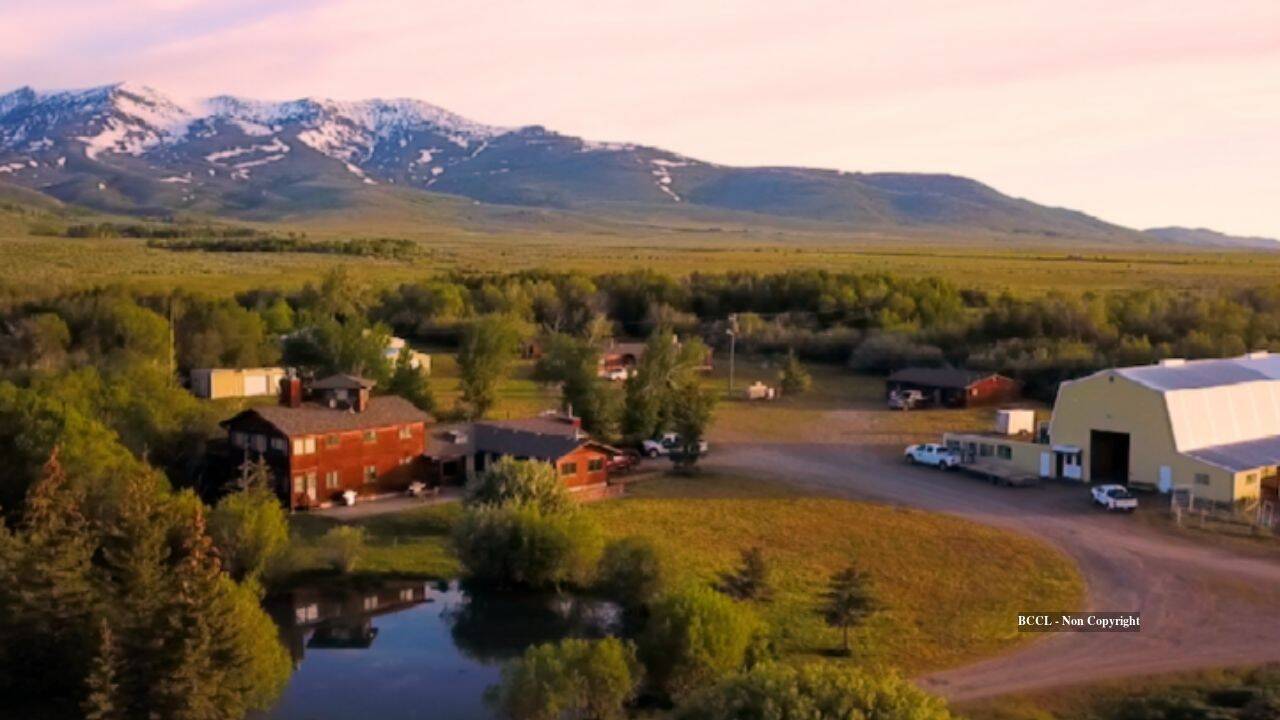
The air out past Reno smells like sun-baked sage and old money. It is a dry, sharp scent that clings to the wool of a sweater long after the sun dips behind the Carson Range. Stand still enough on the acreage once owned by Bing Crosby, and you can almost hear the faint scrape of a golf spike against flagstone, or the brassy swell of a big band echoing off timber beams that have watched the desert shift for nearly a century.
Real estate transactions are usually told in the language of ledgers. Square footage. Acreage. Closing costs. Capital gains. We treat a sprawling estate like a stock portfolio with a fireplace. But timber and mortar hold memory. When a property changes hands for fourteen point two million dollars—as Crosby’s former Nevada ranch recently did—the price tag is just the noise. The real currency is the ghost story left behind in the floorboards.
Consider what happens when an icon builds a sanctuary. In the mid-twentieth century, Bing Crosby was not merely a famous man; he was the soundtrack of the American living room. His voice possessed an effortless warmth that could cut through the static of a postwar world finding its footing. Yet, even the most beloved voice needs a place to go quiet.
He found that quietude in the sprawling expanse of Nevada, far from the flashbulbs of Hollywood and the suffocating demands of the studio lot. This was a place where a man could escape the relentless machinery of his own fame. The ranch was designed for decompression. It was built with heavy stone, rugged timber, and wide porches meant for watching thunderstorms roll across the valley floor.
Walk through the rooms today, and the architecture speaks of an era when luxury meant privacy rather than automation. There are massive hearths designed to swallow entire logs, and windows framed to capture the brutal, beautiful geometry of the high desert. It is easy to picture him there, sitting in a worn leather armchair with a highball in hand, listening to the wind sighing through the pines. He wasn't performing. He was simply existing in a landscape that demanded nothing from him.
Land remembers its owners long after the deeds are transferred to LLCs and trust funds.
Houses absorb the cadence of daily life. They hold the laughter of late-night poker games, the clink of ice in crystal glasses, the hurried footsteps of staff, and the heavy silence of solitude. When a celebrity estate hits the market for millions, buyers are rarely purchasing mere shelter. They are bidding on an aura. They are buying the vicarious thrill of walking the same flagstones where legends once unspooled their vulnerabilities.
Yet, a fourteen-million-dollar price tag creates a strange paradox. It elevates a humble rustic retreat into a trophy asset. The raw, dusty charm that drew Crosby to the region gets filtered through the sterile lens of luxury brokerages, complete with drone footage and glossy virtual tours. The hearths are staged. The history is weaponized as a marketing hook.
But strip away the staging, and the dirt remains.
The Nevada soil doesn't care about market valuations. It doesn't care that a tech titan or a Wall Street dynast just signed the closing papers. The sagebrush continues its stubborn, quiet encroachment. The coyotes still yip at the moon across the ridge. The ghosts of mid-century Americana do not sign over their rights just because a wire transfer cleared.
This is the hidden tax of inhabiting a legendary space. You never truly own a place like Crosby’s ranch. You merely rent it from the history books, keeping the lights on until the next caretaker arrives to write their own chapter in the dust.
As the sun finally drops below the jagged peaks, painting the sky in bruises of purple and gold, the valley settles into its ancient rhythm. The price was paid. The ink is dry. But out here, where the crooner once walked beneath a canopy of desert stars, the true performance never really ended. It just waits for the next listener to walk through the door.