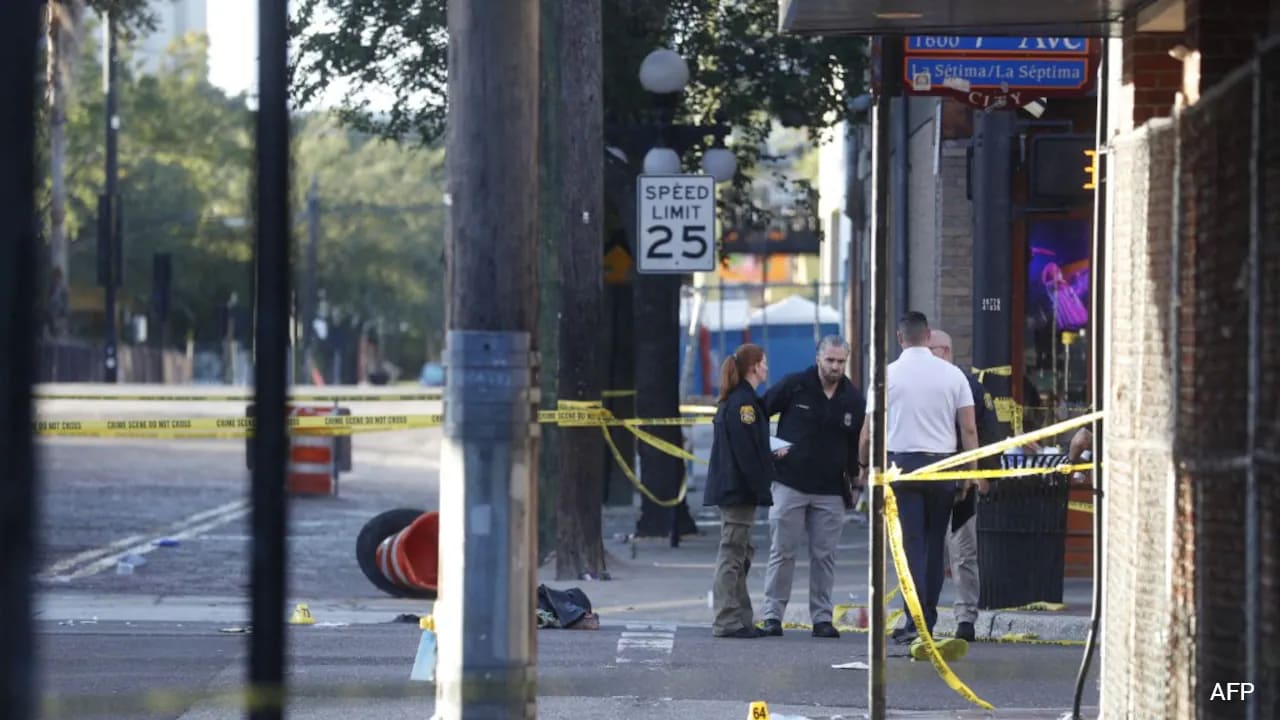
Twelve people shot, including six children, just blocks away from a Florida university campus. When headlines like that drop, the news cycle follows a predictable, exhausting script. Local outlets rush out a 300-word breaking news blurb with basic police scanner details, national networks flash a campus map on screen for forty seconds, and everyone moves on by Tuesday.
That's a massive failure of journalism. Because when gun violence erupts right next to a major college campus—especially when kids are caught in the crossfire—the real story isn't just the immediate police blotter. It's the blurred boundary between university safety bubbles and the surrounding neighborhoods, the legal gray zones of campus carry laws, and how communities actually recover when the sirens fade.
I've spent years analyzing campus crime data and municipal safety policies across the Southeast. Looking closely at incidents like the shooting near a Florida university that left a dozen injured—half of them minors—reveals critical gaps in how we talk about, prepare for, and prevent off-campus violence.
Why "Near Campus" Is the Most Dangerous Blind Spot
Universities love to tout their Clery Act numbers. If you're a parent touring a Florida college, admissions officers will proudly point out how safe the campus proper is, backed by dedicated university police departments, blue-light emergency phones, and strict perimeter patrols.
Here is the catch. Crime doesn't respect property lines.
When a shooting happens a few streets away from a Florida university—whether it's near Florida A&M University in Tallahassee, the University of South Florida in Tampa, or Florida International University in Miami—jurisdiction instantly fractures. University police often don't have primary authority off-campus unless there's a mutual aid agreement. Municipal police departments, frequently stretched thin, take the lead.
That jurisdictional handoff creates a dangerous buffer zone. Students live there. Local families raise their kids there. Community events, block parties, and weekend gatherings happen right in those transition neighborhoods. When an altercation turns into gunfire at a neighborhood gathering near a university, the victims aren't just college kids. They're local elementary and middle schoolers playing down the block.
Six children injured in a single shooting isn't an anomaly in these buffer zones; it's the tragic result of treating campus safety and neighborhood safety as two separate problems.
The Anatomy of Off-Campus Mass Shootings in Florida
Most people hear "mass shooting" and picture a lone gunman stalking hallways. That's not how the vast majority of multi-victim shootings happen in Florida.
Data from the Gun Violence Archive consistently shows that most incidents involving four or more victims stem from interpersonal disputes, neighborhood conflicts, or escalated arguments at social gatherings. They happen on weekends. They happen outdoors. And they almost always involve handguns rather than long rifles.
When twelve people are hit in a single burst of gunfire near a university, you're usually looking at one of two scenarios:
- Targeted retaliation at a crowded event. Someone spots a rival at a block party, park, or off-campus apartment complex and opens fire without caring who is standing in the line of fire.
- Multiple shooters exchanging fire. An argument breaks out, two or three people pull handguns, and dozens of rounds fly in chaotic directions within seconds.
Kids get hit because bullets don't stop at the intended target. In dense residential neighborhoods bordering Florida campuses, stray rounds travel through crowds, parked cars, and thin apartment walls.
The Medical Reality of Pediatric Gunshot Wounds
Treating six shot children simultaneously pushes even top-tier trauma centers to their absolute limit. Pediatric trauma isn't just adult medicine scaled down. Children have smaller blood volumes, meaning they go into hemorrhagic shock far faster than a twenty-year-old college student.
Florida has some of the nation's best trauma networks, like Orlando Health, Tampa General, and Jackson Memorial in Miami. Still, when an ambulance bay suddenly receives a dozen gunshot victims at once—half of them kids—triage protocols shift into overdrive. Surgeons have to make split-second decisions on who goes to the operating room first while pediatric specialists scramble to stabilize tiny airways and manage catastrophic blood loss.
News reports love to use the phrase "non-life-threatening injuries." Honestly, that term is wildly misleading. A "non-life-threatening" gunshot wound to a ten-year-old can still mean shattered bones, permanent nerve damage, colostomy bags, and years of physical therapy.
How University Alert Systems Fail the Surrounding Community
Think about how emergency alerts work during a shooting near a Florida university.
If you're a registered student or faculty member, your phone blows up with text alerts, emails, and push notifications warning you to shelter in place or avoid a specific intersection. The university's communications team locks down campus gates and posts updates on social media.
Now put yourself in the shoes of a mother living two blocks off campus with her three kids.
She isn't enrolled in the university. She isn't on the campus alert list. Unless she happens to be watching local TV or scrolling neighborhood apps at that exact second, she has zero automated warning that an active shooter or armed suspect is running through her backyard.
This communication gap is glaring. Universities have massive technological infrastructure for emergency broadcasts, yet very few partner with city governments to create hyper-local, opt-in geo-fenced alerts for non-student residents living within a one-mile radius of campus boundaries.
Florida's Gun Laws and the Campus Perimeter
You can't analyze a shooting near a Florida university without looking at the state's legal environment. Florida's permitless carry law, which took effect in July 2023, allows anyone legally eligible to own a firearm to carry it concealed without a state permit or mandatory training.
However, Florida Statute 790.115 strictly prohibits carrying firearms on college and university campuses. The moment you step off university property onto a public sidewalk or into a neighboring residential street, permitless carry applies again.
That creates an invisible line with massive legal and practical consequences. Law enforcement officers patrolling the perimeter of a university have to navigate an environment where carrying a concealed handgun is completely legal on one side of the street and a third-degree felony on the other. When an argument breaks out at an off-campus gathering, the barrier to someone having a loaded firearm on their hip is lower than ever, while the legal deterrent against bringing that gun to a crowded street party is practically nonexistent.
What Breaking News Coverage Always Leaves Out
When a local news site publishes a quick hit about twelve people shot near a university, they leave readers with more questions than answers. If you're trying to understand the true impact of an event like this—or evaluate the safety of a campus neighborhood—you have to look past the initial police press conference.
Here is what actually matters in the days following the shooting:
- Ballistics and NIBIN tracing. Did the shell casings recovered at the scene match guns used in previous unsolved crimes in the city? The Bureau of Alcohol, Tobacco, Firearms and Explosives (ATF) uses the National Integrated Ballistic Information Network to link casings across jurisdictions. That tells investigators whether this was a spontaneous dispute or part of an ongoing local feud.
- Victim advocacy and trauma support. Twelve injured victims means dozens of traumatized witnesses, including the friends and siblings of the six shot children. Under Florida's Crimes Compensation Act, victims and their families are eligible for financial assistance covering medical bills, mental health counseling, and lost wages—yet many families never apply because nobody walks them through the paperwork.
- Neighborhood lighting and CPTED audits. Crime Prevention Through Environmental Design (CPTED) looks at how physical spaces enable or deter violence. Poor street lighting, overgrown vacant lots, and lack of security cameras along campus border streets make it easy for shooters to flee undetected.
Practical Steps If You Live, Study, or Raise a Family Near a Campus
Waiting for politicians or university administrators to fix border-zone safety isn't a strategy. Whether you're a student renting an off-campus apartment, a parent sending a kid to college in Florida, or a local resident living near a university, you can take concrete steps right now to protect yourself and your family.
Fix Your Emergency Alert Setup
Don't rely on university texts alone, especially if you live off campus. Download your county's official emergency management app (like AlertTampa, AlertMiami, or Leon County's emergency portal) and enable push notifications for law enforcement activity. Follow the municipal police department's official X (formerly Twitter) account and turn on notifications for their posts—local PDs almost always post active perimeter warnings there before local news stations even dispatch a crew.
Learn Basic Bleed Control
When six children and six adults are shot at once, paramedics take several minutes to secure the scene before entering. Those first three to five minutes determine who survives severe bleeding. Take a free Stop the Bleed course—they're offered regularly through Florida hospital systems and fire departments. Keep a basic trauma kit with a CAT tourniquet and hemostatic gauze in your car's glovebox and your home. Knowing how to pack a wound or apply a tourniquet isn't paranoia; it's basic civic readiness.
Audit Your Immediate Environment
If you're choosing off-campus housing or walking through campus-adjacent neighborhoods at night, pay attention to sightlines and exit routes. Stick to well-lit main corridors rather than cutting through dimly lit apartment complexes or alleys. If you're attending a large outdoor gathering or block party near a campus, position yourself near solid cover—brick walls, concrete planters, or engine blocks of parked vehicles—and always note where the nearest exits are before a crowd gets packed in.
Demand Joint Jurisdictional Patrols
If you live in a university-adjacent neighborhood, show up to city commission meetings and university town halls. Push for formal Interlocal Agreements that allow university police to co-patrol high-density residential blocks bordering campus, funded jointly by the university and the city. Demand that universities extend their emergency text alert opt-in systems to local residents living within half a mile of campus boundaries.
A shooting that injures twelve people and six children isn't just a tragic headline to skim and forget. It's a loud, unmistakable warning that the line between campus safety and community safety doesn't exist—and pretending it does puts the most vulnerable people in the neighborhood directly in harm's way.