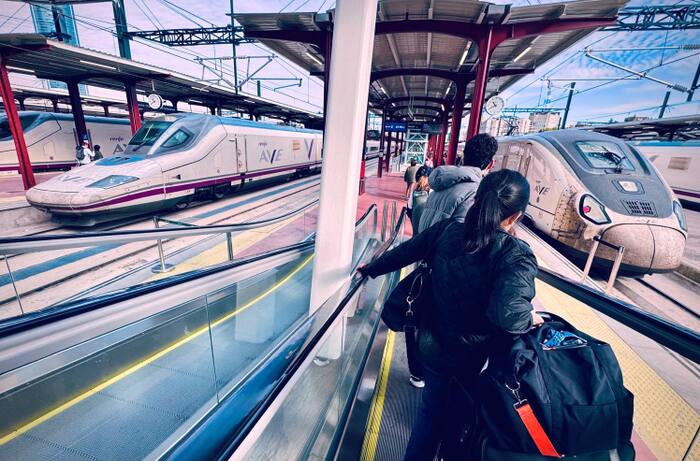
When a Russian drone strike hits a Ukrainian railway hub and kills at least 14 people, the headlines follow a familiar script. Casualty numbers go up. Officials issue condemnations. News cycles move on within forty-eight hours.
That cycle misses the actual story.
Look at why railways keep ending up in the crosshairs of Russian long-range strike campaigns. You can't understand the human toll of an attack like this without understanding what Ukrainian Railways—Ukrzaliznytsia—actually represents to a country at war. It isn't just commuter transit. It's the circulatory system of an entire nation under siege.
Why Train Stations Keep Becoming Targets
Airspace over Ukraine has been closed to civilian flights since February 2022. Every diplomat visiting Kyiv, every ton of grain heading toward border crossings, every wounded soldier moving west for surgery, and every family fleeing frontline towns relies on steel tracks.
I've followed infrastructure targeting patterns throughout this conflict, and one reality stands out immediately. When you hit a station platform or a switching yard, you aren't just damaging concrete and overhead power lines. You're trying to break psychological movement. People gather at stations because they believe schedules still mean something—that a ticket still guarantees an exit from danger.
Russian forces rely heavily on one-way attack drones, most notably Shahed-type unmanned aerial vehicles, alongside guided munitions. Unlike ballistic missiles that trigger nationwide alerts minutes before impact, low-flying drones exploit gaps in radar coverage and overwhelm local air defense batteries through sheer volume.
Here's the problem with protecting rail hubs. You can't put every regional platform under a dense Patriot or IRIS-T umbrella. Ukraine's rail network spans more than 19,000 kilometers of track. Defending every station equally is mathematically impossible, which leaves regional transit points exposed when swarms route through secondary corridors.
The Reality Behind Casualty Counts
Initial reports from Ukrainian officials after a major strike almost always start with a baseline number—like at least 14 dead—before climbing higher as rescue crews clear twisted metal and shattered glass.
Why does that number shift? Because railway stations concentrate civilians in tight, unfortified spaces during specific boarding windows.
Think about what happens in the fifteen minutes before a regional train departs:
- Passengers stand clustered near platforms with luggage, often outside concrete shelter zones.
- Railway workers operate signal boxes, ticket counters, and maintenance equipment in exposed buildings.
- Emergency responders arrive within minutes of the first blast, putting medics and firefighters at risk of secondary strikes.
That last point deserves serious attention. Double-tap strikes—where a second munition hits the exact same location twenty to forty minutes after the first—have repeatedly killed State Emergency Service crews across Ukraine. When local authorities report death tolls from a station attack, those numbers frequently include both commuters waiting for a connection and the first responders who ran toward the smoke.
What People Get Wrong About Rail Resilience
If you only read breaking news alerts, you'd assume a deadly strike on a station shuts down rail traffic for weeks. Honestly, that's rarely how Ukrzaliznytsia operates.
Ukrainian rail crews have earned a reputation among Western logistics analysts for repairing blasted tracks and damaged overhead catenary lines within hours, sometimes while air raid sirens are still echoing nearby. During previous waves of infrastructure attacks, trains were frequently rerouted onto diesel locomotives when electrical substations went dark, keeping timetables moving despite severe damage.
It's a strange contradiction. The physical tracks are remarkably hard to kill permanently, yet the people standing beside them remain terribly vulnerable.
Many outside observers assume stations have deep Soviet-era bunkers capable of holding hundreds of travelers at a moment's notice. Large hubs in Kyiv or Kharkiv have deep metro connections or reinforced underpasses. Smaller regional stations don't. You might have a basic basement cellar or a pedestrian tunnel built decades ago with zero blast reinforcement. When a drone warhead detonates above ground, shrapnel and pressure waves tear straight through glass concourses before people even reach the stairs.
How Drones Changed Air Defense Math
Early in the war, air raid alerts gave civilians a clear signal to move underground. Over time, persistent drone swarms created a dangerous kind of fatigue.
A Shahed-136 or similar loitering munition travels around 185 kilometers per hour. It flies low, hugs terrain, and changes course mid-flight to probe air defense weak spots. A drone tracked heading toward one oblast can bank sharply toward a neighboring rail junction minutes later.
Mobile fire groups—pickups mounted with heavy machine guns, thermal optics, and spotlights—intercept huge numbers of these drones every night. They're effective, cheap, and adaptable. Still, if even one drone slips past layered defenses and dives into a crowded terminal roof, the warhead carries roughly 40 to 50 kilograms of high explosives. Inside an enclosed waiting hall, that blast radius is catastrophic.
International humanitarian law draws a hard line here. Under the Geneva Conventions, attacks must distinguish between military objectives and civilians, and indiscriminate strikes on civilian infrastructure violate core rules of armed conflict. United Nations monitoring missions and organizations like Human Rights Watch have documented repeated strikes hitting rail stations and civilian transit hubs since 2022, pointing out that the presence of dual-use rail lines doesn't erase the legal obligation to protect civilian life.
Looking Beyond the Headline Number
When officials confirm at least 14 people killed at a Ukrainian train station, the number itself can feel abstract if you're reading it thousands of miles away.
Break down what that single strike actually disrupts. Families separated across regions lose their safest route home. Medical evacuation trains have to divert onto slower branch lines, adding critical hours for trauma patients. Grain and industrial freight bottlenecks ripple outward into European rail terminals, driving up transit costs and delaying shipments.
If you want to track verified casualty updates and infrastructure impacts without getting lost in rumor-heavy social media feeds, stick directly to primary reporting channels. Follow official dispatches from Ukraine's State Emergency Service (DSNS), regional military administration briefings, and verified updates from Ukrzaliznytsia's press office, alongside independent verification from the UN Human Rights Monitoring Mission in Ukraine. Cross-checking those sources gives you the clearest picture of what actually happened on the ground once the smoke clears.