Five deaths in Pennsylvania. Nine hundred-plus cases. Another grim press release from the state health department, followed by the usual chorus of shock, blame, and recycled talking points.
Stop staring at the body count. It is the wrong metric. If you enjoyed this piece, you might want to read: this related article.
When headlines frame a measles outbreak around a rising tally of deaths—even tragic ones in Pennsylvania—they hand readers a distorted lens. Measles is not Ebola. Its case fatality rate in high-income countries with modern intensive care is historically low compared to its sheer, brutal contagiousness. Fixating on the death toll as the primary scoreboard invites two predictable failures: people who feel healthy or low-risk shrug off the threat, and loud skeptics waste weeks arguing over whether a patient died with measles or from measles while the virus rips through unimmunized networks.
The real catastrophe is not the headline fatality number. The real catastrophe is the math of transmission, the quiet erasure of immune memory, and the lazy habit of treating state averages like armor. For another look on this event, check out the recent coverage from World Health Organization.
The "Lazy Consensus" Around State Averages
Most outbreak coverage sounds the same. A state reports another death and dozens more infections. Reporters quote officials warning about declining vaccination rates. Commenters argue over politics.
That is lazy consensus. It treats public health like a single national or statewide thermostat.
Suppose a state posts a respectable overall MMR vaccination rate near 90% or higher. On paper, that looks almost safe. In epidemiology, for an airborne pathogen with a basic reproduction number ($R_0$) often cited in the 12 to 18 range—meaning one infectious person in a fully susceptible population can infect roughly 12 to 18 others—the herd immunity threshold sits around 92% to 95%. Even a small gap matters when contact isn't random.
Imagine a scenario where a metro area hits 93% two-dose MMR coverage, yet three tight-knit social hubs—a homeschool co-op, a rural religious community, and a clinic waiting room with delayed infant schedules—sit at 65% coverage. The state average looks calm. Inside those clusters, the fire already has oxygen. Measles does not care about your county line or your statewide average; it moves along social networks, households, pews, and waiting rooms.
I have watched outbreak responses stall for years because leaders policed macro averages while ignoring micro-clusters. You cannot average away a spark sitting on dry tinder.
What People Get Wrong When They Ask "Should I Worry?"
Search bars fill up with predictable questions whenever an outbreak flares: Can vaccinated people still catch measles? How deadly is measles really? Do adults need a booster?
Here is the blunt truth behind those questions, stripped of slogans:
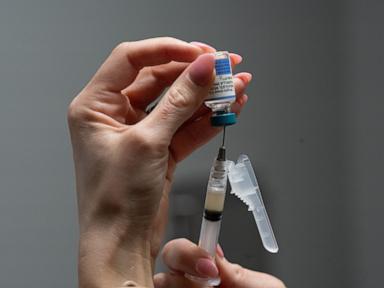
- "Can vaccinated people get measles?" Yes, occasionally, though two doses of the MMR vaccine are roughly 97% effective at preventing infection. Breakthrough cases happen—especially during intense, prolonged exposure or when community transmission is heavy—and they usually run milder. Calling a rare breakthrough case "proof vaccines fail" is like blaming a seatbelt because a crash dented the fender.
- "Isn't measles mostly harmless in healthy kids?" No. Even when most kids recover, measles causes severe complications—pneumonia, encephalitis, dehydration—and hospitalizes a substantial share of infected patients. Worse, measles triggers immune amnesia, wiping out preexisting immune memory against other pathogens for months to years. Surviving measles can leave a child vulnerable to secondary infections they had already fought off or been vaccinated against.
- "Do adults even need to think about this?" Adults born after 1957 who lack evidence of immunity—especially those in healthcare, college settings, international travel, or unverified childhood records—are not automatically safe just because they survived childhood without a rash.
Define the Terms Before You Fight the Fire
Precision matters when noise takes over. Measles-associated death is an epidemiological surveillance category, not a semantic trick to pad numbers. Public health agencies track deaths temporally or clinically linked to confirmed measles infection so investigators can examine contributing factors, underlying conditions, and causes of death—whether the fatal pathway was viral pneumonia, acute disseminated encephalomyelitis (ADEM), or decompensation alongside chronic illness.
Dismissing every death with an underlying condition misses how infectious diseases behave in real populations. Real people have asthma, pregnancy, congenital conditions, or fragile health. A virus that pushes a vulnerable person over the cliff is still the trigger that pulled them there.
Heavy hitters in infectious disease—from long-standing vaccinologists like Paul Offit to epidemiologists tracking global elimination—have pointed out a brutal paradox: success breeds amnesia. When a vaccine works for decades, generations grow up never seeing a child gasping from measles pneumonia or suffering neurological damage. Without lived memory, risk feels theoretical until it walks into your town.
Where My Contrarian Take Can Backfire
Let's be honest about the downside of shifting focus away from the death toll.
If you tell people not to obsess over the death count, some readers will hear, "Oh, so it's not that lethal." That is a real hazard. A lower fatality rate than Ebola or rabies does not make a five-alarm fire harmless—especially for infants too young for routine MMR vaccination, pregnant people, and immunocompromised neighbors who depend on surrounding immunity.
There is also a second risk: over-indexing on clusters can make people outside an active hot spot feel invincible. Measles has an incubation period of roughly 7 to 14 days (sometimes up to 21 days to rash onset) and lingers in the air for up to two hours after an infected person leaves a room. A single exposed traveler can carry a spark across state lines before a single symptom appears.
What Actually Works Instead of Panic or Complacency
Stop arguing in comment sections and run a personal risk audit this week:
- Check actual records, not family folklore. Pull your immunization records or ask your provider about titer testing if your history is unclear. "I think I got my shots" is not documentation.
- Audit your tightest circles. Look at infants under 12 months, pregnant relatives, and anyone undergoing chemotherapy or immunosuppressive therapy in your household or regular gatherings.
- Call ahead before walking into care. If fever, cough, runny nose, red eyes, or a spreading rash shows up during an outbreak, call the clinic or emergency department before entering so staff can isolate safely and protect waiting rooms.
- Fix local access and friction. Outbreaks thrive where convenient appointments, clear guidance, and trust are missing. Practical access beats lecturing every single time.
A headline about five deaths in Pennsylvania tells you the story is already late in the chapter. Watch the cluster math, protect the unprotectable, and act before the spark finds your circle.