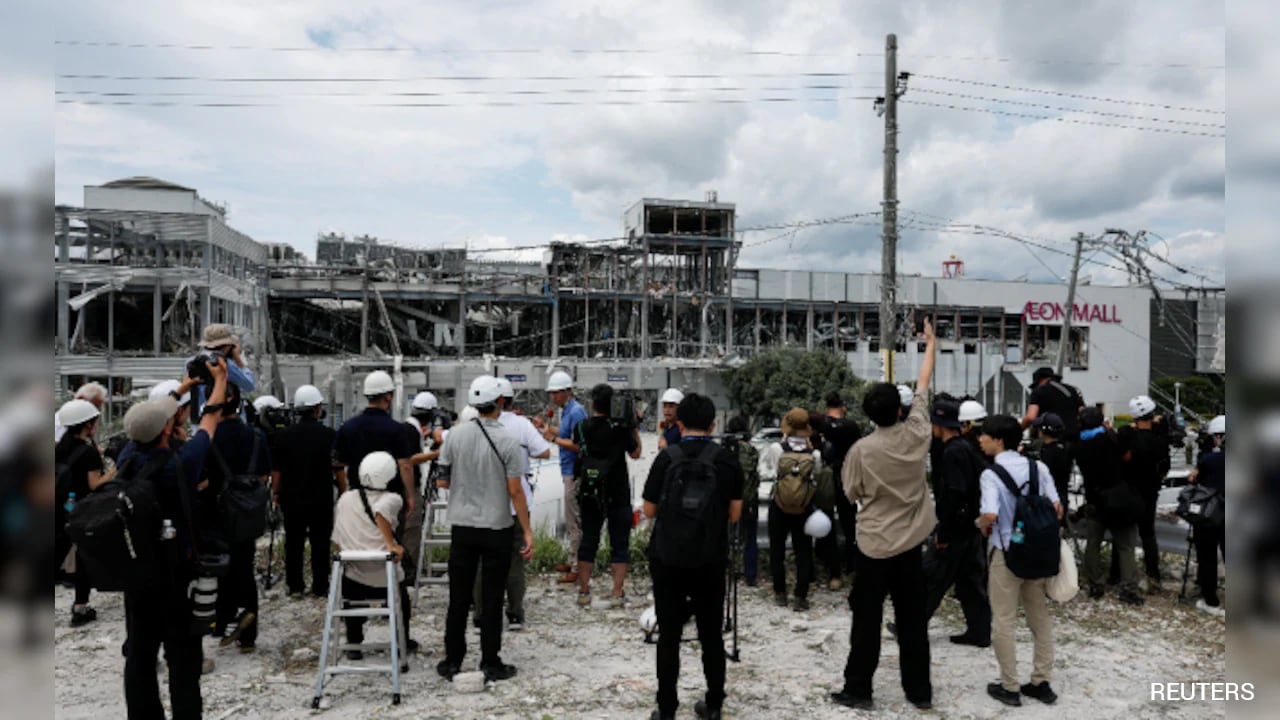
Every time the earth shakes, a predictable script plays out across global newsrooms. The ticker tapes update with morbid fascination. Death toll hits 34. Then 50. Then 100. Journalists breathlessly report every recovered body as if they are tracking points in a high-stakes athletic contest. This is lazy, sensationalist reporting that completely misunderstands how disaster management actually works. Stop obsessing over the running body count. It tells you nothing about the competence of the response, the resilience of the infrastructure, or the truth of what is happening on the ground.
I have spent years analyzing municipal crisis response strategies and emergency logistics. I have watched organizations blow millions of dollars chasing phantom rescue metrics while ignoring the structural failures staring them in the face. The media treats a rising death toll as a breaking news metric. Professionals view it as a lagging indicator of systemic vulnerabilities that were baked into the region decades before the first tremor struck.
The Fallacy of the Immediate Casualty Metric
When a headline screams that the death toll has risen to 34 following a major earthquake, it triggers a visceral emotional reaction. That is the entire point. Fear sells clicks. But let us look at the mechanics of what is actually being measured.
In the immediate aftermath of a seismic event, accurate data collection is physically impossible. Communications are down. Roads are blocked by landslides. Bridges have pancaked. The numbers reported in the first 48 hours are wild estimations cobbled together from frantic local police reports, overwhelmed hospital intakes, and visual assessments from drone footage.
Relying on early casualty numbers to evaluate the severity of a disaster is like trying to gauge the final score of a football game before the teams have even taken the field.
When you treat early estimates as gospel, you create a distorted reality. Emergency resources get misallocated based on rumors rather than verifiable need. Worse, the obsession with counting bodies completely eclipses the metric that actually matters: lives preserved through preventive architecture and rapid logistical mobilization.
What the Lazy Consensus Misses
The standard narrative surrounding earthquakes goes something like this: nature strikes, people die, brave search and rescue teams pull survivors from the rubble, and politicians offer thoughts and prayers while promising stricter building codes.
This is a comforting lie because it frames the disaster as an act of god—a random bolt of lightning that humanity is helpless to prevent.
The truth is much more uncomfortable. Earthquakes do not kill people; bad zoning laws, corrupt contractors, and municipal neglect kill people. Japan is routinely held up as the gold standard of earthquake preparedness, and rightfully so, given their hyper-strict building codes and public drill culture. Yet, every single time a major quake hits, we still see structural failures in older districts, liquefaction in poorly reclaimed coastal land, and elderly residents trapped because evacuation paths were not maintained for an aging demographic.
Focusing on the death count allows local authorities to point to Mother Nature and say, "What could we do?" Instead, we should be interrogating why a magnitude 7 event in one neighborhood causes total devastation while a magnitude 7.5 event three miles away leaves buildings standing proudly. The variable is never the earth. The variable is human engineering and administrative foresight.
The Brutal Economics of Rescue Operations
Let us talk about the search for survivors. It is the most cinematic part of any disaster coverage. Teams with German Shepherds and thermal imaging cameras sift through mountains of concrete. It makes for incredible television.
It is also statistically inefficient.
Survival rates in collapsed structures drop off a cliff after the first 72 hours—the golden period of urban search and rescue. After that, the odds of pulling someone out alive approach zero, barring rare miracles of air pockets and hydration. Yet, political pressure often forces governments to keep expensive, dangerous search operations running long past the point of realistic recovery, purely to satisfy public grief and media optics.
Imagine a scenario where emergency budgets are decoupled from the emotional theater of searching ruins and entirely redirected toward pre-positioned medical supplies, decentralized micro-grids, and automated shut-off systems for gas and power. You would save exponentially more lives. But you would not get the emotional photo-op of a rescue worker carrying a dust-covered child.
Correcting the Record on Seismic Vulnerability
To understand why these disasters continue to exact such a heavy toll, we have to clear away common misconceptions about modern construction.
- "Earthquake-proof" is a marketing myth. No building is truly proof against the raw kinetic energy of tectonic shifts. Structural engineers design buildings to be earthquake-resistant, meaning they are engineered to sway, absorb energy, and crucially, fail gracefully to prevent total collapse. When a building collapses entirely, it is almost always a failure of execution, not theory.
- Older infrastructure is a ticking time bomb. Retrofitting every single residential home built before modern seismic codes is economically impossible. Governments offer subsidies, but individual homeowners simply cannot afford the tens of thousands of dollars required to anchor their foundations.
- Secondary hazards are the real killers. The shaking rarely gets you; the firestorms that follow due to ruptured gas lines do. In the 1923 Great Kantō earthquake, the vast majority of casualties were caused by fire whirls, not the tremor itself.
Why We Must Abandon the Spectacle
If you want to know how well a society handles a disaster, stop reading the daily updates on the rising body count. Look instead at supply chain redundancy. Look at whether hospitals had independent generators that didn't fail. Look at whether evacuation shelters had potable water stored on-site or relied on trucks that couldn't drive through blocked streets.
The media wants a narrative of tragedy and heroism because it keeps eyeballs glued to screens. We deserve better than emotional manipulation disguised as news.
Stop clicking on the running tally. Start demanding accountability for the infrastructure failures that turned a natural geological event into a human catastrophe. The earth will shake again. Whether we treat it as an unpredictable tragedy or a predictable engineering challenge is entirely up to us.