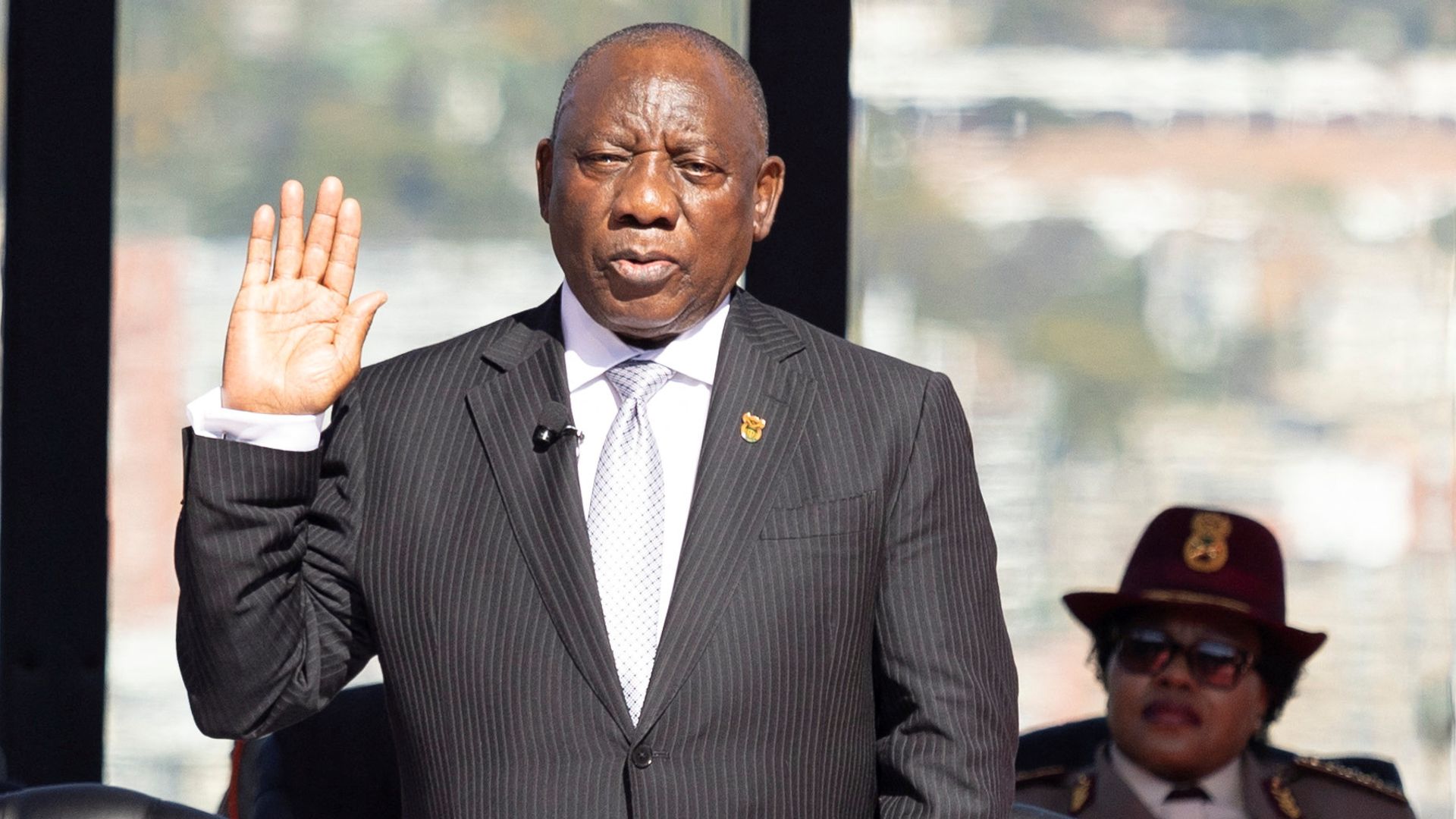
The smell of leather and dust isn't usually the scent of a political crisis. But in the humid air of Limpopo, inside the private sanctuary of a farm called Phala Phala, that scent became the backdrop for a mystery that would eventually threaten the foundations of the South African presidency.
Imagine a quiet afternoon on a sprawling estate. This is Cyril Ramaphosa’s world—a place of prize-winning cattle and silence. It is a far cry from the shouting matches of Parliament in Cape Town or the glass towers of Sandton. Here, the President is a businessman, a breeder of Ankole cows, a man of the soil. But in February 2020, while the world was distracted by the first whispers of a global pandemic, something vanished from this farmhouse.
It wasn’t jewelry. It wasn’t state secrets. It was cash.
Specifically, US dollars. Stashed, according to later testimony, inside the cushions of a sofa.
When the news finally broke two years later, it didn't come from a police report or a government briefing. It came from a disgruntled former spy chief, Arthur Fraser, who walked into a police station with a sworn affidavit that read like a political thriller. The "Phala Phala scandal" was born, and with it, a question that has haunted the South African public ever since: Why would a billionaire president hide a fortune in his furniture?
The Invisible Transaction
To understand the weight of the accusations, you have to look past the surreal image of a cash-stuffed couch. The heart of the matter is about accountability and the shadows where power likes to hide.
The facts, as admitted by the President’s office, are these: a Sudanese businessman named Hazim Mustafa visited the farm in late 2019. He wanted to buy buffalo. He paid $580,000 in cash. Because the farm manager was concerned about the security of the office safe, he allegedly tucked the money into a leather sofa in the President’s private residence.
Then, the money was stolen.
In a normal world, a theft of half a million dollars results in sirens and yellow tape. But at Phala Phala, the silence remained unbroken. No formal police case was opened at the time. No public record of the loss existed. Instead, accusations surfaced that the President’s own security detail tracked the thieves across the border into Namibia, recovered some of the money, and paid the culprits for their silence.
This is where the narrative shifts from a simple robbery to a constitutional crisis. If the money was legal, why wasn't it declared to the South African Reserve Bank within the required thirty days? If the theft occurred, why wasn't it reported through the proper channels? The implication is a heavy one: that the highest office in the land operated a parallel system of justice, one where private losses are settled in the dark.
A House Divided by a Sofa
For the average person living in a township or a struggling suburb, the idea of $580,000 sitting in a couch is more than just a legal technicality. It is a visceral symbol of the gap between the rulers and the ruled. South Africa is a country where "State Capture"—the systematic looting of public funds under previous administrations—left deep, jagged scars. Ramaphosa was elected on a promise to heal those scars, to be the "Mr. Clean" who would sweep out the corruption of the Zuma years.
When the Phala Phala news hit, that image shattered.
The opposition parties seized the moment with a ferocity that turned the National Assembly into a circus of points of order and physical removals. They didn't just see a crime; they saw a betrayal. They argued that by holding undeclared foreign currency and allegedly using state resources to investigate a private theft, the President had violated his oath of office. He had placed his private interests above the public good.
A panel of legal experts, led by a former Chief Justice, eventually looked at the evidence. Their conclusion was a thunderbolt: the President may have committed a serious violation of the constitution. For a few days in late 2022, the air in South Africa was thick with the scent of resignation. Rumors swirled that Ramaphosa was packing his bags, ready to walk away rather than face the humiliation of an impeachment inquiry.
The Weight of the "Buffalo"
But power is rarely surrendered so easily. The African National Congress (ANC), the party of Mandela and the dominant force in South African politics, faced a choice. They could hold their leader to the standard they promised the voters, or they could protect the man who kept the party together.
They chose the latter.
In a dramatic parliamentary vote, the ANC used its majority to quash the report. They argued that the evidence was hearsay, that the President hadn't been given a fair chance to defend himself, and that the "Buffalo" money was a legitimate business transaction, even if the paperwork was messy.
The legal machinery of the state began to turn in his favor. The South African Revenue Service (SARS) found that the tax requirements were eventually met. The Public Protector cleared him of a conflict of interest, stating there was no evidence he was "actively involved" in the day-to-day running of the farm. Even the Reserve Bank concluded that because the "sale" of the buffalo was never technically completed, there was no legal obligation to declare the funds under certain exchange control regulations.
To his supporters, this was vindication. To his critics, it was a masterclass in legal maneuvering—a way to ensure that while the facts remained, the consequences evaporated.
The Human Cost of Silence
Strip away the legal jargon and the parliamentary bickering, and you are left with a story about trust.
Trust is a fragile currency in a young democracy. When a citizen sees a president’s private security allegedly bypassing the police, that citizen loses a little more faith in the local precinct. When a billionaire’s "messy paperwork" is excused while a small street vendor is harassed for a permit, the concept of equality before the law begins to feel like a fairy tale.
The "invisible stakes" of the Phala Phala scandal aren't found in the $580,000. They are found in the cynicism that now colors the South African political landscape. The President survived. He was re-elected to lead his party. He continues to represent the country on the world stage. But the shadow of the couch remains.
Every time he speaks about fighting corruption, the ghost of the Sudanese businessman and the missing dollars sits in the room with him. It is a reminder that in politics, the things we hide in the furniture eventually find a way to the surface.
The Ankole cattle still graze in Limpopo, their massive horns silhouetted against the setting sun. They are beautiful, expensive, and silent. They do not care about exchange controls or constitutional panels. But the people outside the fence care. They remember the smell of the leather and the silence of the robbery. They are still waiting for a story that makes sense.
The presidency continues, but the narrative has changed forever. It is no longer a story of a clean break from a corrupt past. It is a story of a man who, when faced with a crisis in his own home, chose the shadows over the light. And in the long, complicated history of South Africa, those shadows have a habit of growing.