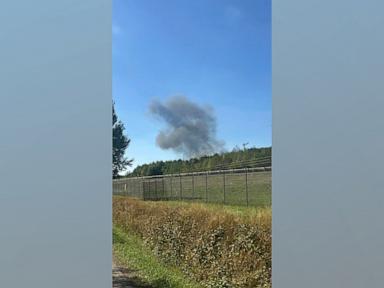
The sudden loss of a single tactical aircraft in European airspace triggers more than immediate emergency response protocols. It exposes the quiet, relentless friction of maintaining a forward-deployed air wing under escalating operational demands. When an American F-16 Fighting Falcon goes down near a major installation in Germany, the official statements from military public affairs offices usually focus on pilot safety, initial rescue operations, and standard investigative procedures. They rarely address the broader structural strains that accumulate across thousands of flight hours, rigorous training cycles, and aging mechanical systems. For decades, the backbone of United States Air Forces in Europe has relied heavily on these multirole fighters to project power, reassure allies, and maintain constant deterrence along contested borders. Yet, every incident highlights a persistent tension between high operational tempo and the physical limits of both machinery and personnel.
The Weight of Continuous Deterrence
Operating tactical fighter jets from European host installations requires a delicate balancing act between diplomatic obligations and combat readiness. Bases such as Spangdahlem have historically hosted squadrons designed to respond within minutes to contingencies across the continent. This permanent posture means maintenance crews, pilots, and support personnel operate under a perpetual state of urgency. Unlike domestic units that rotate through structured training phases, forward-deployed wings face constant pressure to integrate with NATO partners, participate in multinational exercises, and maintain high alert statuses. In other news, read about: Why Fired Federal Scientists Are Doing the Job the White House Won't.
The cumulative effect of this environment alters standard maintenance rhythms. Jets rack up flight hours at an accelerated rate, pushing structural components closer to fatigue limits earlier than projected in original engineering models. When wings are asked to do more with constrained budgets and smaller inventories of spare parts, corner-cutting becomes an invisible hazard. Mechanics face impossible choices when deciding which discrepancy to defer and which to fix immediately. A deferred maintenance item might seem minor on paper—a secondary radar glitch or a non-critical avionics warning—but in a high-stress tactical flight, small distractions compound quickly.
Furthermore, European airspace is among the most congested in the world. Integrating high-performance supersonic fighters into civilian air traffic corridors alongside commercial airliners and cargo carriers demands extraordinary precision from air traffic controllers and pilots alike. The margin for error shrinks significantly when training areas are crowded and weather patterns shift rapidly across the continent. Low-altitude training routes through German valleys and rural districts leave zero room for momentary lapses in situational awareness. Associated Press has analyzed this critical issue in extensive detail.
Mechanical Realities and Airframe Aging
The General Dynamics F-16 first took flight in the 1970s. While modern variants feature advanced radar systems, upgraded digital flight control computers, and structural reinforcement packages, the underlying airframes carry decades of service history. Structural fatigue manifests in microscopic cracks around high-stress areas such as the wing root attachment points, bulkhead joints, and the canopy framing.
Depot-level maintenance schedules are designed to catch these issues before catastrophic failure occurs, but depot capacity across the military logistics enterprise has faced chronic backlogs. When an aircraft spends months waiting for specialized depot maintenance, the remaining fleet must absorb its share of the flight schedule. This accelerates wear and tear across active airframes, creating a vicious cycle of maintenance dependency.
Supply chain vulnerabilities exacerbate the problem. Procuring specialized replacement parts for a legacy airframe that has undergone numerous block upgrades is notoriously difficult. Obsolete components require custom machining or lengthy procurement waivers. Mechanics often find themselves cannibalizing grounded jets for parts to keep flight lines operational—a practice known colloquially as hangar-queen harvesting. While effective as a short-term workaround, it introduces human error risks when components are repeatedly installed, removed, and tested under harsh field conditions.
The Invisible Labor of Crew Chiefs
Behind every flight line departure stands a team of overworked crew chiefs and specialists whose working conditions directly influence flight safety. These young technicians often work twelve-hour shifts in freezing rain, snow, or oppressive summer heat across concrete tarmacs. Their job is to inspect every rivet, hydraulic line, and flight control surface before and after every sortie.
When deployment schedules accelerate, maintenance manpower does not automatically scale upward. Crew chiefs find themselves stretched across multiple aircraft, rushing inspections to meet mandatory launch windows. Fatigue and time pressure create an environment where small oversights can slip past double-check protocols.
The institutional pressure to generate sorties often overshadows the quiet warnings of junior maintainers. If a crew chief flags a recurring hydraulic pressure fluctuation that tests within nominal parameters but feels wrong based on hands-on experience, they risk being overruled by supervisors eager to meet training quotas. This cultural friction between statistical compliance and intuitive field experience represents one of the most dangerous blind spots in military aviation management.
Human Factors in the Cockpit
Beyond the physical machinery lies the human element. Fighter pilots flying frontline missions in Europe operate under intense cognitive load. The modern cockpit of an upgraded F-16 is a data-rich environment. Pilots must process streams of sensor information, manage electronic countermeasures, communicate with command networks, and fly the aircraft simultaneously.
Fatigue is an insidious threat in this environment. Constant deployment rotations, simulator sessions, academic requirements, and irregular flight schedules disrupt circadian rhythms and degrade cognitive performance. When a pilot experiences spatial disorientation or a sudden mechanical emergency at low altitude, human reaction time is measured in fractions of a second. If fatigue has dulled edge-case reflexes, a recoverable emergency can quickly become fatal.
Commanders emphasize safety protocols and risk management checklists, yet the unspoken culture of military aviation often rewards pushing limits. Pilots are conditioned to complete the mission, bring the jet back, and minimize downtime. This cultural expectation can discourage aviators from grounding themselves or flagging marginal aircraft discrepancies until a close call forces the issue.
The Strategic Fallout
Every tactical aircraft loss reverberates beyond the immediate flight line. It prompts immediate safety stand-downs, fleet-wide inspections, and intense scrutiny from congressional oversight committees. Investigators pore over flight data recorders, maintenance logs, and radio transcripts to isolate root causes, whether mechanical, environmental, or human.
Yet, systemic fixes rarely follow. The underlying pressures of global deterrence do not pause for an accident investigation. Air wings are expected to resume flight operations as soon as preliminary safety checks clear the remaining fleet. The structural deficits remain intact, waiting for the next convergence of mechanical fatigue, operational pressure, and environmental stress.
Until defense planners reconcile the gap between strategic commitments and the physical capacity of aging tactical fleets, incidents near European air bases will remain an inevitable byproduct of a military apparatus stretched too thin across an unpredictable world.