The coffee in the breakroom at the TSA checkpoint in Des Moines had gone cold three hours ago. It wasn't the bitter taste that bothered Elias; it was the silence. Usually, the air in the windowless room hummed with the standard gripes about flight delays or the upcoming fantasy football draft. Now, the only sound was the low drone of a television mounted in the corner, broadcasting a silent loop of talking heads in tailored suits.
Elias checked his bank account on his phone. $4.12.
He was a federal officer. He wore the badge. He possessed the authority to pull a traveler aside and change the course of their day. Yet, as the Department of Homeland Security shutdown dragged into its thirty-fifth day, Elias felt less like a guardian of the republic and more like a ghost haunting his own life. He was working forty hours a week for a paycheck that didn't exist, fueled by a sense of duty that was rapidly eroding under the pressure of a looming eviction notice.
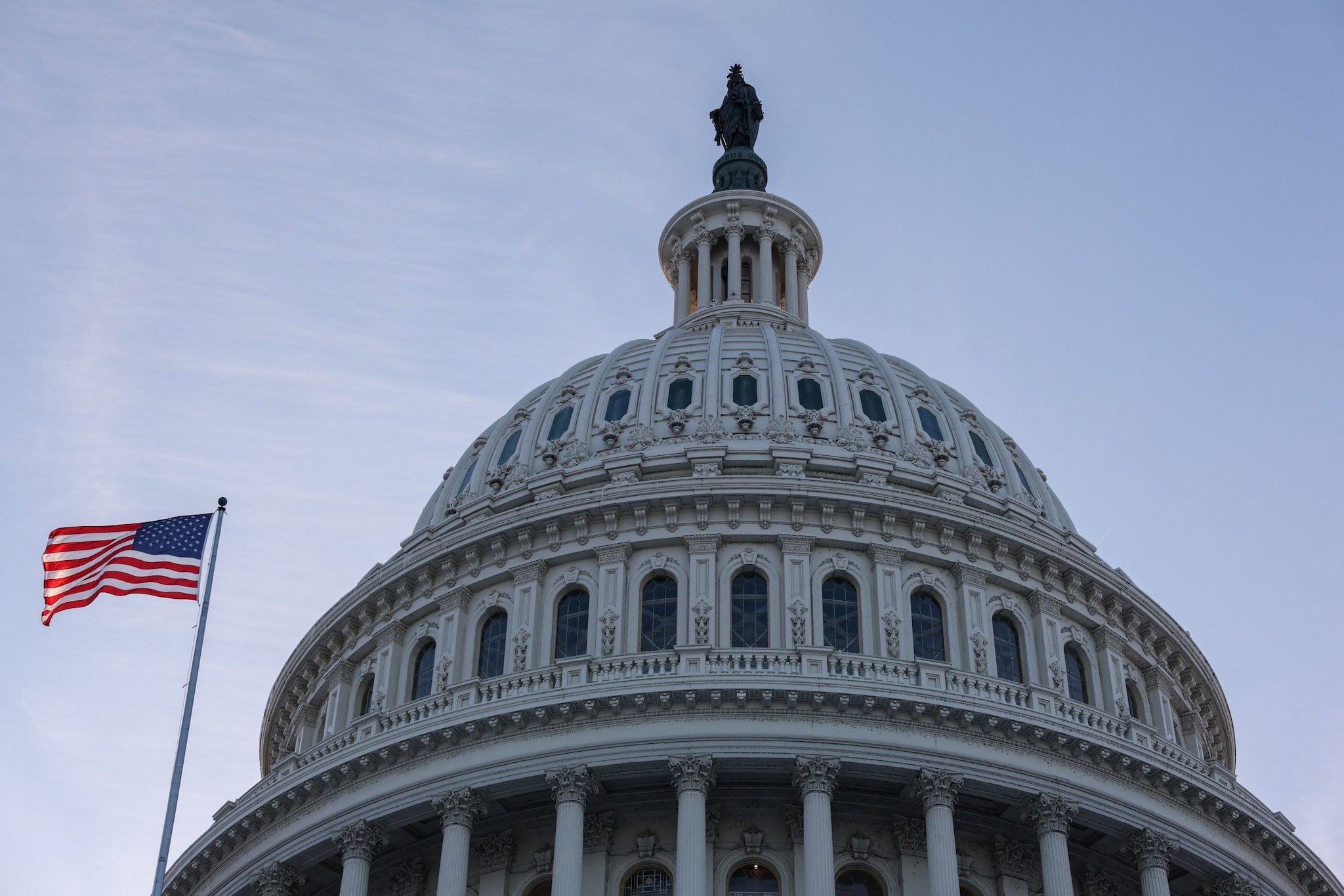
Behind the marble columns of the Senate, the air was different. It smelled of expensive cologne and old paper. While Elias was calculating which bills he could skip without losing his electricity, the men and women who held his livelihood in their hands were locked in a different kind of struggle. It wasn't about rent. It was about leverage.
The Mechanics of a Standoff
To understand why 800,000 people were living in a state of suspended animation, you have to look past the podiums. A government shutdown isn't a mechanical failure. It is a choice. It is a high-stakes game of chicken where the asphalt is made of human lives.
The core of the dispute was a wall. Or a fence. Or a "bollard barrier," depending on which staffer was writing the press release that morning. One side demanded billions for a physical border structure; the other side refused to provide a single cent for what they termed a medieval solution to a modern problem. For five weeks, the two sides had stared at each other across a narrow hallway, waiting for the other to blink.
Meanwhile, the ripples of their obstinacy traveled far beyond the Beltway.
It wasn't just the TSA. It was the Coast Guard sailors patrolling the frigid Atlantic without pay. It was the Border Patrol agents in the high desert, tracking smugglers while wondering if their spouses had enough gas money to get the kids to school. It was the small business owners in D.C. whose lunch counters were suddenly, hauntingly empty.
The logic of the shutdown is a brutal one. It assumes that if you make the public suffer enough, they will eventually scream at your opponent to give in. But the strategists forgot one thing: hunger doesn't make people more political. It makes them more desperate. And desperation is a volatile fuel.
The Breakthrough in the Shadows
The turning point didn't happen on the Senate floor. It happened in a series of quiet, exhausted meetings between a group of centrist senators who had finally realized that the basement was flooding while they argued about the color of the roof.
These "breakthrough talks" weren't born of sudden friendship. They were born of fear.
Air traffic controllers were starting to call in sick. Not because of a flu, but because they couldn't afford childcare or the gas to drive to the towers. When the people responsible for keeping planes from colliding in mid-air can’t pay their bills, the political calculus changes instantly. Suddenly, the "principled stand" looks a lot like a suicide pact.
The senators—a bipartisan coalition of the worried—began to draft a bridge. They looked for the narrowest sliver of common ground. They didn't solve the border wall crisis. They didn't fix the immigration system. They simply agreed to stop the bleeding. They proposed a short-term funding bill that would reopen the department for three weeks, providing a "cool-down" period to negotiate the larger issues without holding Elias’s paycheck hostage.
It was a admission of failure disguised as a victory.
The Invisible Toll
We often talk about the "economic impact" of a shutdown in terms of billions of dollars lost to the GDP. It’s a clean, clinical number. It fits neatly into a bar graph. But you cannot graph the feeling of a father having to tell his daughter she can’t go on the class trip because they need that forty dollars for groceries. You cannot quantify the loss of trust when a person who has dedicated their life to national security realizes they are being used as a bargaining chip.
Consider a hypothetical woman named Sarah. Sarah is a cybersecurity analyst for DHS. Her job is to watch the digital borders, defending against state-sponsored hackers who never take a holiday and certainly don't care about American budget cycles.
During the shutdown, Sarah is "essential." She has to show up. But as the weeks pass, she watches her colleagues in the private sector get bonuses while she's checking the price of eggs at three different grocery stores to save fifty cents. The hackers are still there. They are patient. They are well-funded. Sarah is tired.
When the news broke that the senators had reached a "breakthrough," Sarah didn't cheer. She sighed. A three-week reprieve meant the sword was still hanging; it was just the string that had been reinforced.
The Architecture of the Deal
The deal itself was a masterclass in political maneuvering. It provided a pathway for the President to claim he was still fighting for his wall, while allowing his opponents to claim they hadn't given him a dime of new money for it.
- The Continuing Resolution: A stopgap measure to restore pay and services immediately.
- The Conference Committee: A formal group of lawmakers tasked with hammering out a permanent border security budget.
- The Backpay Guarantee: A promise that the thousands of workers who had been living on credit cards would eventually be made whole.
But "made whole" is a lie. You can't give someone back the sleep they lost. You can't pay back the interest on the payday loans they took out to keep the lights on. You can't repair the institutional knowledge lost when the brightest young minds at DHS decided that a career in public service was too risky for their families' future.
The Human Element
Elias saw the news on the breakroom TV. The "breakthrough." The senators were smiling now, shaking hands in front of the cameras, talking about "bipartisan spirit" and "common-sense solutions."
He looked at his $4.12.
In a few days, the direct deposit would hit. The backlog of bills would be cleared, mostly. He would go back to his post at the metal detector. He would smile at the travelers, ask them to remove their shoes, and tell them to have a safe flight. He would do his job with the same precision as before because that’s who he was.
But the relationship had changed. The veil had been lifted. He knew now that the "security" he was providing was secondary to the political theater of the people he worked for.
The breakthrough wasn't a triumph of statesmanship. It was a temporary truce in a war that had no clear end. As the gates of the Department of Homeland Security creaked open again, the workers walked back in, not with a sense of relief, but with the weary caution of someone returning to a house that had already burned down once.
The senators went home to their dinners. The lobbyists returned to their phones. And in airports and border stations across the country, 800,000 people waited for the other shoe to drop, knowing that in three weeks, the clock would start ticking all over again.
The door was open, but the hinges were screaming.
Would you like me to generate a more detailed breakdown of the long-term economic effects of federal shutdowns on local economies?