A plastic chair in a clinic that smells faintly of bleach and old dust. That is where the reality of global health sits. It does not sit in a boardroom in Seattle or London. It sits with a woman who has walked four miles, holding a feverish child in her arms, only to be told that the clinic ran out of basic antibiotics three days ago.
We tend to look at global philanthropy as a series of oversized checks and press releases. A headline flashes across a screen: a massive sum of money is moving from a billionaire’s foundation to a global initiative. We read the numbers, nod at the benevolence, and scroll on. The figures are too large to comprehend, the geography too distant.
But behind those numbers lies a massive, systemic failure. For decades, the medical world has treated the health of half the planet's population as a niche subcategory.
The Default Human
Consider how we build cars. For a long time, crash test dummies were modeled exclusively on the average male physique. When cars crashed, women died at significantly higher rates because the safety features simply were not built for them.
The same design flaw exists in global medicine.
In the corridors of medical research, the male body has historically been the default setting. From drug dosages to diagnostic criteria, science frequently treated women as smaller men with complicated reproductive systems. This is not just an oversight. It is a fatal flaw in how we approach human survival.
When a woman in a developing nation faces a health crisis, she isn't just fighting a pathogen or a complication. She is fighting an entire infrastructure that was not built with her in mind. If she survives childbirth, she might still succumb to a treatable cardiovascular issue that went undiagnosed because her symptoms did not match the textbook—a textbook written based on male clinical trials.
This is the invisible tax on being born female. And the bill comes due every single day.
Shifting the Gravity of Wealth
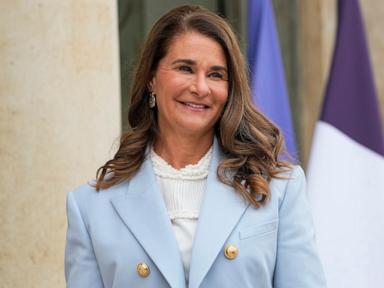
A massive course correction is quietly underway. Melinda French Gates recently announced a $215 million commitment dedicated strictly to improving women’s health globally.
To understand the weight of this move, we have to look past the dollar signs. This isn't just about charity. It is a tactical intervention in a market that has historically ignored women.
Imagine a massive river that has flowed in one direction for centuries, carving a deep canyon. That river is the flow of medical capital, and it has almost always pooled around the needs of the western, male consumer. You cannot change the course of that river by throwing a few stones into it. You need to build a dam. You need massive, disruptive amounts of leverage to force the water into new channels.
That is what a nine-figure injection of capital does. It doesn't just buy medicine; it forces the scientific community to re-evaluate what is worth researching. It funds the labs that study conditions exclusive to women, conditions that have been dismissed for generations as mere "lifestyle inconveniences" or inevitable burdens of life.
The Ripple on the Ground
Let us trace where that money actually goes, far away from the press conferences.
Hypothetically, let us look at a health worker named Amina in a rural district. For years, Amina’s work has been a game of triage. She has a limited supply of basic maternal health kits. She has to decide who gets the clean tools and who has to risk infection. When capital shifts globally, Amina’s clinic gets a steady supply chain.
But it goes deeper than supplies.
The funding targets systemic gaps—things like nutritional deficiencies that cause widespread anemia in adolescent girls, cutting their education short before they even reach adulthood. It funds the development of low-cost, heat-stable medications that don't require a complex refrigerator network to stay viable in equatorial heat.
When a young girl receives proper nutrition and healthcare, her trajectory shifts completely. She stays in school. She enters the workforce. She reinvests her earnings into her family. The economic data on this is ironclad: investing in a woman’s health is the single most effective way to lift an entire community out of poverty. It is a compounding interest machine.
The Skeptic's Corner
It is easy to look at this and feel a sense of cynicism. We have seen wealthy individuals pledge fortunes before, only for the bureaucracy of global NGOs to swallow the impact. Skepticism is healthy here. It is necessary.
The truth is, philanthropy cannot replace functioning state governments. A check for $215 million cannot instantly build paved roads to remote clinics or train tens of thousands of doctors overnight. There is a profound vulnerability in relying on the whims of billionaires to solve problems that should be the fundamental responsibility of global societies.
But we have to look at the world as it exists, not as it should be. Right now, the mechanisms of global governance are slow, bureaucratic, and often paralyzed by political infighting. Philanthropic capital moves faster. It can take risks that governments won't. It can fund the experimental research project that might fail, but could also change everything if it succeeds.
Beyond the Statistics
The real shift isn't just financial; it is cultural. By explicitly earmarking these funds for women's health, it sends a signal to the entire medical ecosystem. It tells the pharmaceutical companies that there is a market, a focus, and a demand for these solutions.
We are moving away from the era where women's health was synonymous only with reproductive care. A woman is not merely a vessel for the next generation. Her health matters when she is a child, when she is a worker, and when she is an elder.
The next time you see a headline about a massive donation, look past the staggering numbers. Think about the quiet rooms where the air is hot and the stakes are life and death. Think about the subtle, profound shift happening when the world finally decides to look at the people who have been kept in the shadows for far too long.
The work is far from finished. The gaps are still wide, and the canyon carved by neglect is deep. But the water is beginning to turn.
A mother walks out of a clinic, her child breathing easily, holding a small package of medicine that did not exist in her village six months ago. She doesn't know the name of the billionaire who funded the research. She doesn't care about the logistics of global supply chains. She only knows that today, the system worked for her.