Cornell Green, a five-time Pro Bowl defensive back who never missed a game across 13 NFL seasons with the Dallas Cowboys and won Super Bowl VI, died on October 21, 2026, at age 86. Taken in the fifth round of the 1962 NBA draft out of Utah State, he never played a minute of pro basketball. Instead, he took a $250 camp flyer in football, played 182 consecutive regular-season games plus 15 playoff contests, and spent decades scouting behind the scenes.
Standard obituaries treat Green's career like a tidy fairy tale. A basketball star walks onto a football field, figures out how to tackle, and becomes an ironman.
That version leaves out the friction. When Green arrived in Dallas in 1962, he had not played organized football since high school, he had been passed over in the NFL draft, and he fully expected to be cut within days. For a young Black athlete in the early 1960s, choosing an unguaranteed football tryout over an actual NBA draft selection was a calculated risk in an era when rosters were tight, travel was grueling, and institutional doors in both leagues were still opening unevenly.
How a Rebounder Ended Up in a Cowboys Stance
Gil Brandt did not stumble onto Cornell Green by accident. Dallas's personnel director was actively hunting outside the conventional football pipeline to build a roster capable of catching up to established NFL powers.
Brandt's premise was straightforward. Athletic movement skills—hip fluidity, vertical leap, lateral quickness, and spatial timing—could be spotted on a hardwood court just as reliably as on a practice field, provided the coaching staff was willing to teach football fundamentals from scratch. At Utah State, Green averaged 22.5 points and 12.7 rebounds across 84 college games, setting program rebounding marks that stood for decades. He was 6-foot-3 and built with the coordination to track a ball in midair without panicking.
"We purposely looked for players with speed. We brought the fast guys in and then some played on defense and some played on offense." — Gil Brandt
Speed and size only get a player through the locker room door. Staying on the roster required surviving Tom Landry's technical demands.
Landry, a former defensive back himself, spent hours molding a player who was raw in coverage assignments, backpedal mechanics, and tackling angles. Green's own recollection of early mistakes had zero ego in it. When receiver Boyd Dowler got behind him for a touchdown and laughed in the end zone after stepping on Green's toe, Green did not sulk—he treated it as tuition in a sport where better men than him had been beaten deep.
The Myth of Effortless Ironman Durability
Playing 182 straight regular-season games in the 1960s and early 1970s sounds like superhuman invulnerability. Look closer at the era and the position, and a more complicated picture emerges.
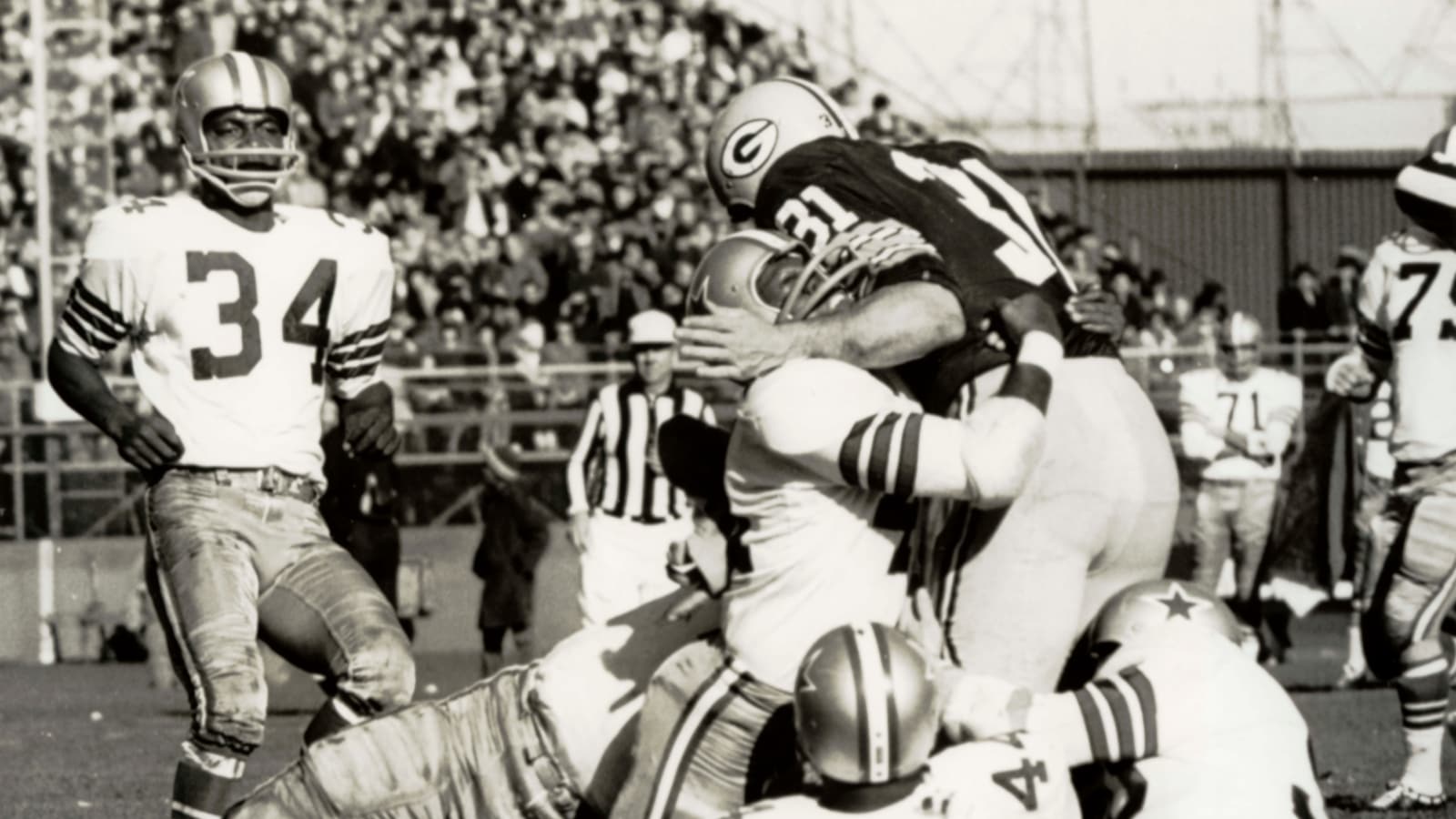
Defensive backs in Green's era operated under rules that allowed far more physical contact downfield than today's game permits. Receivers could be bumped and rerouted, while defensive backs absorbed punishing hits on sweeps, crack-backs, and punt coverage. Yet Green never missed a regular-season or postseason game from 1962 through 1974.
- Position versatility extended his shelf life. Green spent his first eight NFL seasons primarily at cornerback before shifting to strong safety in 1970. Moving inside as he entered his thirties allowed him to use his size, anticipation, and 6-foot-3 frame around the box and deep zones without constantly trading stride-for-stride speed with fresh wide receivers.
- Special teams added hidden value. Green did not merely survive on defense; he set a Cowboys franchise record with 10 career blocked kicks, including eight blocked field goals. Blocking kicks demands timing, leverage, and fearless timing off the edge—traits that transferred straight from basketball shot-blocking and rebounding instincts.
- Durability had a gray area. Not every game on a 182-game streak means playing 100 percent of every snap at full health. Players of that generation routinely taped ankles, took pain management, and played through bruises and strains that would land modern athletes on an injury report. Showing up every Sunday was a badge of honor, even when a player's body was battered.
The counterargument worth weighing is whether modern load management and injury protocols are superior to 1960s toughness. Today's medical standards protect long-term joint and soft-tissue health far better than cold tubs and grit ever could. Still, Green's streak highlights something modern analytics sometimes undervalues: availability compound-interests over a decade. A reliable, disciplined defender who never forces a backup into emergency duty stabilizes an entire secondary.
Why Scouters Like Green Matter More Than Stat Sheets
Most fans remember Green for his 34 career interceptions, his All-Pro selections from 1966 through 1969, and starting in Super Bowl VI when Dallas held Miami to three points. Fewer realize how much of his football life was spent in dark film rooms and small-college gyms long after his cleats were hung up.
Green began scouting for Dallas in 1970 while still an active player, continued full-time with the Cowboys through 1979, and later spent 28 seasons scouting for the Denver Broncos before retiring in 2015 at age 75. Along the way, he helped Denver build multiple championship rosters and earned AFC Scout of the Year honors in 2010.
| Career Phase | Organization / Role | Key Marker |
|---|---|---|
| College Basketball | Utah State (1959–1962) | 1,890 points, 1,067 rebounds, two-time All-American |
| NFL Playing Career | Dallas Cowboys DB (1962–1974) | 182 straight regular-season games, 34 INTs, Super Bowl VI ring |
| Scouting Career | Cowboys & Broncos (1970–2015) | Decades on the road, 2010 AFC Scout of the Year |
Consider a hypothetical scouting scenario in a modern draft room. Analytics models flag a small-school prospect with average combine testing numbers, while a veteran road scout notices the prospect's body language after a bad play, how he communicates on special teams, and whether his movement looks natural under fatigue. That is the exact territory where experienced evaluators earn their keep.
Data tells you what a player did in controlled settings. A seasoned scout who has lived through five decades of the game judges how a prospect handles pressure when the script breaks down.
Family Roots and an Underrated Legacy
Green's athletic pedigree ran deep long before he reached Texas. Raised in a large family in California, he was a brother of Pumpsie Green, who broke the color barrier as the first Black player in Boston Red Sox history. Growing up in that environment meant understanding barrier-breaking up close, even if Cornell rarely sought spotlights for himself.
Teammates nicknamed him "Sweet Lips" for his easy talk in the locker room and "Cornie" on the field, while Hall of Fame defensive tackle Bob Lilly once called him perhaps the most underrated player in Cowboys history. That assessment held up for half a century. Flashy pass rushers and headline quarterbacks usually claim the statues and speeches, while steady cornerbacks and safeties who erase half the field get taken for granted until they are gone.
His passing at 86 closes a direct link to the formative years of modern pro football scouting and defense. For anyone evaluating talent today, his life points to a simple discipline: look past obvious labels, teach fundamentals relentlessly, and value the players who show up every single week.