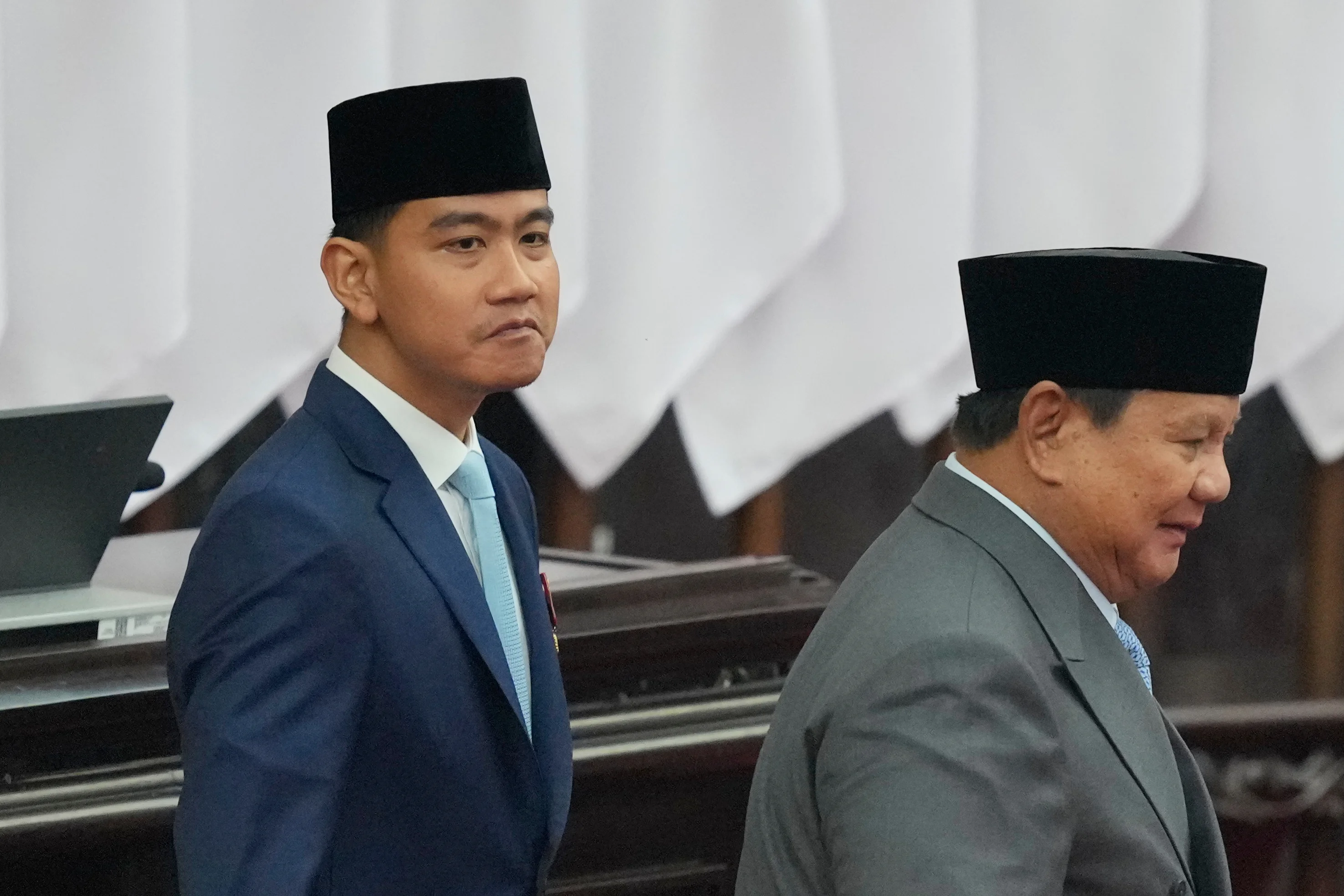
When an executive leader offers a resignation amid eligibility disputes, the event exposes structural vulnerabilities within a nation's constitutional design, judicial independence, and coalition governance. According to the referenced headline—which reports that Indonesia's Vice President has offered to resign as questions mount over his eligibility—the crisis centers on the intersection of legal qualification thresholds and political legitimacy. Because no full source text or verifiable reporting details accompany the headline, this analysis separates the known premise from the institutional mechanisms that govern executive eligibility, resignation procedures, and succession risk in Indonesia's presidential system.
Distinguishing Verified Premises from Unverified Claims
In political risk analysis, treating an unverified headline as established fact creates severe analytical distortion. A rigorous assessment requires partitioning the available information into two distinct categories before evaluating systemic consequences.
- Established Institutional Context: Under the 1945 Constitution of the Republic of Indonesia (UUD 1945) and Law No. 7 of 2017 on General Elections, candidates for President and Vice President must satisfy strict statutory, age, educational, and administrative criteria verified by the General Elections Commission (KPU) and subject to review by the Constitutional Court (Mahkamah Konstitusi).
- Unverified Event Premise: The specific claim that Indonesia's Vice President has formally tendered or offered a resignation over eligibility challenges rests solely on the provided title, with no corroborating primary documents, official presidential palace statements, or People's Consultative Assembly (MPR) records attached to the reference.
Evaluating the mechanics of this scenario therefore requires examining how eligibility challenges operate within Indonesia's legal architecture and why an executive resignation offer functions as both a constitutional trigger and a political bargaining instrument.
The Three Pillars of Executive Eligibility Disputes
Challenges to a sitting Vice President's eligibility rarely emerge from a single administrative oversight. Instead, they develop across three distinct institutional fault lines that determine whether a dispute remains a political talking point or escalates into a constitutional crisis.
1. Statutory Qualification Thresholds
Eligibility for the Indonesian vice presidency is governed by explicit constitutional and statutory rules. Article 6 of the 1945 Constitution mandates that a candidate must be an Indonesian citizen from birth, never have acquired another citizenship by their own will, never have betrayed the state, and be spiritually and physically capable of performing the duties of office. Implementing legislation—specifically the General Elections Law—adds granular requirements regarding minimum age, educational attainment, tax compliance, and absence of certain criminal convictions. Disputes typically arise when critics or litigants contest the interpretation of an exemption, the authenticity of administrative documentation, or the validity of a judicial ruling that altered those thresholds prior to nomination.
2. Judicial Review and Jurisdictional Finality
In Indonesia's electoral framework, pre-election qualification disputes fall under the administrative purview of the KPU and the Election Supervisory Agency (Bawaslu), while post-election disputes over vote counts and certification belong to the Constitutional Court. Once a candidate is inaugurated by the MPR, retroactive challenges to pre-election eligibility encounter a severe jurisdictional bottleneck. The Constitutional Court's rulings are final and binding, meaning a post-inauguration eligibility challenge lacks a straightforward statutory pathway unless new evidence of fraud, forgery, or constitutional violation triggers impeachment proceedings.
3. Political Legitimacy Versus Legal Validity
Legal validity and political legitimacy operate on separate tracks. An official may retain strict legal standing through a prior court decision or administrative certification while suffering rapid erosion of political capital if opposition blocs, civil society organizations, or coalition partners view the qualification process as compromised. When legitimacy deficits widen, legislative cooperation stalls, forcing the executive branch to calculate whether retaining the office costs more political capital than vacating it.
The Mechanics of a Resignation Offer in a Presidential System
In a pure presidential system such as Indonesia's, the Vice President does not serve at the pleasure of the legislature, nor can the President unilaterally dismiss a sitting Vice President. Consequently, an offer to resign carries specific operational mechanics that differ fundamentally from parliamentary systems.
First, an "offer" to resign is legally distinct from a formal resignation. Under Article 8 of the 1945 Constitution, a vacancy in the vice presidency occurs only if the officeholder dies, resigns, is impeached, or is permanently unable to perform their duties during their term. Until a formal instrument of resignation is submitted and processed through the constitutional framework involving the MPR, the Vice President retains full legal authority and constitutional immunity.
Second, a public or semi-public offer to step down functions as a strategic pressure-release mechanism. In coalition politics, signaling a willingness to resign tests the loyalty of supporting parties. If coalition partners refuse to accept the offer and rally behind the incumbent, the executive converts a defensive eligibility crisis into an explicit vote of confidence. Conversely, if key coalition brokers remain silent or quietly endorse an exit, the offer establishes an orderly off-ramp that avoids a protracted, damaging impeachment inquiry.
Third, the timing of an eligibility-driven resignation alters the evidentiary burden. An impeachment process under Article 7A and Article 7B of the 1945 Constitution requires the House of Representatives (DPR) to substantiate specific violations—such as treason, corruption, bribery, other serious crimes, disgraceful acts, or failure to meet the qualifications of office—followed by a Constitutional Court ruling and a plenary vote by the MPR. By offering to resign before formal impeachment articles are drafted, an executive preempts formal judicial fact-finding and preserves negotiation leverage over the transition terms.
Cause-and-Effect Chain of an Executive Vacancy
If a resignation offer transitions into an actual resignation, it initiates a rigid constitutional sequence designed to prevent a power vacuum while simultaneously introducing intense inter-party bargaining.
- Triggering of Article 8 Succession Rules: Upon formal resignation, the vice-presidential seat becomes vacant. Unlike the United States system, where the President nominates a replacement subject to congressional confirmation, Indonesia's Constitution assigns the nomination power to the President while granting the election authority to the MPR.
- The 60-Day Constitutional Clock: Under Article 8(2) of the 1945 Constitution, if a vacancy occurs in the office of the Vice President, the MPR must hold a session within 60 days to elect a successor from two candidates proposed by the President. This strict two-month window compresses coalition negotiations and forces rapid alignment among party leaders.
- Realignment of Coalition Leverage: Because the President must submit two candidates to the MPR—a body composed of all members of the DPR and the Regional Representative Council (DPD)—the President cannot install a successor without legislative consensus. Coalition partners gain immediate leverage, demanding cabinet reshuffles, policy concessions, or institutional control in exchange for backing one of the two nominees.
- Policy Paralysis During Transition: During the 60-day selection window, legislative bandwidth shifts from fiscal and regulatory execution to succession lobbying. Ministries aligned with rival factions slow down major procurement or regulatory approvals until the new balance of power within the executive branch is settled.
Institutional Risks and Analytical Limitations
Applying constitutional mechanics to a developing political headline carries inherent limitations that analysts must account for when modeling outcomes.
- Information Asymmetry: Without verified reporting confirming the exact legal basis of the eligibility dispute or the formal status of the resignation offer, external observers cannot distinguish between a tactical political feint and an imminent constitutional transition.
- Institutional Precedent Constraints: Indonesia's post-Reformasi constitutional amendments have rarely been tested by a mid-term vice-presidential resignation driven by pre-election eligibility questions. Historical precedent from the 1998 and 2001 transitions occurred under different constitutional provisions and political dynamics, limiting their predictive utility for current MPR voting behavior.
- Informal Coalition Dynamics: Written constitutional rules define the boundaries of succession, but actual outcomes in Jakarta depend heavily on informal consensus-building (musyawarah) among party chairs. A legally viable candidate can fail if excluded from backchannel agreements, while a controversial figure can survive if coalition arithmetic favors stability over disruption.
Strategic Framework for Monitoring the Dispute
To evaluate whether an eligibility dispute and resignation offer will escalate into a formal succession event, institutional observers and risk analysts should track four concrete indicators rather than relying on initial political rhetoric.
- Formal Submission to the MPR Leadership: Monitor whether a signed letter of resignation is transmitted to the leadership of the People's Consultative Assembly. Until formal transmission occurs, the executive remains legally in office and the 60-day succession clock does not start.
- DPR Plenary Motions for Inquiry: Track whether members of the House of Representatives initiate formal inquiry rights (hak angket) or draft impeachment petitions under Article 7B. Legislative inaction indicates that parties prefer a negotiated political settlement over a judicialized constitutional battle.
- Presidential Coalition Positioning: Observe public statements from the chairs of the largest governing coalition parties. Coordinated defense of the KPU's original certification signals containment, whereas calls for "institutional clarity" or "respect for legal processes" indicate that partners are preparing to extract concessions in a succession bargain.
- Constitutional Court Docket Filings: Check for new petitions seeking judicial review of the underlying statutory provisions governing vice-presidential qualifications. While the Court cannot retroactively overturn an inauguration through standard review, new filings create legal friction that sustains public scrutiny and erodes executive legitimacy.