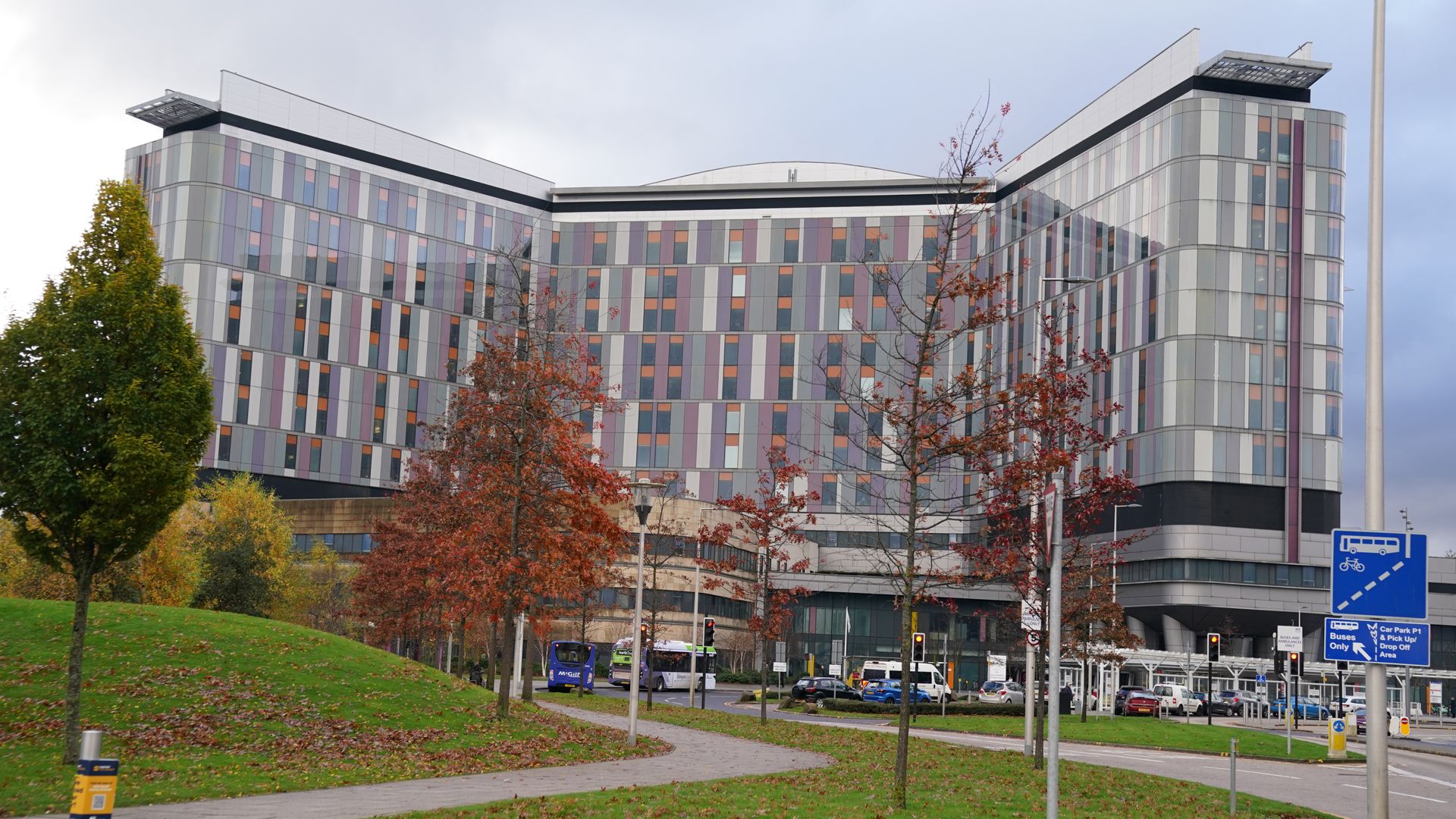
The First Minister stands at a podium and says he is "confident" in hospital safety despite revelations of dirty, contaminated water systems. It is the classic political sedative. It is designed to stop you from asking questions that might actually fix the problem.
Confidence is not a metric. Confidence is a PR strategy used when the engineering has already failed.
When a leader says they are confident in a facility where the water is demonstrably unfit for purpose, they aren't talking about microbiology. They are talking about liability management. The "dirty water" headlines are just a symptom of a much deeper, more systemic rot in how we view healthcare infrastructure. We treat hospitals like hotels with stethoscopes. In reality, they are massive, decaying biological processors that we have neglected for decades.
The Myth of the Sterile Environment
The lazy consensus suggests that "dirty water" is an anomaly—a freak occurrence or a localized maintenance lapse. This is a lie.
Modern hospitals are breeding grounds for pathogens by design. We have created a perfect storm: miles of complex piping, fluctuating water temperatures, and a patient population with obliterated immune systems. When you see a report about Legionella or Pseudomonas in a new hospital wing, don't blame the janitor. Blame the architects and the bean-counters who prioritized aesthetic "healing environments" over the brutal realities of fluid dynamics.
I have stood in utility basements of billion-dollar facilities where the "cutting-edge" filtration systems were bypassed because they were too expensive to maintain. I’ve seen pipes dead-leg—where water sits stagnant for weeks—because a ward was redesigned but the plumbing wasn't. This isn't a "safety lapse." It is built-in obsolescence.
The political class wants you to believe that "confidence" is enough to bridge the gap between a broken system and a safe one. It isn't. Safety is a product of relentless, expensive, and deeply unsexy engineering. If the water is brown, the system is failing. Period.
Why Hospital "Confidence" is a Biohazard
Public health officials often rely on the "acceptable risk" argument. They claim that while the water might be substandard, the risk to the average patient is low. This logic is predatory. It relies on the fact that most people won't get sick, allowing the institution to ignore the few who do.
Let’s look at the math of a contaminated water system. If a hospital has a $10^{-6}$ risk of infection per patient-day, that sounds great on a spreadsheet. But in a 1,000-bed facility, that is a statistical certainty of infection every few months. When you add dirty water to the mix, that exponent shifts.
The "confidence" being sold by the First Minister is a shield against the massive capital expenditure required to actually fix the plumbing. It is cheaper to issue a press release than it is to rip out three miles of copper piping and replace it with antimicrobial alloys.
The Dead-Leg Trap
Most people don't understand how a hospital actually works. They think if the tap runs clear, it's fine.
The Stagnation Problem
Hospitals are rarely at 100% capacity in every single room simultaneously. This leads to "dead-legs"—sections of pipe where water doesn't move. Bacteria don't just float in water; they build cities called biofilms on the inside of the pipes. Once a biofilm is established, you can flush the system with chlorine until the pipes melt and you still won't kill everything.
The Temperature Paradox
To save energy and prevent scalding, hospitals often keep water temperatures in a "lukewarm" zone. This is the biological equivalent of a five-star resort for Legionella.
When the government says they are "monitoring the situation," they are literally watching the bacteria grow. Monitoring is not mitigation. You cannot "monitor" your way out of a structural failure.
Stop Asking if it’s Safe
The public and the press are asking the wrong question. They ask, "Is the hospital safe?"
The answer is always "No." No hospital is "safe." It is an inherently dangerous place where we concentrate the sickest people and the most resistant bacteria.
The question we should be asking is: "Why are we prioritizing political optics over mechanical integrity?"
I've seen millions poured into "patient experience" consultants—people who pick out the right shade of blue for the curtains—while the HVAC and water systems are held together with prayers and duct tape. We are decorating a sinking ship.
If a First Minister were actually serious about hospital safety, they wouldn't express "confidence." They would express "outrage." They would be firing the contractors who signed off on faulty builds and demanding a total audit of every linear foot of infrastructure.
The High Cost of Cheap Solutions
The "lazy consensus" says we just need better cleaning protocols. This is a distraction. You can't scrub the inside of a pipe buried behind a structural wall.
The industry insiders know the truth: we are facing an infrastructure cliff. Most of our "modern" hospitals were built on the cheap during various construction booms. They used inferior materials and rushed the commissioning process. Now, the bill is coming due.
Contaminated water is just the first leak in the dam. Next, it will be air filtration. Then, it will be the structural integrity of the "fast-build" wards.
The government’s "confidence" is a gamble. They are betting that the number of people who die from hospital-acquired infections (HAIs) linked to the water won't exceed the political cost of a massive, multi-billion dollar renovation project. It’s a cold, calculated trade-off.
Demand the Blueprint, Not the Brand
Next time a politician tells you they are "confident" in a facility with known contamination, ask for the following:
- The Biofilm Report: Not a water sample (which is easy to fake by flushing the tap first), but a physical swab of the interior pipe walls.
- The Flow Dynamics Map: Prove that there are no dead-legs in the system.
- The Capital Replacement Schedule: When is the plumbing actually being replaced, not just "treated"?
If they can’t provide those, their confidence is a lie.
We have to stop accepting "confident" as a substitute for "functional." If the water in your home was brown, you wouldn't be "confident" in your house; you’d call a plumber and refuse to pay your mortgage. Why do we have lower standards for the places where we go to survive?
The status quo is a slow-motion catastrophe. We are treating the symptoms of a dying infrastructure while the patient—the public—is being told everything is fine.
Stop listening to the podium. Look at the pipes.