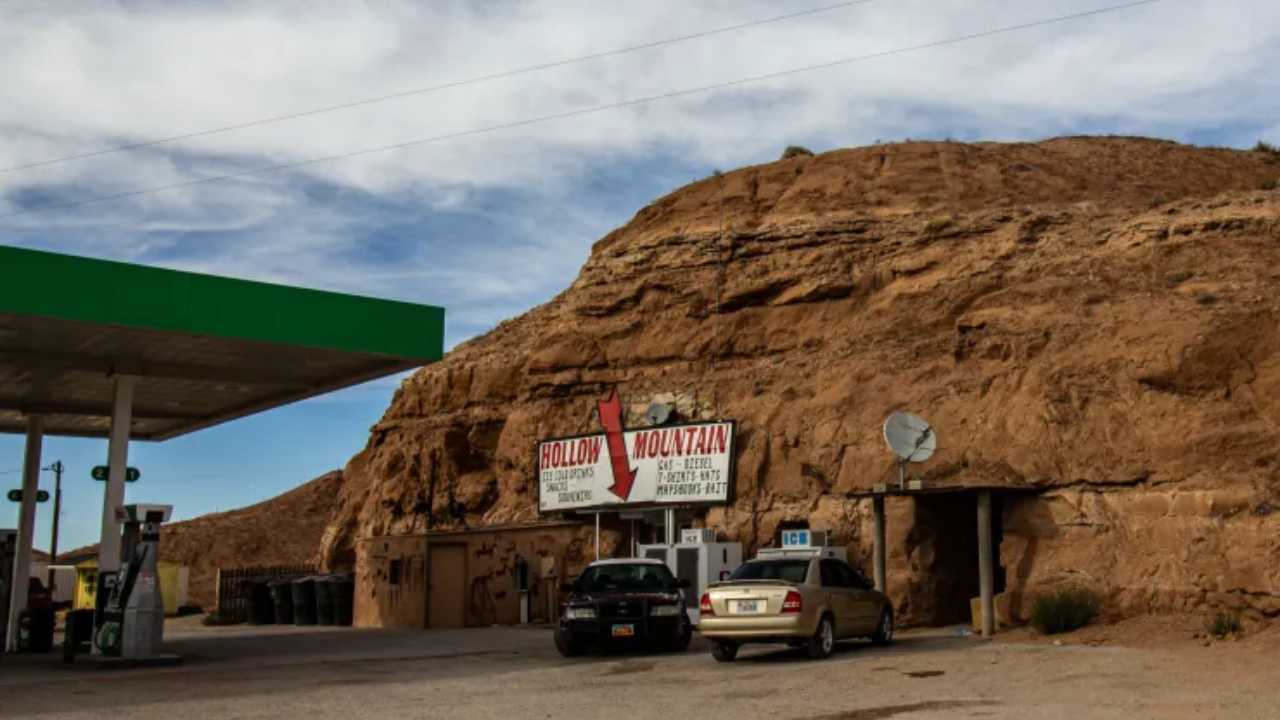
In 1964, a self-reliant Utah businessman named Dean Brimhall erected a modern service station and tourist lodge right against the towering sandstone walls of Capitol Reef, sparking a protracted land war with the federal government that culminated in a $400,000 buyout and the total obliteration of the property. Long before ecotourism was a boardroom buzzword, this corridor of Wayne County was a battleground where private enterprise collided head-on with an expanding preservationist state. The narrative is usually framed as a simple victory for conservation. It was actually a messy, stubborn collision of egos, paving asphalt, and mineral rights.
To understand why a gas station and a commercial stone quarry managed to trigger a multi-year federal offensive, one has to look at the peculiar geography of Wayne County. Mormon pioneers had settled the fertile Fremont River corridor around 1880, planting orchards and carving out homesteads in a place called Fruita. When President Franklin D. Roosevelt carved out Capitol Reef National Monument under the Antiquities Act in 1937, he threw a protective blanket over roughly 37,000 acres.
Yet, blankets have holes. Private land claims, mining parcels, and homestead rights remained scattered across the map like unexploded ordnance.
For decades, the region was isolated. Local ranchers and merchants lobbied for better roads precisely because isolation kept them impoverished. They believed federal designation meant paved highways, and paved highways meant paying customers. When Utah State Route 24 was finally paved through the Fremont River Canyon in 1962, traffic surged almost overnight. Drivers needed gas. Tourists needed lodging. Dean Brimhall saw an economic opening and took it, building his service station on private land entirely surrounded by federally managed monument territory.
The Escalation into Heavy Machinery
A gas station alone might have remained a persistent administrative annoyance. Brimhall, however, did not stop at pumping fuel.
His operations expanded into industrial stone quarrying. Heavy machinery began ripping into the sandstone and gravel deposits right next to pristine public lands, introducing industrial noise, dust, and visual scars to a landscape the National Park Service was mandated to protect. Federal land managers watched gravel trucks kick up dust clouds beneath the majestic cliffs of the Waterpocket Fold with mounting alarm.
To the Park Service, the quarry was an existential threat to the aesthetic and biological integrity of the monument. To Brimhall, it was the exercise of legitimate property and mineral rights on private acreage he had every legal right to exploit.
Bureaucratic friction quickly morphed into open regulatory warfare. Citations were issued. Compliance meetings stalled. The Department of the Interior realized that as long as private landowners held industrial trumps inside the park boundaries, the conservation mission was compromised. A precedent was forming, and it pointed toward total land consolidation.
The Cost of Erasure
Years of legislative gridlock and legal posturing finally ended when the federal government forced a buyout. The Department of the Interior shelled out $400,000 to acquire the entire parcel, capturing the land, the commercial buildings, the business assets, and the underlying mineral claims.
Then came the razing.
Crews did not repurpose the structures for park administration. They demolished the tourist lodge, tore down the petrol pumps, dismantled the service station, and permanently closed the quarry. Earthmovers regraded the terrain, smoothing over the scars so that native desert vegetation could reclaim the floor of the Fremont River corridor.
Today, visitors driving along Route 24 see rustling cottonwoods, sheer red rock, and silent expanses. There are no remnants of the commercial hub that once promised to turn Wayne County into a motorized pit stop. The physical erasure was total.
What remains is a quiet reminder of how violently the American West negotiated its dual identities. One side saw a majestic wilderness requiring absolute defense against commercial encroachment. The other saw an open frontier where private initiative and hard work earned a permanent stake in the dirt. When the two clashed, the federal checkbook wrote the final sentence, turning a businessman's concrete investment back into windblown sand.