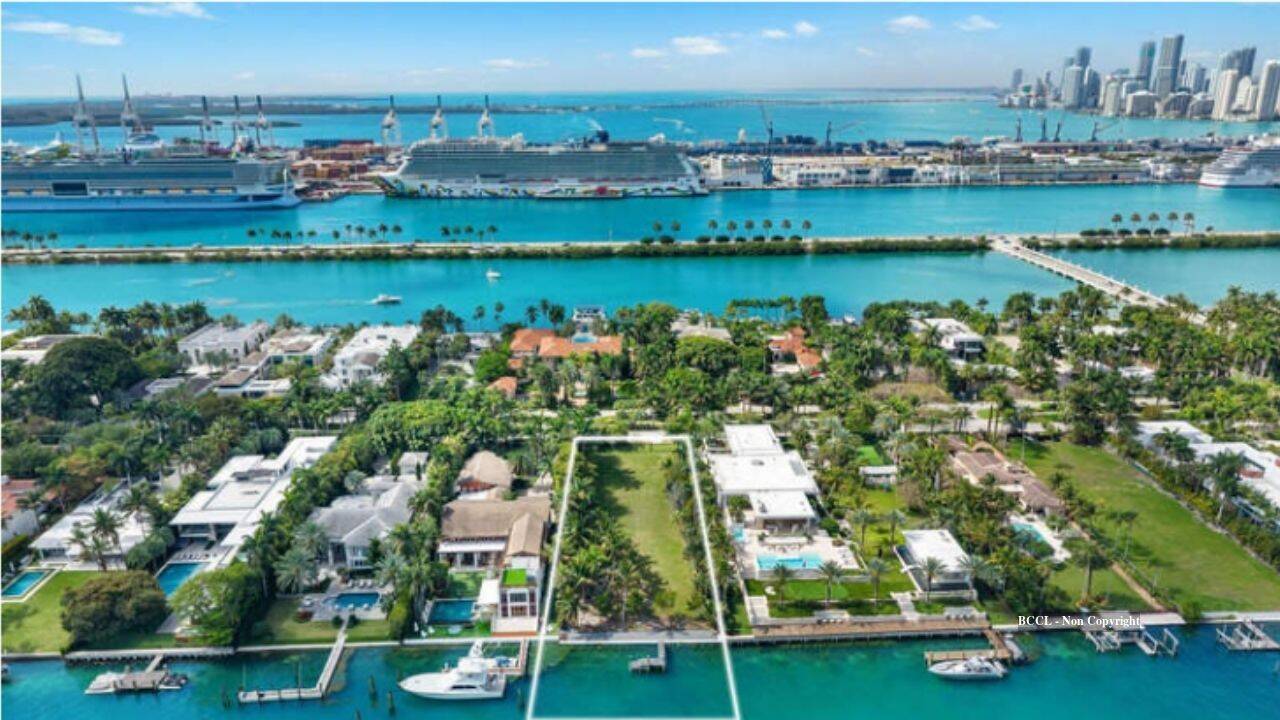
The sea salt on Palm Island has spent nearly a century eating away at the mortar, but it refuses to let go of the ghosts.
If you stand at the edge of the water where the Biscayne Bay laps against the seawall, you can almost hear the low, throaty rumble of a 1928 Cadillac V-8 idling in the drive. You can smell the Virginia tobacco smoke hanging heavy in the humid night air. This was the fortress. Not a home, exactly, but a bunker disguised as a Mediterranean revival mansion, complete with seven-foot-thick perimeter walls, a guard tower that commanded the approach from the MacArthur Causeway, and a private dock where rum-runners could offload their midnight cargo far from the prying eyes of federal agents. Meanwhile, you can find other events here: Why Your Fall Reset Keeps Failing and How to Fix It.
Al Capone did not buy a house on Miami Beach to retire. He bought a stronghold.
He wanted to look out over the turquoise water, feel the ocean breeze on his face, and pretend for a few hours that the blood on his hands could be washed clean by the tide. The public hated him, feared him, and secretly romanticized him. Yet inside those gates, behind the yellow stucco and the Spanish tile, the man who ordered the St. Valentine's Day Massacre spent his final years coughing up blood from late-stage neurosyphilis, half-mad, arguing with phantoms in an empty courtyard. To see the full picture, we recommend the detailed article by Apartment Therapy.
Now, the concrete ghost has finally traded hands for twenty-one million dollars.
For decades, the estate sat as a bizarre pilgrimage site for the curious and the morbid. Tourists would idle their rental cars outside the wrought-iron gates, squinting through the hibiscus bushes to catch a glimpse of the pool cabana where Capone allegedly plotted the eradication of rival bootleggers. Developers circled the property like sharks smelling copper in the water. They wanted to bulldoze it. They wanted to wipe away the concrete and replace it with a gleaming, glass-box spec mansion tailored for a crypto billionaire or a tech baron who wanted to sip champagne where a mob boss once coughed his lungs out.
Heritage preservationists fought back, of course. They argued that even dark history is history. You cannot simply sanitize a city by knocking down its scars.
Consider what happens when we erase these monuments. We do not destroy the memory of the violence; we destroy the physical reminder of our own capacity for building empires out of chaos. Capone’s estate was never just real estate. It was a physical manifestation of America's enduring romance with the underworld. We love the outlaw until he is at our throat, and then we turn his living room into a museum piece before selling it off to the highest bidder for a sum that would have funded the entire Chicago Outfit for a decade.
The new owner inherits more than just a prime slice of Miami waterfront. They inherit a century of American anxiety.
To understand the true weight of a twenty-one-million-dollar transaction on Palm Island, you have to look past the spreadsheets and the zoning permits. You have to look at the way Miami itself has transformed from a swampy playground for smugglers into a glittering, hyper-inflated metropolis where the past is routinely dynamited to make room for the future. Every square foot of sand is priced at a premium, and yet, ghosts are notoriously difficult to evict.
When the wrecking balls finally arrived—or didn't, depending on how much of the original structure survived the latest round of controversial renovations—they chipped away at walls that had absorbed the whispers of Chicago's most infamous son. Workers found old copper plumbing, rusted reinforcement bars, and hollow spaces behind the masonry where contraband might have once rested. Every swing of the hammer was a dialogue with the dead.
We tell ourselves that real estate is about square footage, ocean views, and capitalization rates. It is not. It is about narrative real estate. People do not pay twenty-one million dollars for a plot of dirt and some old bricks because they like the neighborhood. They pay for the alchemy of association. They want to touch the hot stove of history without getting burned.
Al Capone is long gone, buried quietly in a Chicago cemetery after dying of cardiac arrest in the Palm Island master bedroom in 1947. The federal government couldn't pin the murders on him, and tax evasion finally brought him low, but the house remained as his truest monument: fortified, impenetrable, and rotting from the inside out.
The gates are locked once more. The money has changed hands. The modern world has reasserted its claim over the bay, pouring concrete floors that will support minimalist Italian kitchens where illicit whiskey once sat stacked to the ceiling.
Yet, as the tropical dusk settles over the water and the neon lights of South Beach begin to bleed into the horizon, the old concrete remembers. It always remembers.