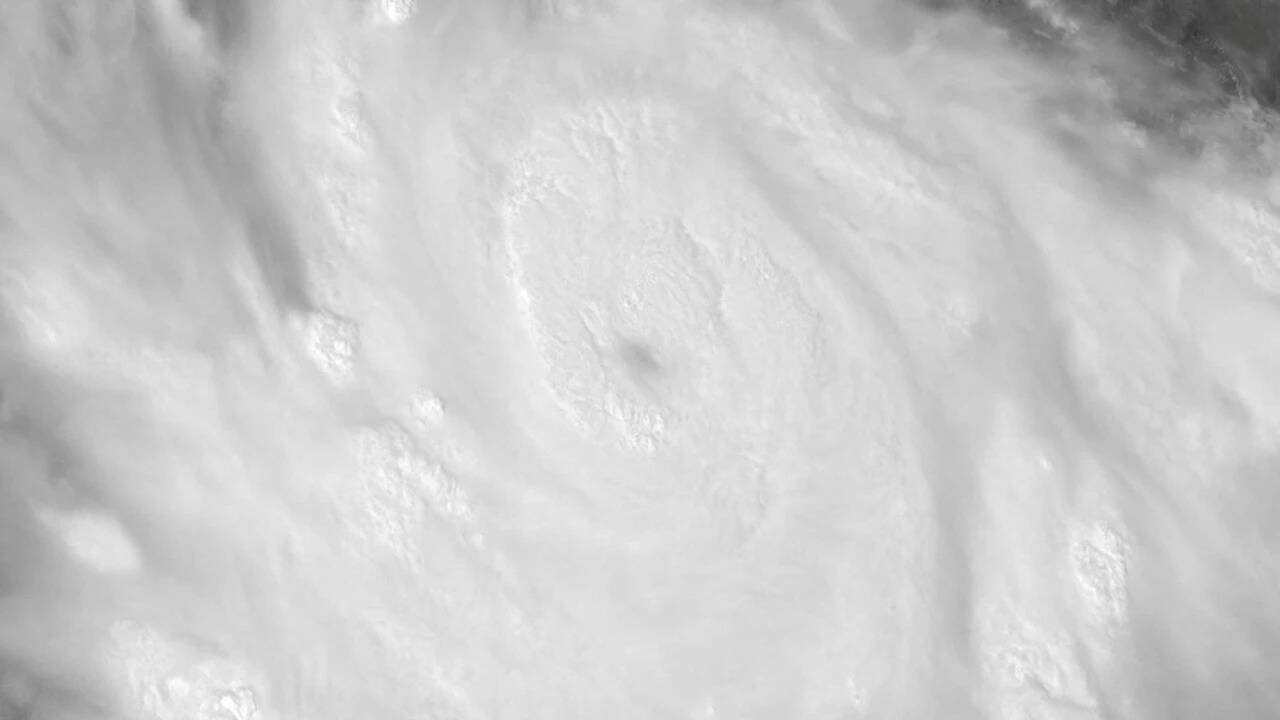
When a major oceanic warming phase aligns with late-season tropical storm intensification, headlines frequently invoke apocalyptic imagery. Media outlets declare states of emergency over phenomena labeled as singular historical anomalies. Yet, treating these concurrent weather events as isolated catastrophes obscures the underlying physical mechanisms that drive them. To understand why a powerful El Nino phase coincides with a Category 5 hurricane off the western coast of North America, one must deconstruct the system into its component parts: upper-ocean heat content, atmospheric wave propagation, wind shear anomalies, and thermodynamic feedback loops.
The standard public narrative treats extreme meteorological events as random shocks. A rigorous analysis reveals that compound extremes follow predictable physical laws, even when their scale exceeds historical baselines. By mapping the thermodynamic drivers of sea surface temperature anomalies against the atmospheric circulation patterns that steer tropical systems, we can evaluate the structural vulnerability of coastal infrastructure without resorting to hyperbole.
The Thermodynamic Baseline of El Nino Southern Oscillation Phases
The El Nino Southern Oscillation operates as an interannual climate cycle characterized by fluctuations in sea surface temperatures across the central and eastern tropical Pacific Ocean. In a neutral state, trade winds blow from east to west across the tropical Pacific, piling up warm surface water in the western Pacific near Indonesia. During a strong warming phase, these trade winds weaken or reverse. Warm water sloshes eastward toward the Americas, deepening the thermocline in the eastern Pacific and suppressing cold water upwelling off the coast of South America.
This redistribution of thermal energy alters the global atmospheric circulation through what meteorologists call the Walker Circulation. The shift in massive convective heating centers modifies the Jet Stream, pushing it southward and intensifying its velocity across the southern tier of North America.
Normal State: Trade Winds -> Warm Water West -> Upwelling East
El Nino State: Weak Winds -> Warm Water East -> Suppressed Upwelling East
This thermodynamic shift creates distinct anomalies across different sectors:
- Upper-Ocean Heat Content: A deeper layer of warm water provides
Super El Nino and Hurricane Dynamics Structural Risk Analysis
news, technology
Climate anomalies operate on compound feedback loops rather than isolated linear events. When a Super El Nino phase aligns with high-intensity tropical cyclone generation, such as Category 5 systems developing off the Pacific coast of Mexico, standard emergency management paradigms fail. The intersection of thermal energy anomalies in the equatorial Pacific and atmospheric pressure gradients creates systemic vulnerabilities across municipal infrastructure, agricultural supply chains, and disaster response logistics.
Understanding this macro-environmental stress test requires deconstructing the physical mechanisms driving the crisis. The interaction between oceanic heat content and atmospheric instability establishes a predictive framework for cascading failures in regions far removed from the immediate coastal impact zones.
The Thermodynamic Engine of Super El Nino
El Nino Southern Oscillation events are governed by changes in sea surface temperatures across the central and eastern tropical Pacific. When ocean temperatures persistently exceed baseline thresholds by 2.0 degrees Celsius or more, the system transitions into a Super El Nino state. This massive thermal displacement alters the Walker Circulation, shifting convection patterns from the western Pacific toward the central and eastern basins.
The primary driver of severe weather downstream is the elevation of the global tropospheric temperature baseline. Warm ocean water acts as a high-capacity thermal battery, pumping latent heat into the atmosphere. This energy surplus alters jet stream trajectories, driving anomalous moisture plumes into western North America while suppressing rainfall in interior landmasses.
Municipal emergency declarations triggered by these events are rarely responses to a single hazard. Instead, they reflect a recognition of system-wide stress. When saturated soils meet high-intensity precipitation events, runoff coefficients spike, overwhelming urban drainage architectures designed for historical climate baselines.
Tropical Cyclone Intensification Mechanics
The concurrent persistence of a Category 5 hurricane, such as Hurricane Polo in the eastern Pacific, highlights the thermodynamic coupling between warm surface waters and tropical storm energetics. Tropical cyclones function as thermal engines, drawing energy from the enthalpy difference between the ocean surface and the upper troposphere.
When sea surface temperatures remain elevated well above the critical threshold of 26.5 degrees Celsius, the potential intensity ceiling for tropical cyclones rises exponentially. Furthermore, weak vertical wind shear during certain phases of El Nino transitions allows these storm structures to maintain vertical alignment, preventing core disruption and facilitating rapid intensification cycles.
- Enthalpy Transfer: High sea surface temperatures maximize sensible and latent heat flux from the ocean into the base of the storm vortex.
- Vorticity Consolidation: Mid-tropospheric moisture reduces dry air entrainment, protecting the inner core and allowing convective towers to cluster symmetrically around the eye.
- Outflow Maintenance: Upper-level divergence channels exhaust air efficiently away from the storm center, reducing backpressure and accelerating surface wind speeds toward Category 5 parameters.
The proximity of such intense systems to continental landmasses compresses the decision-making timeline for disaster management agencies. Evacuation protocols based on historical storm tracks become unreliable when steering currents are modified by anomalous upper-level high-pressure ridges.
The Cost Function of Infrastructure Failure
Infrastructure resilience is a function of redundancy, material tolerance, and maintenance cadence. When extreme weather events exceed design return periods—such as a 100-year flood event occurring twice within a decade—the economic cost function shifts from linear damage accumulation to exponential disruption.
Urban drainage networks in coastal regions operate under gravity-fed discharge principles. When storm surge levels rise concurrently with heavy inland rainfall, the hydraulic head reverses, causing backflow into municipal storm systems. This inundates subterranean transport corridors and wastewater treatment facilities, creating secondary public health crises.
[Thermal Anomaly] ---> [Enhanced Atmospheric Moisture] ---> [Hydraulic Overload]
                                                                  |
[Oceanic Heat Content] ---> [Category 5 Cyclone] ---> [Coastal Infrastructure Failure]
The economic toll extends beyond immediate physical destruction. Supply chain networks dependent on single-point infrastructure nodes, such as major port facilities or transcontinental mountain passes prone to landslides, experience cascading bottlenecks. Inventory carrying costs rise as firms hedge against transport delays, translating local weather shocks into national inflationary pressures.
Operational Adjustments for High-Volatility Climate Regimes
Traditional disaster response relies on historical analogues. Because anthropogenic climate shifts and strong El Nino phases produce conditions outside the observational record, retrospective planning models are obsolete. Strategic adaptation requires a transition from reactive emergency management to continuous risk modeling.
Resource allocation must shift from static prepositioning to dynamic balancing. Rather than maintaining fixed stockpiles of relief equipment in historically vulnerable zones, logistics networks must utilize real-time telemetry from oceanographic buoys and atmospheric sounding models to predict spatial-temporal impact nodes weeks in advance.
Municipal authorities must decouple capital improvement projects from historical precipitation frequency charts. Engineering standards should incorporate dynamic safety factors that account for non-stationary climate variables. Without this structural shift, emergency declarations will transition from extraordinary interventions to perpetual management states, signaling systemic failure rather than exceptional preparedness.