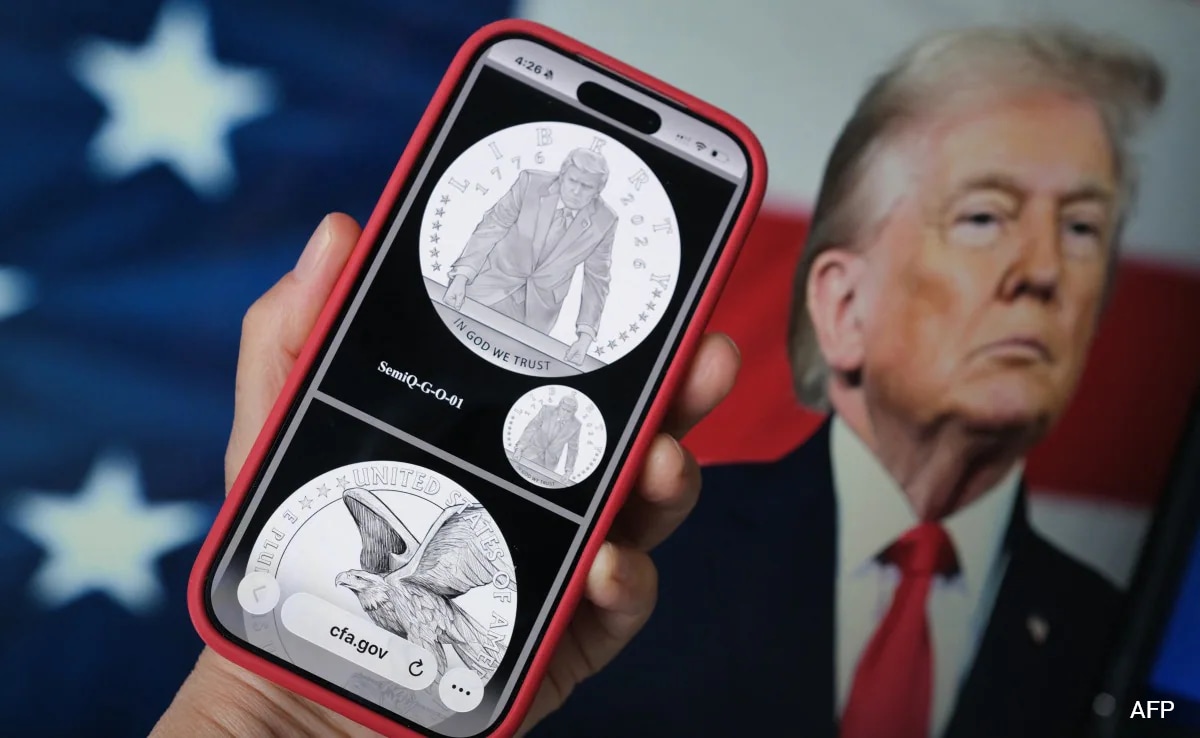
The intersection of political branding and numismatic asset creation represents a sophisticated exercise in capturing "seigniorage of personality." When a former and future president, Donald Trump, is featured on a gold coin to celebrate the United States Semiquincentennial (250 years of independence), the event transcends mere commemorative merchandise. It functions as a strategic alignment of three distinct variables: the historical weight of the 250th anniversary, the inherent scarcity of precious metals, and the concentrated brand equity of a political figure. This analysis deconstructs the mechanics of this release, evaluating its impact on the collectibles market and its role in modern political iconography.
The Tri-Factor Valuation Model for Political Numismatics
The market value of a commemorative gold coin is rarely dictated by the spot price of gold alone. Instead, it follows a specific valuation function where the "Numismatic Premium" is calculated based on three primary pillars. Learn more on a similar topic: this related article.
- Temporal Relevance (The Semiquincentennial Factor): The 250th anniversary of the United States provides a high-gravity historical anchor. Assets tied to quarter-millennial milestones historically outperform standard annual releases because they tap into "legacy-tier" collecting.
- Iconographic Demand: Unlike standard bullion, which is fungible, a coin featuring a specific political figure introduces a non-fungible demand curve. The demand is driven by a loyalist base that views the object as a fractional share of a political movement rather than just an investment in $Au$.
- Mintage Constraints: The rarity of the strike determines the long-term price floor. If the mintage is "open-ended," the coin behaves like a commodity. If it is "hard-capped," it behaves like a Veblen good, where price increases do not necessarily decrease demand.
Structural Mechanics of the Gold Commemorative Market
The issuance of a Trump-themed 250th-anniversary coin operates within a dual-market system. The primary market consists of direct-to-consumer sales, often at a significant markup over the intrinsic metal value. The secondary market, however, is where the "Analytical Truth" of the asset is revealed.
The Melt Value vs. Narrative Premium
A standard one-ounce gold coin has a baseline value determined by the London Bullion Market Association (LBMA) fix. When a commemorative coin is sold for $3,000 while gold trades at $2,500, the $500 delta represents the Narrative Premium. For the Trump Semiquincentennial coin, this premium is sustained by the "Proof" quality of the strike—a specialized minting process involving polished dies and multiple strikes to produce a mirror-like finish. More reporting by Forbes delves into related views on the subject.
The logic of the purchaser in this scenario is often counter-cyclical. While traditional investors buy gold as a hedge against systemic instability, the political collector buys the iconography as a hedge against "historical erasure." They are purchasing a physical stake in a specific version of American history.
Verification and Provenance
The legitimacy of such an issue hinges on the issuing authority. There is a sharp distinction between "Legal Tender" (issued by a sovereign government with a face value) and "Commemorative Medallions" (issued by private mints).
- Sovereign Issues: Carry a nominal face value (e.g., $50) and are backed by a state.
- Private Commemoratives: Rely entirely on the brand of the individual and the quality of the mint.
The Trump 250th-anniversary coins typically fall into the latter category or are issued in partnership with smaller sovereign entities. This creates a bottleneck in liquidity: while gold is universally liquid, "specialty gold" requires a specific buyer, often found on secondary auction platforms rather than at bullion desks.
Economic Symbolism of the 250-Year Milestone
The U.S. Semiquincentennial in 2026 is projected to be the most significant branding event in American history since the 1976 Bicentennial. During the Bicentennial, the U.S. Mint saw record-breaking engagement with the Washington Quarter, Kennedy Half Dollar, and Eisenhower Dollar reverses.
Integrating a political figure like Trump into this 250-year timeline is a move to "Institutionalize the Persona." By placing his likeness on a gold coin alongside the dates 1776–2026, the strategy seeks to create a visual and physical link between the founding of the republic and the current political era. This is a classic application of Aesthetic Mapping, where the prestige of the "Gold Standard" and the "Founding Fathers" is transferred to the contemporary subject.
The Liquidity Trap and Collector Psychology
Potential holders of the Trump gold coin must navigate the "Collector’s Paradox." In high-inflation environments, gold is a rational hold. However, high-premium commemoratives carry a "Sunken Cost of Artistry."
If a collector buys a coin at a 30% premium over spot price, the market price of gold must appreciate by 30% just for the collector to break even on the intrinsic metal. This necessitates a secondary market where the next buyer values the Trump iconography at an even higher premium than the first. This creates a "greater fool" dynamic that is common in high-end memorabilia but rare in standard precious metal investing.
The cause-and-effect relationship here is clear:
- Cause: Massive media saturation regarding the 250th anniversary.
- Effect: Increased emotional valuation of related physical artifacts.
- Result: A temporary decoupling of the coin's price from the gold spot price.
Risk Assessment of Political Numismatics
Investing in or acquiring political gold coins involves specific risks that differ from the S&P 500 or standard 24-karat bars.
- Sentiment Volatility: The value of the iconographic premium is tied to the public standing of the figure. Unlike a neutral historical figure (e.g., Benjamin Franklin), a contemporary political figure's "market cap" fluctuates with election cycles and legal proceedings.
- Counterfeit Proliferation: High-profile releases attract sophisticated counterfeiting. Without a third-party grading service (such as PCGS or NGC) certifying the "slabbed" coin, the resale value is compromised.
- Opportunity Cost: The capital locked in a high-premium commemorative coin is capital that is not earning yield or tracking the broader gold market with 1:1 efficiency.
Strategic Recommendation for Market Participants
For the strategic observer or the high-net-worth collector, the acquisition of a Trump 250th Anniversary gold coin should be categorized as Alternative Passion Asset Allocation rather than Core Bullion Reserve.
The move to feature Trump on a gold coin for the 250th anniversary is a masterful use of the "Limited Edition" psychological trigger. It captures the zeitgeist of a polarized era and freezes it in a 1-ounce format of .9999 fine gold. To maximize the utility of this asset, one must ensure the presence of a Certificate of Authenticity (COA) and prioritize coins with the lowest mintage numbers.
The ultimate play is to recognize that you are not buying gold; you are buying a serialized slice of a political legacy. The success of the "Trump 250" numismatic strategy will be measured not in the vaults of banks, but in the auction houses of 2040, where the historical "curiosity factor" will determine if the narrative premium survived the test of time. Focus on "First Strike" designations and pristine "MS-70" (Mint State) grades to ensure the asset remains at the top of the quality pyramid.