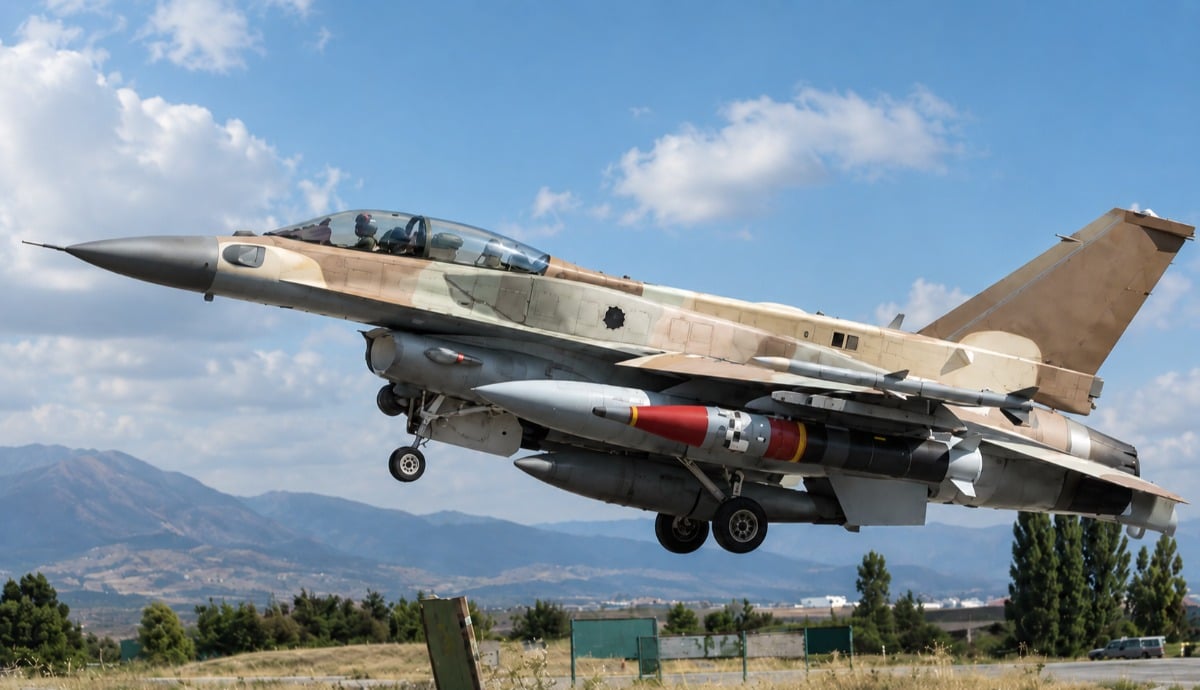
The defense industry has a monetization ritual. Every two years at the Farnborough International Airshow, defense contractors line up to display hardware adorned with the most expensive marketing label in the business: "Combat-Proven."
This year, the spotlight burns brightest on Israeli defense firms showcasing automated interception systems, loitering munitions, and precision electronic warfare gear. The consensus among trade publications and defense analysts is predictable. They look at these systems, look at recent conflicts, and declare that these specific weapons are the uncontested future of global security.
They are wrong. They are confusing tactical survival with strategic scalability.
The industry is buying into a massive cognitive bias. Having worked inside defense procurement pipelines and watched states burn through billions on bespoke hardware, I know the dirty secret of modern defense marketing: "combat-proven" in a localized, asymmetrical theater often translates to "commercially non-viable" in a peer-to-peer conflict.
The defense sector is scaling the wrong technologies for the wrong type of war. Here is why the tech generating the most buzz at Farnborough is fundamentally poorly suited for the realities of long-term attrition.
The Iron Dome Paradox Why Tactical Success Dictates Strategic Bankruptcy
The primary misconception driving trade show hype is that high interception rates equal systemic viability. Consider the active defense systems and multi-layered missile shields that dominate the marketing brochures this year. We are told these systems are flawless because they intercept 90% plus of incoming threats in active theaters.
That is an impressive engineering metric. It is also a catastrophic financial strategy.
In defense economics, we look at the cost-imbalance ratio. If an adversary fires a swarm of mass-produced, low-tech loitering munitions that cost $20,000 each to manufacture, and your combat-proven countermeasure requires a highly sophisticated interceptor missile costing $100,000 to $1 million per shot, you are losing the war of attrition even if every single missile hits its target.
You cannot out-produce an adversary whose offensive supply chain is ten times cheaper than your defensive supply chain.
When a state faces thousands of incoming threats simultaneously over months, the inventory of specialized interceptors bottoms out long before the adversary runs out of cheap airframes. The current Farnborough narrative focuses entirely on the kinetic capability of the weapon while ignoring the industrial reality of the assembly line. We are celebrating boutique solutions to industrial-scale problems.
The Micro-Conflict Delusion
The weapons dominating the headlines right now were incubated in a highly specific operational environment. They were designed for short-range, dense, urbanized battlefields characterized by stark technological asymmetry.
Move those exact systems to a distributed, vast geographic theater—think the Indo-Pacific or Eastern Europe—and the operational assumptions collapse.
- Logistical strain: High-maintenance, specialized electronic components require clean supply lines and temperature-controlled storage. In a distributed theater spanning thousands of miles, these requirements turn into massive liabilities.
- Spectrum saturation: Systems reliant on continuous data links for human-in-the-loop targeting fail when the entire electromagnetic spectrum is jammed by a near-peer adversary. A weapon that works beautifully against an asymmetric insurgent force becomes an expensive brick when the GPS and satellite relays go dark.
- The battery problem: Active defense hardware requires immense power generation. Mobile units frequently rely on heavy, maintenance-heavy diesel generators or specialized battery packs that cannot be easily replaced in mud-slicked trenches or austere island outposts.
Firms are selling localized optimization as universal doctrine. Buyers are falling for it because it looks spectacular on a promotional video.
The Software-Defined Illusion
The secondary push at Farnborough centers on artificial intelligence and autonomous target acquisition. The marketing pitch claims that by embedding proprietary algorithms into drones and missile guidance packages, military forces can drastically reduce the kill chain timeline.
Here is what the industry engineers do not tell you during the chalets and champagne hours: these models are incredibly fragile.
Military algorithms are trained on specific datasets derived from specific geographic terrains and threat profiles. When the environment changes—when the mud looks different, when the adversary uses unexpected visual camouflage, or when the atmospheric conditions alter the thermal signature—the algorithmic confidence interval drops off a cliff.
Furthermore, proprietary, closed-loop military software creates vendor lock-in. If a field commander needs to patch an algorithm because the adversary just changed their electronic jamming frequency, they cannot wait six months for a defense contractor in Tel Aviv or Dallas to push a software update through a highly bureaucratic corporate compliance pipeline. They need open-architecture systems that allow field-level modification.
The current crop of highly integrated, proprietary platforms showcased by major international contractors provides exactly the opposite. They sell black boxes. In a rapidly evolving war of attrition, a black box is a liability.
The Industrial Reality Check
Let us look at actual production numbers. The defense industrial base of the West is built around a low-volume, high-margin manufacturing model. Contractors prefer building fifty incredibly complex, highly profitable stealth fighter jets or advanced missile batteries rather than five thousand cheap, reliable artillery pieces or mass-production drones.
This model is incentivized by corporate boards and defense procurement regulations that reward technological complexity over sheer volume.
Imagine a scenario where a manufacturing plant takes four weeks to calibrate the advanced optical sensor on a single high-end loitering munition. That weapon might be unmatched in its precision. But if the frontline expenditure rate is fifty units per day, that factory is functionally useless during an active mobilization.
The true innovation in modern warfare is not the weapon itself; it is the factory that builds the weapon. The industry is hyper-focused on the kinetic end-product while completely ignoring the sclerotic state of the supply chain behind it. We see stunning static displays of automated weapon stations, but no one is showing off a factory floor that can double its output in forty-eight hours.
Stop Buying the Hype, Rebuild the Base
If you are a defense acquisition officer or a state strategist walking the tarmac at Farnborough, you need to change the criteria by which you judge military technology.
Stop asking if a system is "combat-proven" in an asymmetric vacuum. Start asking how fast the sub-components can be sourced when international shipping lanes are compromised. Demand to see the open-source software documentation. Refuse to buy platforms that require proprietary maintenance pipelines.
The future of survival belongs to the side that can field the most resilient, cheaply reproducible, and easily modifiable technology at scale. The gleaming, ultra-complex hardware filling the exhibition halls this week looks fantastic under the airshow sun. But in a real war against a peer adversary, it will run out of ammo, run out of parts, and run out of time long before the conflict is decided.
Stop buying boutique weapons for an industrial war.