The sirens did not sound like warnings. They sounded like knives scraping across bone, sharp and jagged against the stillness of a midnight sky that should have belonged to the stars.
Thousands of miles away, in quiet suburban kitchens and sunlit courtyards, families woke up to check their phones, scrolling through flickering screens for news of distant maps and shifting borders. But here, on the edge of a city breathing heavy under the weight of conflict, the abstract geometry of war took on a very specific, suffocating weight. It smelled of scorched cardboard, crushed glass, and the bitter, chemical ghost of medicines that would never reach a feverish child. For an alternative look, see: this related article.
Consider the ordinary architecture of relief. We build warehouses because we must store the fragile ballast of human survival—rows upon rows of cardboard boxes stacked high against the dark, holding back pain, infection, and despair. These places are supposed to be invisible. They are the quiet engine rooms of compassion, guarded only by night watchmen, paperwork, and the quiet hum of industrial refrigerators keeping life-saving vials at precise, life-sustaining temperatures.
Then a drone arrived. Related coverage regarding this has been shared by The New York Times.
It was manufactured with cold precision, programmed with coordinates that stripped away the human context of what lay beneath its trajectory. To the operator miles away, sitting before glowing monitors, it was a pixelated target on a grid. To the people inside, it was a sudden, roaring darkness.
When the explosion tore through the facility owned by Indian investors—a facility designed to distribute vital pharmaceuticals across a region gasping for stability—the roof did not just collapse. It shattered. The blast wave obliterated the cold rooms, sending a thousand crystalline shards of glass and thousands of liters of liquid medicine cascading into the dirt like ruined tears.
Yet, the broken bottles were not the worst of it.
Amidst the smoke and the jagged iron skeletons of shelving units, a life was extinguished. A staffer—someone who had walked to work that morning under a grey morning haze, perhaps worrying about grocery prices or whether they would call their mother later that evening—became a casualty of a war they did not wage.
We talk about geopolitics as if it were a game of grand chess played by statues. We throw around terms like supply chain disruption, diplomatic fallout, and sovereign risk. We analyze trade corridors and international treaties on glossy Sunday morning broadcasts, dissecting the economic chess pieces moving between New Delhi, Moscow, and Kyiv.
But what does a supply chain disruption look like when it bleeds?
It looks like an empty chair at a dinner table that will never be filled again. It looks like a shipment of antibiotics turning to ash, destined for hospitals where surgeons are already running out of thread and antiseptic. It looks like the sudden, shattering realization that in an interconnected world, a bomb dropped on a pharmaceutical depot in Eastern Europe reverberates instantly into the medicine cabinets of vulnerable patients who don't even know what a drone looks like.
The geopolitical threads binding India and Ukraine are complex, woven through decades of historical alignment, economic trade, and strategic balancing. India has long navigated a delicate tightrope, maintaining independent foreign policy traditions while the world fractures into hostile camps. Ukrainian officials, meanwhile, look at every strike against civilian infrastructure not merely as property destruction, but as an existential erosion of the systems keeping their society breathing.
When a warehouse burns, the fire does not care about diplomacy. It consumes the neutral ground. It reduces the painstaking work of international commerce and humanitarian logistics to soot.
Let us be entirely honest about the fear that creeps into the edges of this tragedy. We live in an era where the infrastructure of everyday life has become a battlefield. Grain silos, water treatment plants, power grids, and now medical warehouses—these are the modern targets. Each strike is a calculated erosion of resilience, designed to make survival itself an exhausting, daily negotiation.
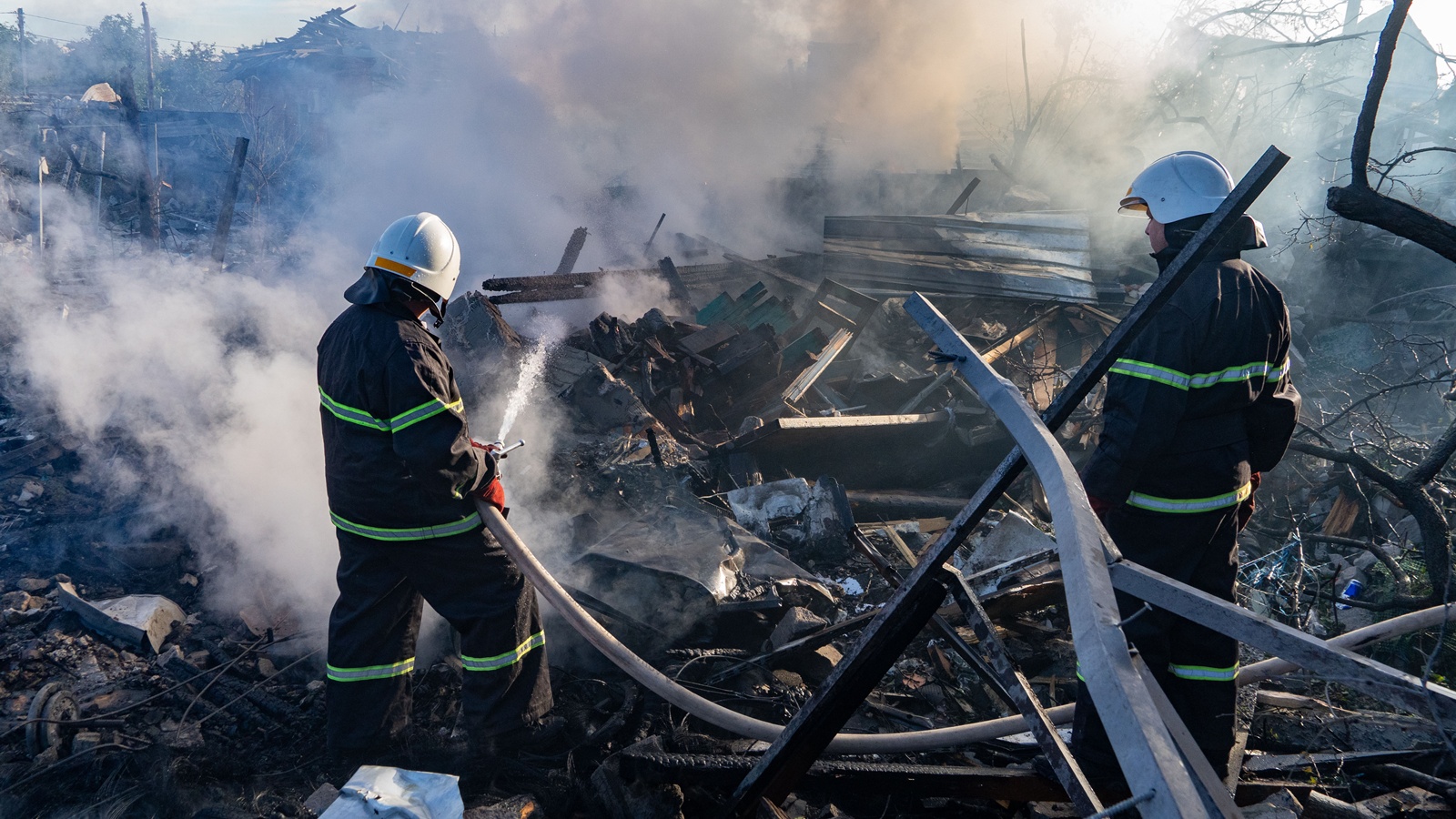
When the smoke finally cleared over the ruins of that depot, the local rescue workers did not speak in grand political paradigms. They moved with slow, methodical exhaustion, pulling twisted metal apart with bare hands and heavy machinery. They were looking for remains, yes, but they were also looking for anything salvageable—a single intact carton, a box of bandages, a glimmer of the order they had spent years building out of chaos.
This is the hidden cost of modern conflict. It is not just the dramatic theatre of frontlines and trenches. It is the quiet, devastating erosion of the mundane. It is the destruction of the warehouse at the end of the lane, the death of the worker who checked the inventory logs, and the silent panic of a pharmacist downstream who realizes that the shipment isn't delayed—it is gone.
The night air is cold now over the ruins. The steel beams have cooled from a fierce, incandescent orange to a dull, bruised grey. Somewhere far away, diplomatic cables are being drafted, statements are being issued, and representatives are preparing to express deep concern in language polished smooth by protocol.
But down here, in the dust and the ruined medicine, the silence is absolute. And it has the final word.