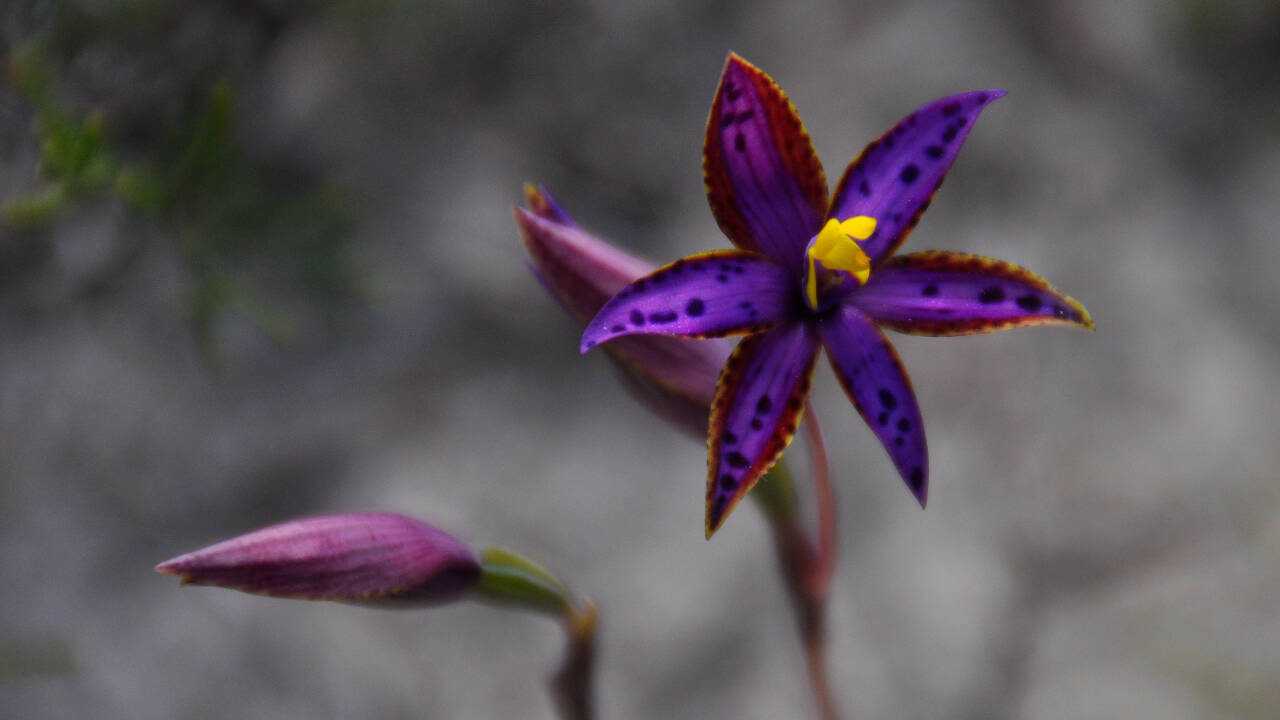
The media recently lost its collective mind over a headline claiming scientists grew one thousand rare Queen of Sheba orchids in five years. Conservationists cheered. Nature documentaries drafted treatments. Twitter users posted heart-hands emojis about saving a botanical masterpiece from extinction.
It is a comforting narrative. It is also completely useless.
I have spent two decades watching well-funded laboratories burn through millions of dollars playing God in sterile tissue-culture rooms, churning out cloned specimens that cannot survive a stiff breeze in the real world. We treat propagation as a victory when it is actually a distraction. Growing a thousand plants in a petri dish does not mean you have saved a species. It means you have successfully manipulated a fungus-dependent organism in a climate-controlled box.
When you remove the romantic varnish from botanical headlines, the math gets ugly fast. Let us examine why treating the Queen of Sheba orchid as an engineering problem is bankrupting real conservation, and why throwing tissue culture at an ecological collapse is the exact equivalent of rearranging deck chairs on the Titanic.
The Mycorrhizal Illusion
The fundamental flaw in the mainstream narrative around the Queen of Sheba orchid, scientifically known as Thelymitra antennifera, lies in a biological dependency that laboratory enthusiasts prefer to gloss over. You can clone all the protocorms you want in an agar gel, but you cannot clone the microscopic subterranean architecture that keeps these plants alive.
This orchid is an obligate mycoheterotroph in its early stages and maintains a strict symbiotic relationship with specific soil fungi throughout its life. In plain terms, the plant eats fungi. Not just any fungus, but exact strains of Tulasnella that inhabit undisturbed Australian bushland.
When researchers boast about mass-producing a thousand plants in five years, they usually omit a critical detail: those plants were coddled with synthetic nutrients, sterile environments, and hand-inoculated fungal partners under artificial lights. They are botanical trust-fund babies.
I have seen corporate nurseries blow seven figures on high-tech micropropagation facilities, only to watch their lab-grown stock melt into mush within forty-eight hours of outdoor introduction. Nature does not care about your sterile laminar flow hood. If the soil microbiome has been degraded by agricultural runoff, invasive species, and climate shift, your cloned orchid is dead on arrival.
The Fallacy of Numerical Conservation
Conservation journalism loves big numbers. One thousand plants sounds like a triumph. In ecological terms, one thousand genetically identical or narrowly bottlenecked clones dumped into a fragmented habitat is a genetic dead end.
Genetics is not stamp collecting. You do not measure success by raw headcounts. Imagine a scenario where a billionaire funds a massive lab operation, flooding a national park with cloned orchids. On paper, population numbers spike. On reality's balance sheet, you have just introduced a massive population of clones with zero adaptive capacity to handle a changing pathogen landscape or a shifting rainfall gradient.
Wild populations survive through genetic diversity, messy sexual reproduction, and brutal natural selection. Laboratories bypass selection. They reward the traits that make a plant easy to grow in a Petri dish, which often opposes the traits required to survive a drought in the Western Australian scrub.
We are not preserving the Queen of Sheba orchid through cloning. We are preserving a zoo specimen on life support, paying enormous bills to congratulate ourselves on keeping a corpse warm.
Follow the Money
Why do universities and botanical institutions keep pushing the cloning narrative? Follow the funding.
Flashy press releases about high-tech rescue operations secure grants much faster than boring, unsexy proposals about fencing off cattle, eradicating feral pigs, or stopping real estate developers from paving over remnant bushland.
Saving a habitat requires political fights, zoning battles, and long-term ecosystem management. It requires telling local governments and industries that they cannot bulldoze a specific tract of earth. That work is tedious, contentious, and unpopular with donors.
Cloning looks great on Instagram. It lets a laboratory take a bow, secure the next three-year funding cycle, and pretend that technology can substitute for land stewardship.
I have watched conservation budgets get sucked into high-end biotechnology while adjacent native bushland burned or was carved up for subdivisions. We have institutionalized a system where the symptoms are treated with expensive chemistry while the cause is ignored because the cause is too politically inconvenient to fix.
What Real Recovery Looks Like
If you actually want to protect rare flora, stop obsessing over laboratory yields. The real work is dirty, unglamorous, and localized.
- Protect the underground: Focus conservation dollars on soil integrity and fungal mapping rather than above-ground stem counts. If the soil is dead, the plant has no future.
- Halt habitat fragmentation: A wild orchid pollinated by native insects across an unbroken landscape has infinitely more evolutionary potential than a million clones planted in a sterile municipal park.
- Embrace natural recruitment: Measure success by natural seed set and seedling recruitment in the wild, not by how many tubes a technician can seal in a greenhouse.
The Queen of Sheba orchid does not need a better laboratory protocol. It needs its home left alone. Until we stop treating nature as an engineering project that we simply haven't coded correctly yet, our victories will remain nothing more than expensive illusions.