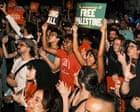
The plastic clipboards always rattle when the wind picks up across the concrete porches of Queens. It is a specific, sharp sound. If you have ever stood on a doorstep holding one, your fingers cramped around a cheap ballpoint pen while the smell of frying onions wafts through a screen door, you know the exact pitch of that rattle.
For decades, the people behind those doors did not look at the people holding the clipboards. Not really. The clipboard wielders were usually cogs in a vast, predictable machine. They wore the laminated badges of institutional campaigns. They spoke in the practiced, focus-grouped cadences of a political establishment that viewed these neighborhoods not as communities, but as data points to be harvested every two or four years. They wanted a signature, a pledge, a donation, and then they wanted to catch the subway back to Manhattan before dark.
Then the clipboards changed hands.
The new kids on the stoop did not look like the old political operatives. They wore worn-out sneakers and faded t-shirts. Many of them were drowning in student debt, working two gig-economy jobs just to afford a room in an apartment shared with three other people. When they knocked, they did not read from a script about bipartisan compromise or incremental tax credits. They looked the voters in the eye and asked a question that felt almost radical in its simplicity: "How much of your paycheck went to your landlord this month?"
That shift in tone, quiet at first, has grown into a roar that is currently fracturing the bedrock of American politics. From the dense blocks of New York to the sun-baked suburbs of Colorado, a wave of democratic socialist insiders and insurgent candidates are no longer just knocking on the door.
They are moving in.
The Heat in the Gymnasium
To understand how deep this current runs, you have to leave the cable news studios behind and stand in a crowded high school gymnasium where the air conditioning broke three hours ago.
Politicians love to talk about momentum as if it is an abstract mathematical formula, a graph fluctuating on a screen. It isn’t. Momentum is the physical weight of two hundred people squeezed into a room meant for eighty, all of them nodding along to a speaker who isn’t using a microphone because the campaign couldn't afford one.
Consider the reality of a modern primary election. In the old playbook, a challenge from the left was something a mainstream incumbent could easily smother. You simply raised three times as much money from real estate developers and corporate political action committees, flooded the local airwaves with glossy television commercials, and relied on the party machinery to turn out the reliable, older voters who always show up.
But television commercials do not mean what they used to. The generation currently reshaping local politics does not watch network television. They do not answer phone calls from unknown numbers. They are entirely invisible to traditional polling methods.
When the democratic socialists began winning primary races across New York and Colorado, the political establishment reacted with genuine, unvarnished shock. They treated these victories like freak weather events—lightning strikes that could not possibly happen twice in the same place.
They were wrong. The victories were not accidents of nature; they were the result of a grueling, block-by-block ground game that turned the traditional campaign model completely on its head. While the incumbents were holding $1,000-a-ticket fundraising dinners in upscale restaurants, the challengers were organizing tenant unions in rent-stabilized apartment buildings. They realized a fundamental truth that the consultants had forgotten: an energized volunteer who lives on the block is worth more than a hundred thousand dollars in negative advertising.
The Anatomy of an Insurgency
It is easy to get lost in the terminology. Political commentators love to argue over definitions, parsing the exact difference between a progressive Democrat and a democratic socialist until the words lose all meaning to the average person trying to pay their electric bill.
Let us strip away the academic jargon. At its core, this movement is driven by a profound, generational disillusionment with the status quo.
Imagine a young woman named Elena. She is twenty-eight years old, holds a degree in biology, and works forty-five hours a week at a laboratory testing facility. She makes decent money on paper, certainly more than her parents did at her age. Yet, every month feels like a slow-motion financial collapse. More than half of her income goes toward a studio apartment with peeling paint. Her student loan payments are the size of a car note. Last month, when her car’s alternator died, she had to put the repair bill on a credit card with an eighteen percent interest rate.
Elena does not care about ideological purity. She cares about survival.
When a mainstream politician tells her that the economy is booming because the stock market reached a record high, she does not feel prosperous; she feels gaslit. When that same politician explains that universal healthcare is a beautiful dream but simply too expensive to implement, she looks at the deductible on her employer-provided insurance plan and realizes she cannot afford to get sick anyway.
This is where the democratic socialist narrative hooks into the American psyche. They are not offering a defense of the system; they are offering an indictment of it. They look at Elena and say, "You are not failing. The system is failing you."
That distinction is powerful. It transforms personal shame—the quiet, agonizing guilt of not being able to get ahead despite working hard—into collective anger. And collective anger, when properly channeled, is the most potent fuel in politics.
The Westward Expansion
For a long time, the conventional wisdom dictated that this brand of politics could only survive in the unique ecosystem of coastal cities. It was dismissed as a New York phenomenon, a product of Brooklyn gentrification and Queens diversity that would never play in the American heartland.
Colorado broke that theory.
The political terrain of the Mountain West is notoriously complex. It is a place that values independence, a region where Western libertarianism often blurs into suburban moderate liberalism. Yet, the same economic pressures that fueled the rise of democratic socialists in the East are now cooked deep into the soil of the Rockies.
In Denver and its surrounding suburbs, the cost of living has skyrocketed at a pace that has left long-time residents breathless. Housing prices have turned the dream of homeownership into a cruel joke for anyone without generational wealth. The open spaces and mountain views that once drew people to the state are now framed by sprawling developments that most of the people building them can never afford to live in.
When democratic socialist candidates began securing victories in Colorado’s state legislative primaries, it sent a shudder through the national Democratic party. These were not districts filled with radical activists. These were suburbs. These were neighborhoods where people mowed their lawns on Saturdays and took their kids to soccer practice on Sundays.
The message resonated there for the exact same reason it resonated in New York. The crisis of affordability is not regional; it is national. The anxiety of feeling one medical emergency away from bankruptcy does not stop at the state line. By focusing entirely on these material conditions—housing, healthcare, wages—the insurgents managed to bypass the cultural tribalism that usually paralyzes American political debate.
The Weight of the Win
But winning a primary is the easy part. The real test begins when the celebration ends and the reality of governing sets in.
There is a distinct vulnerability that comes with achieving power when you have spent your entire life as an outsider. The transition from shouting at the gates to sitting at the committee table is fraught with peril. The very system you were elected to dismantle is incredibly adept at absorbing dissent, wearing down radicals with the slow, bureaucratic friction of legislative procedure.
I watched a newly elected insurgent legislator walk into a state capitol building for the first time. The contrast was stark. They looked tiny beneath the vaulted marble ceilings, surrounded by lobbyists in custom-tailored suits who had been roaming those hallways since before the freshman lawmaker was born.
The pressure to conform is immense. It arrives not as a blunt threat, but as a series of polite suggestions. Compromise on this bill, and we will look favorably on your budget request next year. Tone down the rhetoric, and you can have a seat on a prestigious committee.
Many give in. They discover that passing a single piece of modest legislation requires horse-trading that leaves them feeling hollowed out. Their supporters back home, watching from the cheap seats, begin to smell betrayal. The word "sellout" is never far from the lips of the activist base.
This is the invisible tightrope that the democratic socialist movement is currently walking. If they refuse to compromise, they risk becoming a permanent, ineffective protest faction, pure but powerless. If they compromise too much, they risk becoming the very thing they ran against, losing the authentic, raw energy that propelled them to victory in the first place.
The Unanswered Question
The establishment still thinks this is a temporary insurgency. They are waiting for the fever to break, for the economy to stabilize, for the restless young organizers to grow up, buy houses, and become cautious moderates.
They are missing the point. The young organizers cannot buy houses. That is the entire reason they are organizing.
This movement is not a seasonal trend. It is a structural response to a structural crisis. As long as the gap between productivity and wages continues to widen, as long as the cost of basic human necessities remains out of reach for a significant portion of the population, the clipboards will keep rattling on the doorsteps.
The old political machine knows how to fight an opponent that plays by its rules. It knows how to counter a million-dollar ad campaign with a two-million-dollar ad campaign. It knows how to trade favors and slice up districts.
But it does not know how to fight a volunteer who is willing to walk up five flights of stairs in August heat just to talk to a single voter about their rent. It does not know how to defeat a narrative that replaces isolation with solidarity.
The future of American politics is being written right now, not in the marble halls of Washington, but on the cracked asphalt of suburban driveways and the dim hallways of urban apartment buildings. The people holding the clipboards are no longer asking for permission to enter the room.
They are already rewriting the rules of the house.