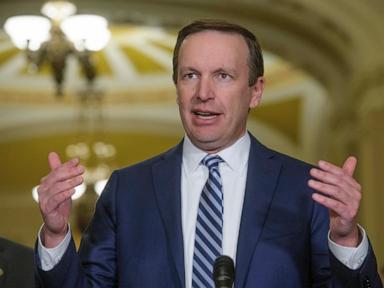
The transfer of United States Senator Chris Murphy from an acute care hospital to an inpatient rehabilitation facility following a stroke marks a standard, high-probability transition within modern neurovascular care rather than an anomaly of legislative health crises. Standard political journalism treats a hospital discharge as a binary milestone of recovery, missing the underlying operational continuum that governs post-stroke outcomes. Understanding this transition requires dissecting the clinical triage protocols of cerebrovascular events, the structural mechanics of inpatient rehabilitation, and the institutional continuity frameworks that insulate the United States Senate from individual incapacitation.
The Acute-to-Rehab Continuum in Cerebrovascular Events
A stroke occurs when blood flow to a specific region of the brain is interrupted—either by an arterial blockage (ischemic stroke, accounting for roughly 87 percent of cases) or a ruptured blood vessel (hemorrhagic stroke). In either scenario, the immediate clinical objective during acute hospitalization is hemodynamic stabilization, the cessation of ongoing neural necrosis, and the prevention of secondary complications such as cerebral edema or aspiration pneumonia.
Acute care hospitals operate on rapid throughput models designed to resolve immediate threats to life. Once a patient achieves physiological stability—meaning blood pressure is controlled, airway protection is verified, and the acute neurological deficit has plateaued—extending the acute inpatient stay yields diminishing clinical returns while exposing the patient to nosocomial infection risks and physical deconditioning.
The decision to discharge a patient directly to an inpatient rehabilitation facility (IRF) rather than a skilled nursing facility (SNF) or home care operates as a precise diagnostic filter. Admission to an acute IRF is governed by strict clinical criteria, primarily the Centers for Medicare & Medicaid Services (CMS) three-hour rule, which serves as the industry benchmark regardless of the patient's insurer. To qualify for an IRF, a patient must demonstrate:
- Medical Necessity for Active Physician Supervision: The patient requires frequent, direct intervention by a rehabilitation physician (physiatrist) to manage ongoing medical comorbidities alongside neurological recovery.
- Multidisciplinary Therapy Requirements: The patient exhibits deficits requiring at least two distinct therapeutic modalities—typically physical therapy (PT), occupational therapy (OT), or speech-language pathology (SLP).
- Endurance Threshold: The patient must possess the baseline cardiovascular and neurological stamina to tolerate intensive therapy, defined operationally as at least three hours of active rehabilitation per day, five days a week.
Transferring to an IRF signals two critical facts about Senator Murphy’s clinical baseline. First, the stroke produced measurable functional deficits—such as hemiparesis, ataxia, dysarthria, or aphasia—that preclude an immediate return to independent daily activities. Second, his neurological and cardiovascular reserves remain intact enough to sustain rigorous physical exertion immediately following the acute phase. Patients with catastrophic, non-recoverable neurological damage lack the endurance for IRF admission and are routed instead to long-term acute care hospitals or subacute nursing facilities.
Neuroplasticity and the Subacute Window
The urgency of transferring a stroke patient directly from an acute hospital bed to a rehabilitation gym is driven by the biological timeline of neuroplasticity. Following focal brain ischemia or hemorrhage, the surrounding neural tissue—the ischemic penumbra—enters a state of heightened structural malleability.
During the first 30 to 90 days post-stroke, the brain upregulates growth-promoting factors, such as brain-derived neurotrophic factor (BDNF), and initiates synaptogenesis and axonal sprouting. This biological window allows undamaged neural networks to assume the functions of lost cortical or subcortical tissue. The mechanism is strictly use-dependent: repetitive, task-specific physical and cognitive inputs force surviving neurons to form new synaptic pathways.
Delaying intensive therapy blunts this recovery curve. If a patient remains sedentary during the subacute phase, the brain consolidates maladaptive compensatory patterns, and peripheral musculoskeletal structures undergo rapid atrophy and contracture. An IRF functions as an engineered environment designed to maximize stimulus density during peak neuroplastic receptivity.
The Three Pillars of Inpatient Stroke Rehabilitation
- Motor Relearning and Hemodynamic Conditioning: Physical therapists target gross motor deficits, balance, and gait mechanics. Because cerebrovascular events frequently impair autonomic blood pressure regulation, therapists continuously monitor orthostatic tolerance while retraining neuromuscular pathways through high-repetition, task-oriented movements.
- Adaptive Execution and Executive Function: Occupational therapists address fine motor control, visual-spatial processing, and activities of daily living (ADLs). For a legislator whose professional output relies on rapid cognitive processing, reading comprehension, and interpersonal negotiation, OT also evaluates subtle executive function deficits—such as divided attention, working memory fatigue, and emotional lability—that often accompany frontal or subcortical strokes even when gross motor function appears intact.
- Linguistic and Bulbar Integrity: Speech-language pathologists manage both communication deficits (expressive or receptive aphasia, motor speech dysarthria) and dysphagia (swallowing dysfunction). Silent aspiration remains a leading cause of post-stroke mortality; verifying safe deglutition via instrumental swallowing assessments is a foundational prerequisite before advancing diet textures or reducing clinical oversight.
Distinguishing Known Clinical Facts from Operational Hypotheses
In high-profile medical events, public disclosures are intentionally curated to balance transparency with patient privacy. Rigorous analysis requires separating verified operational facts from structural inferences.
Verified Facts:
- Senator Murphy experienced an acute cerebrovascular event requiring inpatient hospitalization.
- His medical team cleared him for discharge from the acute care setting, indicating resolution of immediate life-threatening instability.
- He was admitted directly to a dedicated rehabilitation facility, confirming the presence of residual functional deficits paired with sufficient physical stamina for intensive therapy.
Operational Hypotheses (Unverified Variables):
- Etiology and Localization: Public announcements rarely specify whether the event was ischemic or hemorrhagic, nor do they identify the affected vascular territory (e.g., middle cerebral artery vs. posterior circulation). A brainstem or cerebellar stroke can produce severe ataxia and vertigo requiring inpatient rehab without causing cognitive impairment, whereas a dominant-hemisphere cortical stroke directly threatens speech and executive processing.
- Length of Stay: The median length of stay in an IRF for stroke patients in the United States ranges from 12 to 16 days, depending on baseline functional independence measure (FIM) scores. A shorter stay indicates rapid resolution of mild-to-moderate deficits; an extended stay beyond three weeks points toward denser hemiplegia or complex linguistic barriers.
- Secondary Prevention Regimen: If the stroke was cardioembolic (such as from undiagnosed atrial fibrillation) or atherosclerotic, long-term management will require anticoagulation or dual antiplatelet therapy, alongside aggressive lipid and blood pressure targets. These pharmacological adjustments carry distinct side-effect profiles, including fatigue and bleeding risks, that influence daily stamina.
Institutional Continuity and Legislative Mechanics
The incapacitation of a sitting United States Senator tests the constitutional and procedural resilience of the upper chamber. Unlike the executive branch, which possesses a formal mechanism for temporary transfer of power under the 25th Amendment, the United States Senate operates without a temporary proxy or substitute voting system.
Under Article I, Section 5 of the Constitution and Senate standing rules, a senator must be physically present on the Senate floor to cast a vote. Neither remote voting nor proxy voting is permitted during standard legislative sessions. When a senator enters an inpatient rehabilitation facility, their absence creates an immediate mathematical shift in chamber dynamics, particularly in closely divided legislatures.
Structural Buffers Against Individual Absence
- Quorum and Majority Thresholds: The Senate requires a simple majority of sworn members (51 of 100) to constitute a quorum, though business proceeds continuously under unanimous consent unless a senator explicitly demands a quorum call. For routine legislation requiring a simple majority, a single absence lowers the threshold needed to pass a measure from 51 to 50 (assuming all other 99 members vote). For cloture motions—which require three-fifths of the entire Senate duly chosen and sworn (60 votes)—an absence acts functionally as a "no" vote, making it mathematically harder for the absent senator's party to overcome a filibuster.
- Pairing and Institutional Courtesy: Historically, senators from opposing parties utilized "live pairing"—where a present senator agrees to withhold their vote to offset an absent colleague's inability to attend due to illness. While formal pairing has declined in polarized eras, leadership routinely adjusts floor schedules, delaying contentious confirmations or tight cloture votes until hospitalized members return.
- Committee Delegation and Staff Execution: A Senate office functions as a distributed bureaucratic enterprise. Legislative directors, communications teams, and state caseworkers continue executing constituent services, drafting bills, and negotiating text in committees without interruption. While an absent senator cannot vote in committee markups unless specific committee rules permit proxy voting for non-dispositive matters, the legislative pipeline remains active.
Historical Precedents and Recovery Trajectories
Evaluating Senator Murphy’s likely operational trajectory requires examining established benchmarks from recent senatorial cerebrovascular events. The modern Senate provides clear empirical models demonstrating the variance in recovery timelines based on stroke severity and anatomical location.
In 2022, Senator Ben Ray Luján suffered a cerebellar stroke requiring decompressive surgery and several weeks of inpatient rehabilitation. Because the cerebellum governs motor coordination rather than higher-order language or executive reasoning, Luján returned to the Senate floor roughly five weeks after the initial event, resuming full voting and committee duties with minimal long-term cognitive impairment.
Conversely, Senator Mark Kirk experienced a massive ischemic stroke in the right carotid artery in 2012, resulting in severe left-sided paralysis. His rehabilitation required nearly a full year away from Washington before he returned to the chamber, illustrating how large-vessel anterior circulation strokes impose prolonged physical barriers even when cognitive capacity remains intact.
Senator Tim Johnson’s 2006 intracerebral hemorrhage caused by an arteriovenous malformation required nine months of intensive neurological and speech rehabilitation before his return. His case underscored how expressive speech recovery lags behind cognitive comprehension, requiring institutional accommodations on the Senate floor while the member retains full constitutional authority.
These cases confirm a critical operational principle: the timeline for returning to legislative duty is dictated not by the diagnosis of "stroke" itself, but by the specific anatomical territory damaged and the presence or absence of aphasia.
Limitations of Inpatient Rehabilitation Metrics
Observers frequently misinterpret discharge from an inpatient rehabilitation facility as a signal of complete clinical recovery. This represents a fundamental misunderstanding of rehabilitation medicine.
An IRF discharge indicates only that the patient has achieved sufficient functional independence to transition safely to a lower level of care—typically outpatient therapy combined with home modifications. Stroke recovery follows a logarithmic curve: the steepest gains occur in the first 90 days, followed by slower, incremental improvements over six to twelve months.
Furthermore, standardized inpatient metrics like the Functional Independence Measure (FIM) heavily weight physical mobility and basic self-care (walking 150 feet, dressing, toileting). These metrics are poorly calibrated to measure high-level cognitive stamina. A legislator can pass every physical discharge benchmark at an IRF while still experiencing severe post-stroke fatigue—a pathological exhaustion triggered by sustained cognitive processing, bright lights, and simultaneous auditory inputs common in legislative hearings and floor debates.
Relying solely on physical discharge milestones creates a strategic blind spot: returning to a high-stress legislative schedule too rapidly risks cognitive overload, severe fatigue, and elevated blood pressure, which directly undermines secondary stroke prevention.
Strategic Framework for Evaluating Post-Discharge Milestones
To accurately track Senator Murphy’s recovery and operational readiness over the next 60 days, observers and institutional stakeholders must shift away from vague press releases and monitor four concrete operational indicators:
- IRF Discharge Velocity: Track the exact duration of his inpatient rehabilitation stay. A discharge within 10 to 14 days confirms mild-to-moderate deficits and rapid motor/speech stabilization. A stay extending past 21 days indicates complex functional barriers requiring prolonged multidisciplinary intervention.
- Transition to Outpatient Modality: Observe whether his post-IRF care transitions immediately to outpatient therapy in Connecticut or Washington, D.C. Returning to Washington for outpatient care signals confidence in his cardiovascular stability and ability to tolerate interstate travel.
- Communication Medium Progression: Monitor the sequence of his public communications. A progression from written staff statements to pre-recorded video addresses, followed by unscripted live interviews, provides an objective diagnostic timeline of his bulbar motor control, vocal stamina, and real-time cognitive processing speed.
- Floor Return and Pacing: Expect his physical return to the Senate floor to be phased rather than immediate. The optimal operational play for his office is a calibrated re-entry: prioritizing essential floor votes and controlled committee appearances while delegating non-essential travel and late-night sessions for the first 90 days post-event to protect the biological recovery window and enforce strict secondary hemodynamic control.