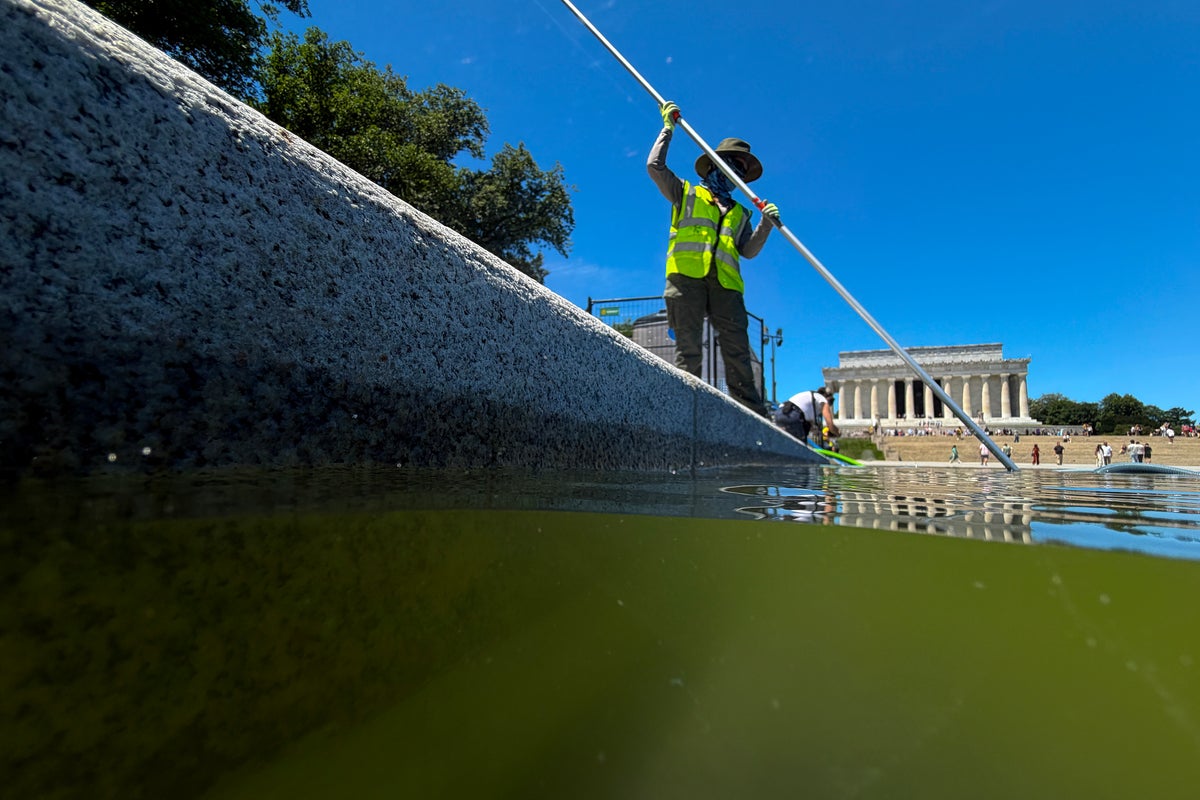
Washington has a green problem. It isn't the park lawns. The Lincoln Memorial Reflecting Pool, fresh off a massive fourteen million dollar renovation designed to make it look a deep, striking shade of American flag blue, turned a bright, stubborn shade of chartreuse instead.
Nature wins. It always does.
The Trump administration isn't taking this sitting down. White House officials recently sent internal emails to staff calling the task of cleaning algae from the Reflecting Pool a regional and national priority ahead of the upcoming July 4 celebrations. National Park Service workers find themselves drafted into a high-stakes race against the clock. They are logging grueling twelve hour shifts to scrub the two thousand foot landmark before crowds arrive for the nation’s 250th anniversary events.
If you think this is just a routine maintenance issue, you're missing the bigger picture. This struggle reveals exactly how difficult it is to reshape historic infrastructure to fit an aesthetic vision. It shows what happens when political ambition collides with the relentless realities of biology.
Why Cleaning Algae From the Reflecting Pool Mattered So Much This Week
The timing couldn't be worse for the White House. On June 3, the project looked like a major victory. The administration proudly declared the renovation complete, celebrating a shiny new lining and industrial-grade materials meant to permanently seal a basin that historically leaked sixteen million gallons of water every single year. The bottom was painted a deep navy hue. The goal was simple. It was meant to provide a perfect, mirrors-edge reflection of the Washington Monument.
Then a major summer heatwave slammed into the nation’s capital.
Stagnant water met intense summer sun. Within days, thick mats of green slime spread across the surface. Satellite data analyzed by environmental scientists showed that algae levels reached some of the highest points seen in the month of June for half a decade.
The political optics became instantly toxic. The administration had spent months framing this cleanup as a stark contrast to previous leadership. Department of the Interior spokespeople openly criticized past administrations for letting national treasures fall into disrepair. They promised a pristine capital city for the historic Semiquincentennial. When the water turned green instead of staying flag blue, the cleanup shifted from a standard park chore to an urgent political operation.
The Scientific Reality of Turning Untreated Basin Water Blue
You can't treat a massive outdoor historic landmark like a backyard swimming pool. The Reflecting Pool holds millions of gallons of water. It spans an area larger than six full-sized soccer fields. Crucially, it draws its water from the Tidal Basin.
That water is natural, untreated, and full of organic nutrients.
Industrial water management experts point out that the basin acts as a giant incubator. When you pump raw river water into a shallow concrete tray under ninety-degree heat, biology takes over. The new dark blue coating on the bottom actually makes the problem worse. Darker surfaces absorb more solar radiation. They heat the water up faster. Warm, stagnant water acts as rocket fuel for algal growth.
To fight back, crews are throwing a mix of chemistry and new machinery at the water column.
- Hydrogen Peroxide Drops: Workers in neon vests are walking the perimeter, dumping bulk quantities of hydrogen peroxide directly into the water. It acts as a milder alternative to chlorine, oxidizing the organic matter without leaving a harsh chemical residue that harms local waterfowl.
- Ozone Nanobubblers: The core of the strategy relies on a specialized $1.7 million water-treatment system. This setup injects ozone-impregnated nanobubbles directly into the water. Instead of rising to the surface and popping, these microscopic bubbles diffuse through the water column, actively attacking pathogens like E. coli and breaking down the cell walls of the algae.
- Manual Vacuum Operations: NPS crews are wading straight into the shallow waters in boots, pulling industrial pool vacuums behind them to suck up the dead, decaying plant matter before it can settle and rot.
Inside the Millions Spent on a No Bid Project
The price tag for this aesthetic transformation raised eyebrows across Washington long before the first bloom appeared. What started as an initial estimate of less than two million dollars rapidly ballooned into a project costing over fourteen million.
The funding mechanism triggered immediate scrutiny. The contract to waterproof and repaint the century-old basin was awarded without a competitive bidding process. The recipient was Atlantic Industrial Coatings. This Virginia-based firm had a specific credential on its resume. It previously handled pool coating work at one of the president's private golf clubs.
Legal challenges from local non-profit groups attempted to halt the work in May, citing concerns over historical preservation and the use of federal taxpayer funds for cosmetic overhauls. The White House defended the choice aggressively. They noted that the specialized industrial materials would protect the structure for a century, finally ending the chronic leaks that wasted millions of taxpayer dollars under previous city managers.
The Cost of the Race to July 4
The human element of this emergency cleanup is creating its own friction. Labor representatives and worker unions issued warnings about the speed and intensity of the operation. Pushing workers into twelve-hour shifts under direct summer heat to vacuum a concrete basin creates genuine safety risks.
The National Park Service insists the measures are necessary. The agency maintains that the current milky, murky appearance of the water is actually proof that the nanobubble system is functioning properly. The technology kills the algae, turning it into a floating debris cloud that must be physically cleared away.
Tourists walking between the Lincoln Memorial and the World War II Memorial are getting a front-row seat to the chaos. Instead of a pristine blue vista, they are photographing crews hauling large boxes of chemical treatments and wading through green film. Some visitors find it amusing. Others find it a frustrating distraction from their long-planned summer vacations.
What to Expect Next on the National Mall
If you are planning to visit Washington for the holiday weekend, don't expect a simple, sparkling blue lagoon. The battle against the environment requires continuous intervention.
Maintaining this specific look means the National Park Service will likely have to keep running high-intensity filtration cycles around the clock. Independent water treatment professionals suggest that the current setup might eventually require a complete drain, power-wash, and refill cycle using pre-treated water if the Tidal Basin inflows keep bringing in fresh organic material.
For now, the heavy pumping and peroxide treatments will continue daily. The administration has staked significant reputational capital on the presentation of the National Mall. They are treating every patch of green slime as a direct challenge to their promises of renewal. Expect to see those neon vests and vacuum hoses active right up until the first fireworks light up the sky.