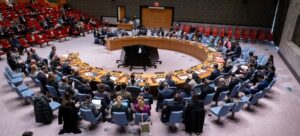
The global consensus has already written the job description for the next United Nations Secretary-General. The pundits want a saint. They demand a leader who will simultaneously shatter the glass ceiling, dismantle the deeply entrenched culture of political patronage, and introduce corporate-style meritocracy to the halls of the Secretariat.
It sounds noble. It sounds progressive. It is also dangerously naive.
The current obsession with fixing the internal culture of the UN misses the entire point of the institution. The United Nations is not a Silicon Valley startup. It is not a multinational conglomerate where you can clear out middle management to optimize efficiency. It is a diplomatic shock absorber designed to prevent World War III.
If you appoint a reformer whose primary mission is to fight patronage and clean up the organizational chart, you will get a pristine, transparent, highly ethical bureaucracy that enjoys zero influence with the world’s actual power brokers. The next Secretary-General should not be a housekeeping executive. They need to be a ruthless, pragmatic dealmaker who knows exactly how to weaponize patronage to keep global superpowers at the negotiating table.
The Myth of the Meritocratic UN
Every few years, a wave of commentary insists that the UN’s hiring practices are compromised by backdoor deals and national quotas. They are right. The mistake is thinking this is a bug rather than a feature.
The UN operates on the principle of sovereign equality, but its survival depends on keeping the permanent members of the Security Council—the US, UK, China, Russia, and France—invested in the system. When a major power secures a high-level post for one of its nationals, like the head of Department of Peace Operations or Economic and Social Affairs, that is not a failure of meritocracy. It is the cost of doing business.
I have spent decades watching idealistic institutional reforms collapse because they ignored the raw mechanics of geopolitics. When you strip away the ability to trade favors, you remove the incentives for powerful states to participate. A merit-based hiring system that locks out a superpower’s preferred candidate does not create a fairer UN; it creates an ignored UN.
To understand why, look at the historical precedent. Trygve Lie, the first Secretary-General, tried to defy the Soviet Union during the Korean War. The result? Moscow completely boycotted him, rendering his office useless. Dag Hammarskjöld, often romanticized as the ultimate independent diplomat, was eventually pushed to the absolute brink of institutional paralysis because he alienated major powers by moving too far outside their consensus. The lesson is brutal but clear: independence without alignment is just irrelevance.
Patronage Is the Only Real Currency Left
People ask how the UN can remain credible when top jobs are handed out as political favors. The brutal truth is that credibility among human rights NGOs does not stop wars. Credibility among the leaders who command armies does.
Patronage is not a moral failing; it is the lubricant of international diplomacy. The Secretary-General possesses virtually no hard power. They have no army, no sovereign territory, and a budget smaller than that of many major global cities. Their only leverage is the ability to convene, persuade, and broker compromises.
When a Secretary-General manages appointments strategically, they are building a network of debts and obligations. If you give a rising superpower a prominent Under-Secretary-General slot, you have just bought yourself a direct line to that country’s head of state when a real crisis erupts. If you replace that transactional system with a rigid, blind HR process managed by external consultants, you trade access for compliance.
Imagine a scenario where a major conflict breaks out, and the Secretary-General needs to broker an immediate ceasefire. A clean-up leader relies on moral authority and strongly worded statements. A pragmatic leader calls the official they hand-picked for a top UN agency three months prior and demands that the nation uses its leverage to halt the escalation. Which one actually saves lives?
The Identity Trap
The push for representation at the highest level of global governance is entirely justified, but treating identity as a qualification for institutional disruption is a tactical error. The demand that the next leader must break the glass ceiling in order to fix the culture assumes that a leader’s background dictates their operational style.
The identity of the next Secretary-General matters symbolicaly, but it tells us nothing about their willingness to survive the meat grinder of Great Power competition. The fixation on the demographic profile of the leader serves as a convenient distraction from the real issue: the fundamental decay of multilateral cooperation.
Focusing the debate on whether the next leader will clean up the office culture is a luxury for a time of peace. We are currently navigating a fractured international order, shifting alliances, and the constant threat of proxy conflicts turning into direct confrontations. In this environment, an obsession with internal administrative reform is deckchair arrangement on a sinking ship.
What an Effective Leader Actually Looks Like
The obsession with organizational purity needs to stop. If you want a United Nations that actually functions in the real world, the criteria for the next leader must change completely.
Prioritize Diplomatic Cruelty Over Administrative Purity
The next leader must be comfortable with hypocrisy. They must be willing to smile through photo opportunities with autocrats if it keeps open a humanitarian corridor. A leader who enters the office with an agenda to purge political appointments will alienate the very states whose cooperation is mandatory.Manage the P5, Don't Fight Them
The Security Council veto is a structural reality, not a design flaw to be bypassed. A successful Secretary-General accepts that the UN cannot force the P5 to do anything against their core national interests. The job is to find the narrow margins where their interests overlap and exploit them ruthlessly.Treat the Secretariat as a Marketplace
Instead of trying to eliminate national influence within the staff, formalize it. Use the distribution of departments to balance the competing anxieties of Washington, Beijing, and Brussels. A balanced gridlock of competing interests inside the Secretariat is far safer than an isolated bureaucracy that represents no one with actual power.
The downside to this approach is obvious. It means accepting that the UN will always be messy, compromised, and occasionally compromised by cynicism. It means acknowledging that total fairness is impossible in a world governed by states with vastly unequal power.
But the alternative is worse. A perfectly clean, meritocratic, uncompromised United Nations would be completely isolated from the realities of international power. It would become a giant, expensive think tank—pristine, principled, and utterly useless.
Stop looking for a reformer to save the organization's soul. Find a realist who knows exactly how to trade it to keep the peace.


