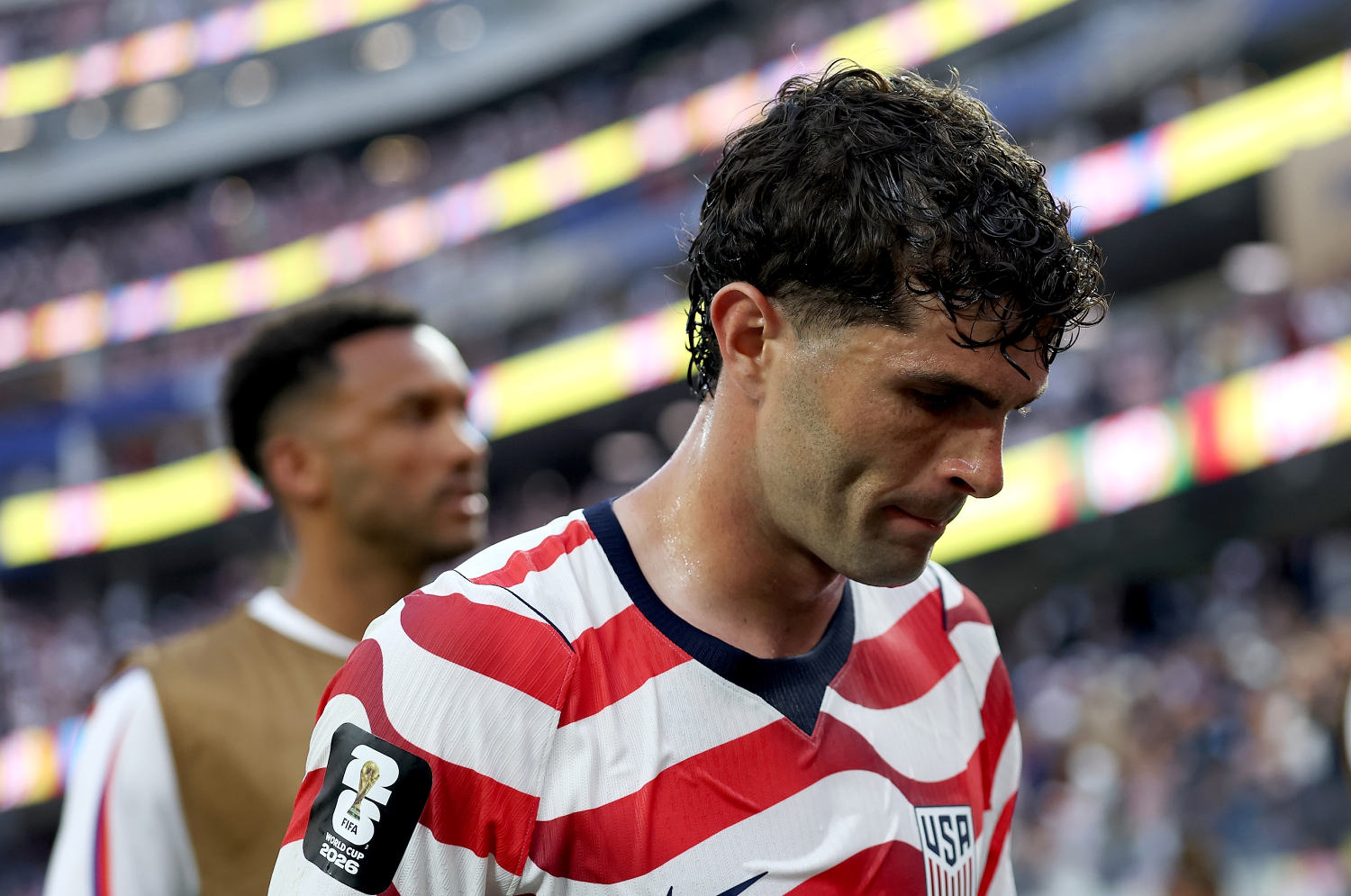
The football media machine has a favorite script, and it plays every time a high-profile player limps off the pitch. Christian Pulisic gets substituted after taking a heavy blow, tells a reporter it is "just a precaution," and hopes the kicked leg "is nothing." The press prints the quotes, the fans breathe a sigh of relief, and everyone pretends the system is working perfectly.
It is a lie. For an alternative look, consider: this related article.
The "precautionary substitution" narrative is a comfort blanket for a broken professional football calendar. It glosses over the systemic failure of player management, medical risk assessment, and the toxic culture of playing through micro-trauma. When a club claims a substitution is merely a precaution, they are usually covering up the fact that they pushed a asset to the absolute brink of structural failure.
We need to stop buying into the comforting public relations spin. The reality of elite sports science tells a completely different, much uglier story. Further insight on this trend has been provided by CBS Sports.
The Myth of the Clean Bill of Health
Football journalism loves the phrase "cleared to play." It implies a binary state of human biology—either a player is broken, or they are perfectly healthy. Any sports scientist worth their salary knows that elite athletes operate in a perpetual gray zone of sub-clinical injury.
When Pulisic or any other elite winger takes a heavy knock and stays on the pitch for another ten minutes before being hooked, the damage is already multiplying. The initial impact is rarely the true disaster. The disaster is the immediate biomechanical compensation.
Imagine a scenario where an elite athlete suffers a minor contusion on their right quadricep. The brain, functioning as a hyper-efficient survival mechanism, instantly alters the recruitment patterns of the surrounding musculature. To protect the bruised quad, the player shifts an extra 3% to 5% of the mechanical load onto the left hamstring and the opposite ankle joint during high-speed deceleration.
In a sport where players change direction at forces exceeding several times their body weight, that tiny, unconscious shift in load distribution is catastrophic. By the time the manager listens to the medical staff and signals for a substitution, the "precautionary" move is actually a desperate attempt to stop a secondary, far more severe soft-tissue tear.
Calling this a precaution is like slamming on the brakes after you have already skidded halfway through a red light and claiming you stopped out of an abundance of caution.
The Flawed Premise of Player Autonomy
"I feel fine."
These are the most dangerous words in professional sports, yet we treat them as definitive medical evidence. When a player gives a post-match interview declaring they hope the injury is nothing, the media treats it as a authoritative diagnosis.
Why do we trust the least objective person in the stadium?
Elite athletes are hardwired to deny pain. Their entire careers are built on overcoming physical discomfort and fighting through adversity to keep their starting spot. Furthermore, the sheer volume of adrenaline pumping through a player's system during a high-stakes match acts as a massive, natural analgesic. A player cannot accurately judge the severity of a micro-tear or a bone bruise while their heart rate is hovering at 180 beats per minute and their cortisol levels are through the roof.
I have spent years analyzing the fallout of clubs relying on player feedback over objective data. The scenario is always the same: a star player insists they can carry on, the coaching staff yields to the player's star power, and three weeks later, a minor tweak has degenerated into a grade-two tear requiring two months of rehabilitation.
The industry needs to dismantle the premise that a player's subjective optimism has any value in a medical assessment. It does not.
The Elite Sports Science Metrics We Ignore
While the public consumes vague updates about "kicked legs," elite clubs possess tools that could instantly expose the true state of a player's physical degradation. They just choose to keep the data behind closed doors because the truth would force a radical, unprofitable restructuring of the competitive schedule.
- Asymmetry Tracking: Modern GPS vests track asymmetric stride power in real-time. If a winger's left-foot peak force drops by even a fraction during a match, it indicates compensation.
- Deceleration Volume: The true tax on a football player's body is not sprinting; it is stopping. High-velocity decelerations cause the most eccentric muscle damage.
- Salivary Cortisol and Urea Levels: Rapid biochemical markers that reveal systemic fatigue long before a muscle physically gives way.
If a club pulls a player because these metrics are flashing red, it is not a precaution. It is an emergency intervention. Framing it as a minor knock downplays the reality that the player was pushed past the safe threshold of human performance.
The downside to acknowledging this data publicly is obvious: it shifts the blame onto the clubs and the governing bodies. If teams admit that their players are constantly on the verge of structural failure due to overplaying, the conversation shifts from "unlucky contact injuries" to systemic player exploitation.
Dismantling the People Also Ask Nonsense
The public discourse surrounding football injuries is plagued by fundamentally flawed questions. Let us address them with the blunt reality they deserve.
Why do players get injured more frequently now than thirty years ago?
The common answer points to a more physical game or softer modern players. This is entirely incorrect. The game is vastly faster. The number of high-intensity sprints per match has skyrocketed over the last two decades. The human skeleton and tendon architecture have not evolved to match the physical demands of modern tactical pressing systems. Players are not softer; the sport has become an unsustainable meat grinder.
Can a player truly recover from a contact injury in just a few days?
A simple bruise, yes. But a heavy blow often causes deep bone bruising or intramuscular hematomas that alter muscle firing patterns for weeks. When a player returns to the pitch four days after a "minor knock," they are rarely fully recovered. They are simply heavily taped, medicated, and taking a massive gamble with their career longevity.
The High Cost of the Short-Term Gamble
The current football ecosystem rewards short-term thinking. A manager fighting to keep their job cares about the next ninety minutes, not the player's joint health when they turn thirty-five.
When a star asset suffers a knock, the pressure to get them back on the pitch for the next crucial fixture is immense. This creates a cycle of premature returns, leading to chronic instability. We have seen this play out with dozens of world-class talents who looked unstoppable at twenty-two and physically spent by twenty-seven.
The club protects its immediate investment; the player protects their immediate status. The media gets a clean narrative about a brave athlete fighting through the pain barrier. The only loser is the long-term health of the sport and the human beings playing it.
Stop celebrating the "precautionary" substitution. Start questioning why the asset was exposed to that level of risk in the first place, and demand real transparency from the medical reports instead of manufactured post-match platitudes.