Paying twenty to ninety yuan to watch a glitchy sci-fi thriller stitched together from synthetic clips? Most moviegoers passed.
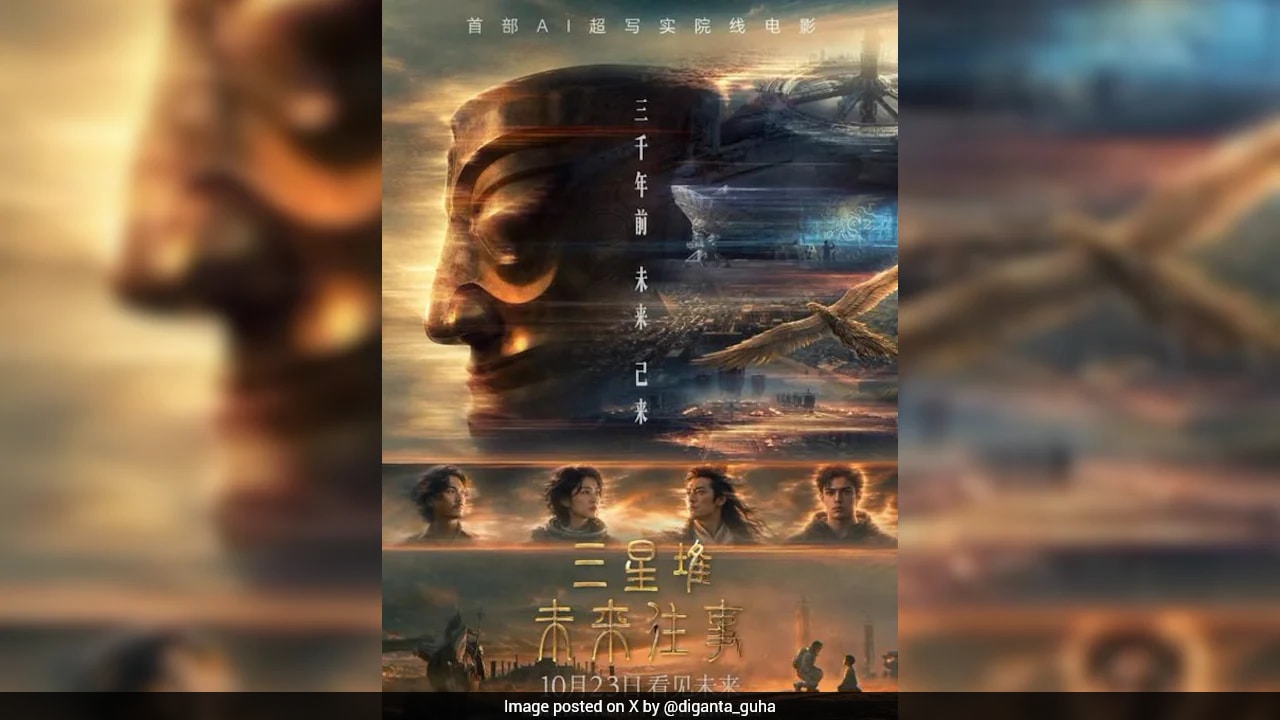
When Sanxingdui: Future Past hit Chinese cinemas on October 23, 2026, it carried a huge label. Backed by Bona Film Group and built using Shengshu Technology's Vidu AI platform alongside an in-house writing tool called Bowen, the film became the first fully AI-produced feature to win a public screening license from the China Film Administration. On paper, it looked like a milestone for synthetic cinema. At the box office, it looked like a cold splash of water.
Roughly three weeks into its run, the movie earned around 1.7 to 1.8 million yuan against a production budget reported in the tens of millions of yuan. For an industry that loves chasing shiny new tools, those numbers hurt. Worse, they exposed a sharp gap between tech hype and what people actually pay to see on a giant screen.
What Actually Happened at the Box Office
Let's look at the raw numbers before spinning any narratives. Sanxingdui: Future Past opened on October 23, 2026, with a 100-minute runtime and more than 10,000 scheduled screenings tracked by ticketing platform Maoyan. Presales started thin at around 80,000 yuan, and early box-office and screening shares hovered near 1% and 3% respectively. Over its first two days, ticket sales crossed 500,000 yuan—roughly $75,000—and climbed to roughly 1.7 million or 1.8 million yuan over three weeks.
A production costing tens of millions of yuan after more than two years of work and roughly 100 crew members cannot survive on less than two million yuan in ticket revenue. Investors briefly cheered the announcement in late September, sending Bona Film Group shares hitting the daily limit up the following day. Cinema audiences didn't share that enthusiasm.
Why did the market react so coldly? Because theatrical tickets aren't free clicks. You have to pick a time, travel to a theater, sit in the dark for over an hour and a half, and compete with live-action blockbusters and traditional animation. When "made by AI" is the headline selling point rather than a killer story, curiosity buys a trickle of tickets—not a hit.
Why an AI Feature Struggles on a Big Screen
Having watched plenty of AI video experiments over the past few years, I'm not surprised a 100-minute theatrical feature stumbled. Short clips are forgiving. A feature film has nowhere to hide.
A Plot That Lost Its Way
Sanxingdui: Future Past mixes big ideas: future humans handing control over to algorithms, a global crisis, ancient Shu bronze artifacts like the sacred tree and protruding-eyed masks, astronauts racing through ancient Egypt, and archaeologists diving into space-time vortices. That sounds wild on a pitch deck. On screen, critics and viewers described the storyline as confusing and lacking basic entertainment value.
Beijing film critic Yu Yaqin put it bluntly when talking to reporters, noting the film flopped because the movie simply isn't entertaining. No amount of neural rendering fixes muddled pacing or a plot that jumps around without emotional payoff. A cool premise isn't a screenplay.
Clip Stitching vs. Real Continuity
Generating cool individual shots is one thing; holding characters, lighting, physics, and tone steady across a 100-minute feature is another beast entirely. The team generated over 1.2 million base images and stitched clips together before human editors assembled the final cut.
On a phone screen, a weird hand gesture or subtle shift in facial structure flashes by in a second. Projected onto a massive cinema screen, small inconsistencies jump right out. Viewers at screenings and on social media pointed out that the visual quality wasn't close to big-budget spectacles like Avatar, which sets the bar for what people expect when they pay theater prices.
Short Feeds Are Not Movie Theaters
Here's the irony everyone in media is chewing on right now: AI video in China isn't unpopular at all. On Douyin, AI-generated short dramas pulled in over 200 billion views in a single month. People love quick, bite-sized novelties when they're scrolling with their thumb.
Cinema works differently. As film bloggers and commenters on Weibo pointed out, AI microdramas are great for killing a few minutes for free, whereas a theater ticket is supposed to buy a memorable shared experience. Frankly, asking audiences to pay full freight for an experimental tech demo before the craft is ready is a tough sell.
What Filmmakers and Investors Actually Think
If you think this box-office stumble means AI tools are going away in filmmaking, you're missing the bigger picture.
Major directors have raised serious alarms about synthetic media. Creators like Hayao Miyazaki, Christopher Nolan, Guillermo del Toro, and James Cameron have each criticized or cautioned against AI in filmmaking—whether pointing to the value of human craft, artistic apprenticeship, or keeping real actors and emotion at the center of stories. Those aren't fringe voices; they represent decades of hands-on storytelling experience.
At the same time, capital keeps flowing toward AI. Yu Yaqin noted that AI movies will likely keep getting made in China in the near term because investors place high value on AI. Bona Film Group CEO Jiang Defu also emphasized that building reusable digital assets—such as ancient Shu environments—and obtaining the first theatrical permit lays groundwork that could later support large-scale scenes or hybrid live-action projects.
Still, there's a real tension here. Investors want scalable tech and asset reuse. Filmmakers worry about hollowing out creative growth and displacing crew roles. And audiences just want a story that grabs them.
Common Myths About AI Cinema
- Myth: A low-cost AI tool automatically makes filmmaking cheap. Sanxingdui: Future Past took over two years, around 100 people, 1.2 million-plus base images, and tens of millions of yuan. Generating, filtering, stitching, and polishing still takes serious time and money.
- Myth: "First AI film" is a magic marketing hook. Novelty gets headlines, not repeat ticket buyers. Audiences judge the finished story on screen, not the software behind it.
- Myth: Box-office failure proves AI has zero role in movies. Using AI for pre-visualization, background elements, or rough concepts is very different from handing an entire feature-length theatrical release over to AI generation.
Practical Next Steps If You're Building or Watching Video AI
If you're a creator, producer, or tech builder trying to learn from Sanxingdui: Future Past's box-office miss rather than repeating it, focus on what actually works:
- Match the format to the tech's strengths. Start with short-form series, pitch reels, concept tests, or visual exploration where fast iteration shines and audiences already watch snackable content.
- Put story and pacing ahead of tech bragging rights. Never market a project primarily around how the pixels were made if the plot drags or confuses viewers.
- Treat AI as a crew assist, not a replacement for human judgment. Keep strong writers, editors, and art directors in charge of coherence, emotion, and rhythm.
- Test with real paying audiences early. Free preview invites to friends or industry insiders won't tell you if strangers will spend hard-earned cash at the box office.
China's first AI theatrical feature didn't conquer the box office, yet it gave the entire film world a real-world stress test. Until synthetic storytelling feels less like a novelty and more like a story you can't stop watching, theaters will stay a tough crowd.