You fill every seat on your planes, grow your revenue by double digits, and still manage to burn through twenty million dollars a day. That is the stark reality facing the aviation sector in China right now.
Air China, China Eastern Airlines, and China Southern Airlines just dropped their interim financial reports, and the numbers are brutal. Together, the country's three state-owned aviation giants posted a combined net loss of roughly 8.2 billion yuan, which translates to about $1.22 billion. This marks their seventh straight year of bleeding money during the first half of the calendar year. Recently making news in this space: The Giants That Hold the Weight of a Billion Dreams.
If you look purely at the top line, the situation looks healthy. Air China grew its revenue by 10.5 percent, China Eastern climbed 11.1 percent, and China Southern saw a 9.7 percent bump. International travel demand recovered nicely from last year, and planes were moving passengers across borders again. Yet, all those extra ticket sales were completely swallowed by an old enemy: surging jet fuel costs.
The Fuel Shock That Broke the Math
Aviation fuel is the single largest variable cost for any airline, typically eating up 30 to 40 percent of total operating expenses. When energy markets stable, carriers can manage this. When geopolitical conflicts flare up, the whole model breaks down overnight. Further information on this are explored by Harvard Business Review.
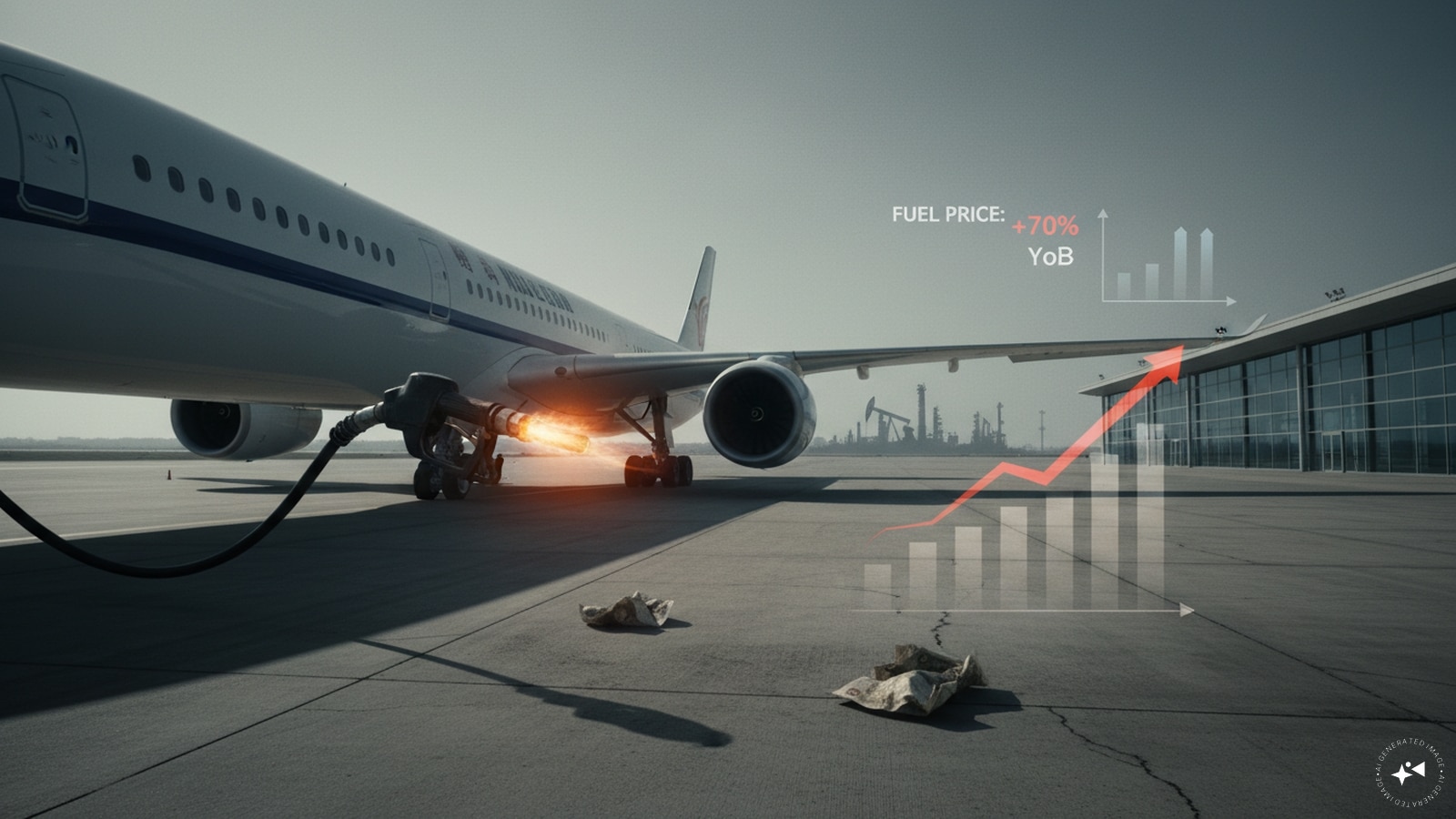
Following escalations in the Middle East, international jet fuel prices went on a wild ride. Prices spiked from around 5,600 yuan per ton at the start of the year to a staggering 9,800 yuan per ton, marking a brutal 75 percent swing. Across the Big Three, combined fuel spending hit 96.8 billion yuan in just six months.
Individual burdens show just how hard each carrier got hit. China Southern carried the heaviest weight with a net loss of 3.7 billion yuan. Air China dropped 2.3 billion yuan, while China Eastern lost 2.2 billion yuan. Their operating costs simply grew faster than their revenue. When your primary expense jumps by 35 to 38 percent in a few months, no amount of ticket sales can save your margins.
Why Chinese Airlines Are So Vulnerable
Most major European and American carriers protect themselves against oil market chaos using complex fuel hedging strategies. They lock in prices ahead of time to smooth out volatility.
Chinese airlines operate differently. They historically hedge very little of their fuel consumption, choosing to ride the open market. When oil prices drop, they reap the benefits. When prices skyrocket, they take the full brunt of the shock without a safety net. China Southern even admitted in its official filing that there is currently "no effective means available" to manage its exposure to these violent fuel fluctuations.
This lack of structural protection turns every global energy crisis into an immediate corporate emergency. It highlights a major blind spot in how these state-backed giants plan for risk. When you lack hedging tools, your profitability is entirely at the mercy of foreign oil markets.
A Brutal Summer and Discount Wars
People assumed the third quarter would rescue the ledger. Summer is supposed to be the golden stretch for aviation, driven by vacationers and students. Instead, nature and the economy conspired against the carriers.
An unusually aggressive typhoon season slammed coastal and inland routes, grounding flights and disrupting peak holiday schedules. At the same time, broader economic caution and fierce competition from high-speed rail forced airlines to keep domestic ticket prices low. Passengers are traveling, but they are hunting for deals. Airlines cannot raise fares without killing demand entirely.
Aviation data firms noted that domestic and international passenger traffic actually contracted during the peak summer months, marking a rare summer slump. HSBC analysts updated their full-year forecasts, predicting the Big Three will finish the year down roughly 16.8 billion yuan. Wall Street had previously hoped for a modest profit, but those hopes are gone.
The Silver Lining in Domestic Jets
Amid the financial red ink, a quiet industrial shift is happening. All three airlines are pushing forward with fleet diversification by integrating homegrown COMAC C919 narrow-body jets.
China Eastern expanded its C919 fleet to 17 aircraft after taking three new deliveries in the first half. Air China and China Southern are operating 11 of the domestic planes each. While these aircraft represent a long-term strategic push for independence from Western manufacturers like Boeing and Airbus, incorporating new fleet types also brings short-term training and operational expenses.
If you are watching airline stocks or analyzing transport trends, these results offer a clear lesson. Revenue growth is completely meaningless if management cannot control its primary cost inputs. Until Chinese carriers figure out a way to hedge against fuel shocks or domestic yields improve, the big three will keep running full planes toward empty balance sheets.