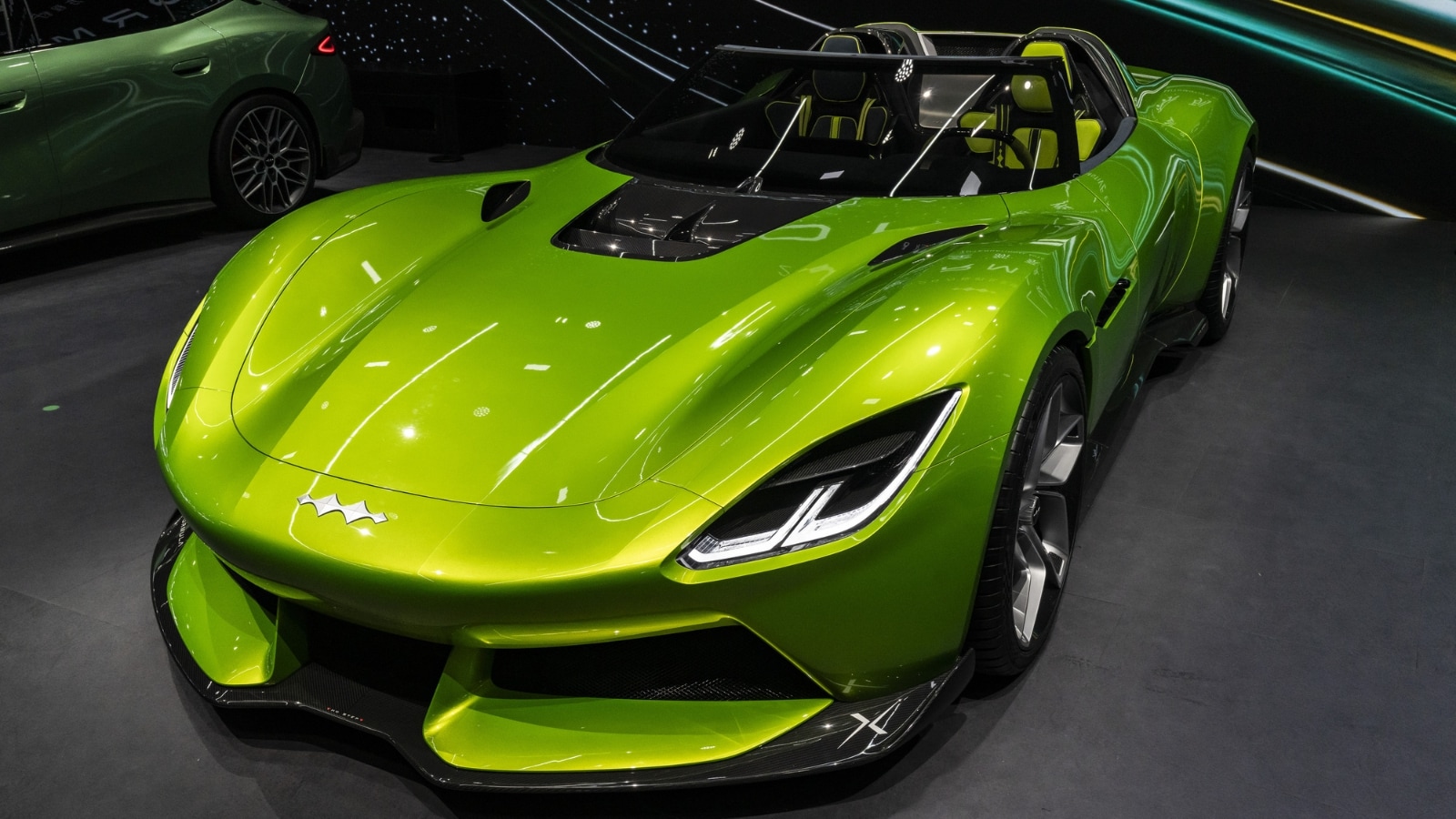
Walk through the halls of the 2026 Beijing Auto Show and you'll realize one thing immediately. The Americans aren't just behind. They're basically playing a different sport. While Washington focuses on high tariffs and protecting legacy brands, Chinese manufacturers like BYD, Xiaomi, and Li Auto are turning cars into rolling supercomputers. It’s not about the battery anymore. It’s about the soul of the machine.
If you think an EV is just a car with a motor instead of an engine, you’ve already lost the plot. In Beijing, the talk isn’t about horsepower. It’s about "compute." We’re seeing vehicles that recognize your face as you walk up, adjust the cabin temperature based on your heart rate, and navigate complex urban environments with zero driver input. The US market is effectively a walled garden right now. We’re keeping the world’s most advanced tech out to save companies that are still struggling to make a profit on 2020-era tech.
The Software First Reality
Chinese EV makers don't build cars and then add software. They build software and wrap a car around it. This is why a company like Xiaomi can go from making smartphones to launching a world-class electric sedan in record time. They understand the ecosystem. Your car isn't a standalone tool. It's another node in your digital life.
Take the latest models from Xpeng. Their AI-driven navigation doesn't just follow a map. It learns. It handles the chaotic traffic of a tier-one city like Shanghai with a level of aggression and precision that makes Tesla’s Full Self-Driving look like a nervous student driver. They’re using massive neural networks trained on billions of miles of local data. Because they don't have to worry about the regulatory gridlock found in the West, they’re iterating at a pace that is honestly terrifying for Detroit.
Washington Is Playing Defense Instead of Offense
The Biden administration recently hiked tariffs on Chinese EVs to 100%. The logic is simple. Protect American jobs and prevent a flood of cheap, subsidized vehicles from destroying Ford and GM. But there’s a massive downside nobody wants to admit. Protectionism breeds laziness.
By locking out the competition, we’re depriving American engineers and consumers of the benchmark. If you don't have to compete with a $12,000 BYD Seagull that gets 250 miles of range, you have no incentive to build one. Instead, we get $60,000 electric SUVs that feel like heavy, clunky versions of their gas-powered ancestors.
The argument for national security is real, sure. Nobody wants a fleet of foreign-controlled sensors roaming US streets. But we're using security as a blanket excuse for a lack of innovation. We’re building a wall, and while that might keep the "threat" out, it also keeps us trapped in the past.
The AI Integration Gap
What does AI in a car actually look like? In the US, it’s mostly voice commands that barely work or basic lane-keeping. In Beijing, it’s generative AI built into the dashboard. You can ask your car to summarize a meeting transcript while you drive, or have it suggest a restaurant based on your previous habits and then handle the reservation.
- Li Auto's Mind GPT: A large language model integrated directly into the car’s OS.
- Nio’s Adam Supercomputer: Uses four Nvidia Orin chips to process massive amounts of sensor data in real-time.
- Huawei’s ADS 3.0: A system that allows for valet parking where the driver gets out at the curb and the car finds its own spot in a multi-story garage.
These aren't concept features. People are buying these cars today. They’re using them. The gap in user experience is becoming a chasm. When you sit in a high-end Chinese EV and then hop into an American competitor, the American car feels like a flip phone in a world of iPhones.
Supply Chain Dominance is the Real Story
China doesn't just have the best software. They own the dirt. From lithium processing to graphite production, they control the ingredients. This vertical integration is why BYD can turn a profit on cars that cost half as much as a Tesla Model 3. They aren't just assembling parts. They’re making the batteries, the semiconductors, and the motors in-house.
American manufacturers are trying to catch up by building "battery belts" in the South and Midwest. It’s a good move, but it’s late. We’re trying to build a 20th-century manufacturing base while China is already onto the next phase of AI-integrated logistics. It’s not just about making the car. It’s about making the machines that make the car.
Why This Matters for the Average Driver
You might not care about global trade wars. You just want a car that works and doesn't cost a fortune. But the "wall" being built around the US market means you're going to pay more for less. You’re paying a premium for the "privilege" of driving older technology.
There's also the infrastructure problem. China has more fast chargers than the rest of the world combined. Their cars are designed for this. They support ultra-fast charging that can add 200 miles of range in ten minutes. In the US, we're still arguing over plug standards and dealing with broken chargers at Walmart parking lots.
What Happens When the Wall Fails
History shows that you can't keep superior, cheaper technology out forever. Eventually, these companies will set up shop in Mexico or find other backdoors. Or, American consumers will simply demand better.
If US automakers don't start prioritizing software and AI over leather seats and chrome trim, they won't just lose the global market. They’ll lose their home turf too. The Beijing Auto Show isn't a warning. It’s a funeral for the old way of doing things.
Stop looking at the price tag and start looking at the silicon. The future of the automotive industry isn't being written in Detroit. It’s being coded in Shenzhen and Beijing. If you want to see where the industry is going, look at the cars the US government is trying so hard to keep you from driving.
If you’re a domestic automaker, stop lobbying for more tariffs and start hiring more software engineers. If you’re a consumer, demand that your next $50,000 purchase actually feels like it belongs in 2026. The competition is already here. It’s just waiting at the border.