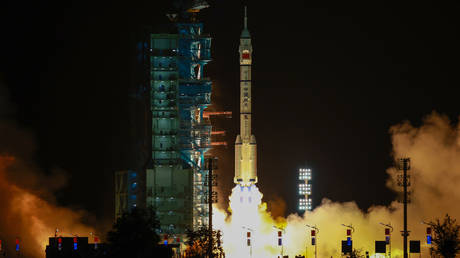
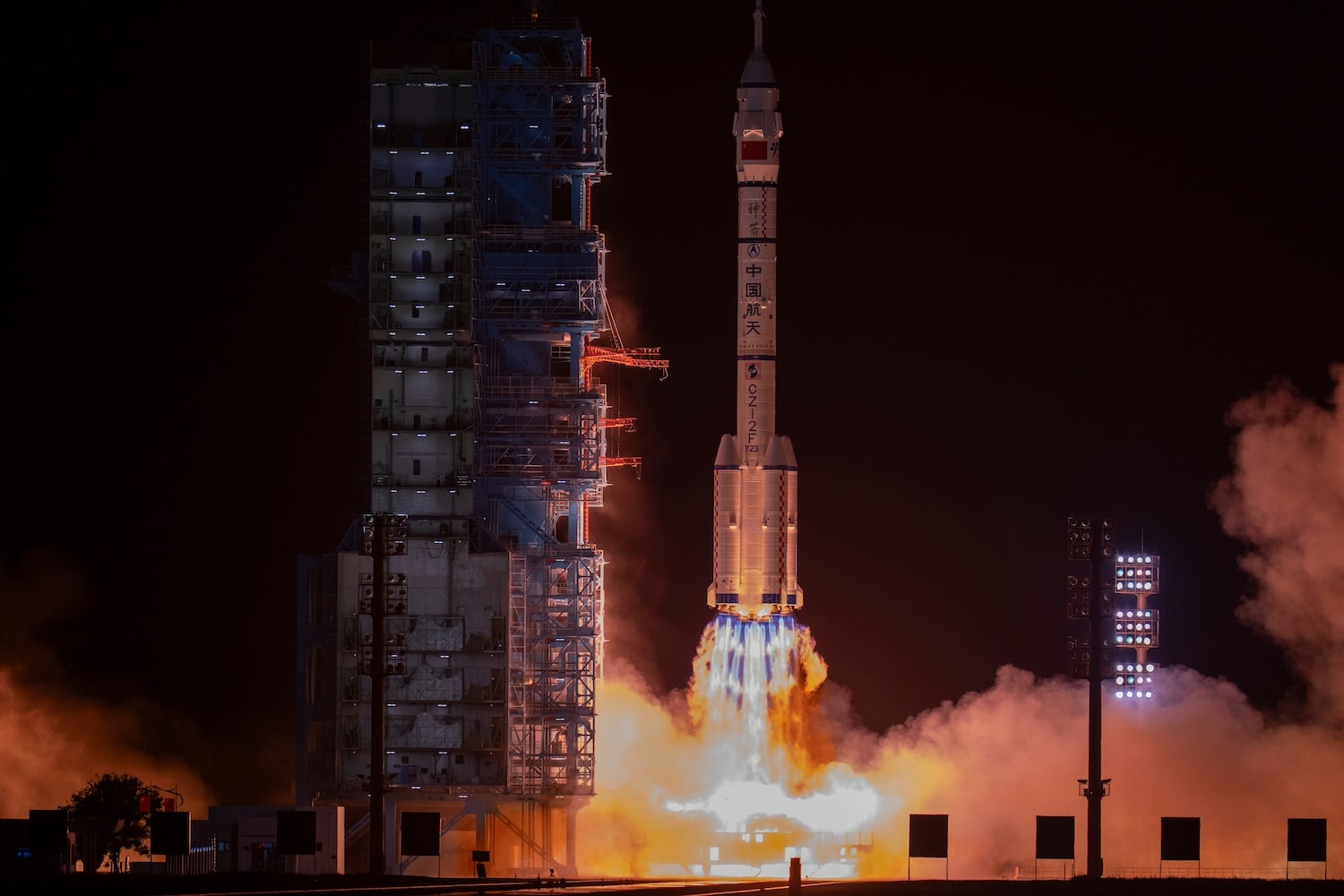
China just pulled off a flawless nighttime launch, sending the Shenzhou 23 spacecraft into orbit and setting up its most ambitious space endurance test yet. A Long March 2F rocket blasted off from the Jiuquan Satellite Launch Center in the Gobi Desert, lighting up the sky at 11:08 PM Beijing Time on May 24, 2026. Within three and a half hours, the crewed vessel successfully executed a fast, automated docking with the Tiangong space station.
This isn't just another routine crew rotation. One of the three astronauts on board is staying in space for a full year. For a different perspective, check out: this related article.
It is the longest continuous orbit stint in the history of China's space program. When you look past the standard headlines, the real motive behind this grueling mission becomes clear. Beijing is using this flight to stress-test human biology for a crewed lunar landing by 2030. If you think the modern space race is just about flag-waving, this mission proves otherwise. It is a highly calculated, technical rehearsal for deep space survival.
The Logistics Behind the Yearlong Orbit
The China Manned Space Agency hasn't publicly named which specific crew member will pull the 365-day marathon shift. The agency stated they will make the final decision as the flight progresses. Commander Zhu Yangzhu, an experienced space engineer who previously flew on Shenzhou 16, leads the trio. Joining him are two space rookies: pilot Zhang Zhiyuan and payload specialist Lai Ka-ying. Related coverage on this trend has been shared by TechCrunch.
Lai's presence on the roster breaks significant political and cultural ground. She is a 43-year-old former Hong Kong police inspector with a doctorate in computer forensics. Her journey makes her the very first astronaut from Hong Kong to enter space, as well as the fourth Chinese woman to reach orbit.
The logistical jigsaw puzzle behind the yearlong stay reveals a fascinating international twist. Why is only one astronaut staying behind while the others return after the typical six months? It comes down to a seat-swapping arrangement coming later this year.
The upcoming Shenzhou 24 mission, scheduled for late 2026, will carry a Pakistani astronaut to Tiangong for a short-duration stay. This represents the first international visitor to the Chinese outpost. That visitor will take one of the returning Shenzhou 23 seats when their initial six months wrap up. Another crew member will swap out normally, leaving the designated endurance astronaut alone on Tiangong to clock a full twelve months. They won't hitch a ride back to Earth until 2027 aboard the Shenzhou 24 capsule.
Breaking Down the Flight Records and Emergency Repairs
The arrival of the Shenzhou 23 trio brings a much-needed sigh of relief to the crew currently occupying Tiangong. The outgoing Shenzhou 21 crew has been floating in the orbital outpost for more than 200 days. They stayed in space a month longer than originally intended.
That delay wasn't an accident. It was the result of a serious, high-stakes hardware emergency that space officials kept quiet until recently.
Last year, micrometeoroid or space debris impacts severely damaged the window and exterior of the Shenzhou 20 spacecraft. The hull compromise was bad enough that engineers determined the vessel didn't meet strict safety standards for re-entry. It basically left the crew stranded in orbit without a safe ride home.
To resolve the crisis, China launched Shenzhou 22 completely uncrewed as a dedicated emergency lifeboat to rescue the marooned astronauts. Because the emergency shifted the entire production and launch schedule, the Shenzhou 21 crew had to pull overtime while engineers prepared the Shenzhou 23 hull and its Long March 2F carrier rocket.
Why Microgravity Experiments Matter for a 2030 Lunar Landing
Staying in low Earth orbit for a year isn't a vanity stunt. The human body degrades fast without gravity. If you want to send astronauts to the moon, you have to understand the physiological breaking points.
Astrophysicists and space medicine experts frequently point out the brutal reality of long-duration spaceflight. Without constant resistance, bones shed density at an alarming rate. Muscles waste away. Without Earth's atmosphere to shield them, astronauts face prolonged cosmic radiation exposure that alters cellular structure and increases cancer risks. Fluid shifts toward the head, altering vision and putting pressure on the brain. Then there's the mental toll—severe sleep disruption, isolation, and psychological fatigue from living in a pressurized metal tube with the same small group of people.
The Shenzhou 23 crew will spend their time running dozens of automated medical, material science, and fluid physics experiments to counter these exact issues. They're gathering precise data on how to keep bones and cardiovascular systems intact.
This data feeds directly into the development of the hardware China needs to hit its 2030 lunar deadline. Beijing is actively testing three major pieces of tech right now:
- The Long March 10 heavy-lift rocket.
- The next-generation Mengzhou spacecraft.
- The Lan Yue (Embracing the Moon) lunar lander.
The rapid, automated docking maneuver that Shenzhou 23 executed three hours after launch is a perfect example of this technical overlap. When Chinese astronauts head to the moon, the Mengzhou spacecraft and the Lan Yue lander will have to perform automated rendezvous and docking maneuvers while orbiting the moon. Practicing these fast-docking sequences at Tiangong gives mission control the precise software telemetry they need to pull it off a quarter-million miles away from Earth.
The Geopolitical Reality of the Lunar Sprint
You can't talk about China's space program without looking at the geopolitical elephant in the room. The United States effectively barred China from participating in the International Space Station decades ago, citing national security concerns. That snub forced Beijing to build its own space infrastructure from scratch.
Tiangong is the direct result of that exclusion. Now, the tables are turning. While the International Space Station faces structural retirement by the end of the decade, China's "Heavenly Palace" is fully operational, expanding, and starting to welcome international partners.
The modern push toward the moon focuses heavily on the lunar south pole. This region contains valuable water ice reserves buried in permanently shadowed craters. Water means oxygen. It means hydrogen rocket fuel. It means sustainability.
NASA aims to put boots back on the moon with its Artemis missions, while China is moving with aggressive, methodical consistency. The country proved its deep-space capabilities in June 2024 when its robotic Chang'e 6 probe successfully snatched soil and rock samples from the far side of the moon and brought them back to Earth.
Shenzhou 23 proves that China isn't just relying on robotic probes anymore. They're systematically building the human endurance profile required to establish a permanent presence. A successful crewed landing before 2030 serves as the stepping stone for Beijing's ultimate objective: a fully functioning, permanent scientific research station built on the lunar surface by 2035.
If you want to track where the space race is actually heading, look past the political speeches. Watch the flight clocks. The astronaut who spends the next year orbiting Earth on Tiangong is writing the exact survival manual China needs to walk on the moon.