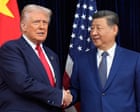
The postponement of the high-stakes summit between Donald Trump and Xi Jinping, originally set for late March 2026, is being framed by Washington as a logistical necessity of war. With the Strait of Hormuz effectively shuttered and energy markets in a tailspin, the White House claims the President must remain grounded to manage the escalating conflict with Iran. But in the quiet corridors of Beijing’s Ministry of Foreign Affairs, the delay is viewed less as a scheduling conflict and more as a tactical gift.
Beijing is not just keeping a close eye on the calendar; it is calculating the exact point where American domestic desperation meets Chinese strategic patience. By pushing the meeting into May, or perhaps later, China has gained a window to watch the American economy buckle under the weight of soaring fuel prices and a looming midterm election cycle. For a U.S. administration that staked its reputation on economic strength and "maximum pressure," the sudden need for Chinese assistance to reopen global shipping lanes has flipped the script. Washington is no longer just a competitor; it is a petitioner.
The Hormuz Trap
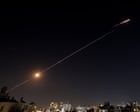
The primary driver of this diplomatic paralysis is Operation Epic Fury. What was sold to the American public as a swift maritime stabilization effort has instead resulted in a locked Strait. With 20% of the world’s oil supply held hostage by Iranian coastal batteries and drone swarms, the global economy is bleeding. Trump’s recent public appeal for Chinese warships to join a "protection coalition" in the Gulf was a rare, public admission of a capacity gap.
China has zero incentive to comply. Beijing’s strategy in the Middle East has long favored non-interference and energy diversification. By refusing to commit military assets to a conflict it blames Washington for starting, China preserves its "neutral" status while watching the U.S. Navy stretch its resources thin. Every week the summit is delayed is another week where oil prices climb, chipping away at the Republican majority’s polling numbers. Beijing knows that a President facing $6-a-gallon gasoline at home is a President who will be much more flexible at the negotiating table in Beijing.
Trade Truce or Tech War
While the war dominates the headlines, the underlying friction remains the structural imbalance of trade and technology. The Paris talks held earlier this month between Treasury Secretary Scott Bessent and Vice Premier He Lifeng were supposed to lay the groundwork for a "Grand Bargain." Instead, they revealed a chasm.
The Supreme Court’s recent ruling striking down certain executive tariff powers has stripped the White House of its most potent unilateral weapon. This legal setback in Washington has not gone unnoticed in Beijing. Chinese negotiators now realize that the Trump administration’s ability to impose sweeping new economic penalties is hampered by domestic litigation and constitutional checks.
Beijing is doubling down on its own "New Quality Productive Forces." The latest Five-Year Plan, finalized just weeks ago, makes it clear: China is transitioning away from being the world’s factory and toward becoming its laboratory.
- Semiconductor Independence: Massive state subsidies are flowing into domestic lithography projects to bypass U.S. export controls.
- Rare Earth Dominance: China continues to hold the kill switch on the minerals required for the American defense industry and the "Green New Deal" alike.
- AI Sovereignty: Local models are being integrated into the industrial base to automate manufacturing at a scale the West cannot yet match.
The Midterm Math
The November 2026 midterms are the "X-factor" in every calculation. With a razor-thin four-seat majority in the House, the GOP cannot afford an economic downturn. China has historically demonstrated a surgical ability to target its retaliatory measures. By halting purchases of American soybeans or aerospace components in key swing districts, Beijing can effectively campaign against its rivals without firing a single shot.
However, a total collapse of the Trump presidency isn't necessarily what Xi wants. Beijing prefers a predictable, if transactional, adversary over the ideological volatility of a fragmented Washington. The goal of the summit delay is to ensure that when the two leaders finally sit down, Trump is hungry for a win—any win—that he can sell to voters as a restoration of stability.
The Erosion of the First Island Chain
While Washington is distracted by the burning oil tankers in the Gulf, the security situation in the Indo-Pacific is shifting. The transfer of U.S. Marine units and missile defense systems from the Pacific theater to the Middle East has created a "security vacuum" that Beijing is quietly filling.
Increased naval patrols in the South China Sea and heightened pressure on Taiwan are the direct results of American overextension. Allies like Japan and South Korea are watching the U.S. ask for Chinese help in the Middle East with profound unease. If Washington needs Beijing to secure the Strait of Hormuz, how can it effectively lead a coalition to "contain" China in its own backyard? This perceived weakness is the most significant form of leverage China has gained from the summit stall.
The reality is that the "G2" era—a world managed by two superpowers—is returning, but on terms that favor the party with the longer attention span. Washington is currently playing a game of tactical fire-fighting, moving from one crisis to the next. Beijing is playing a game of structural displacement, waiting for the current global order to exhaust itself.
The summit, when it eventually happens, will not be a victory lap for American diplomacy. It will be a cold assessment of a new reality where the United States is no longer the sole guarantor of global commerce. China isn't just watching the clock; it's waiting for the American century to finally run out of gas.
Demand a clear timeline for the rescheduled Beijing visit from the State Department to see if the "five-week" promise holds any weight.