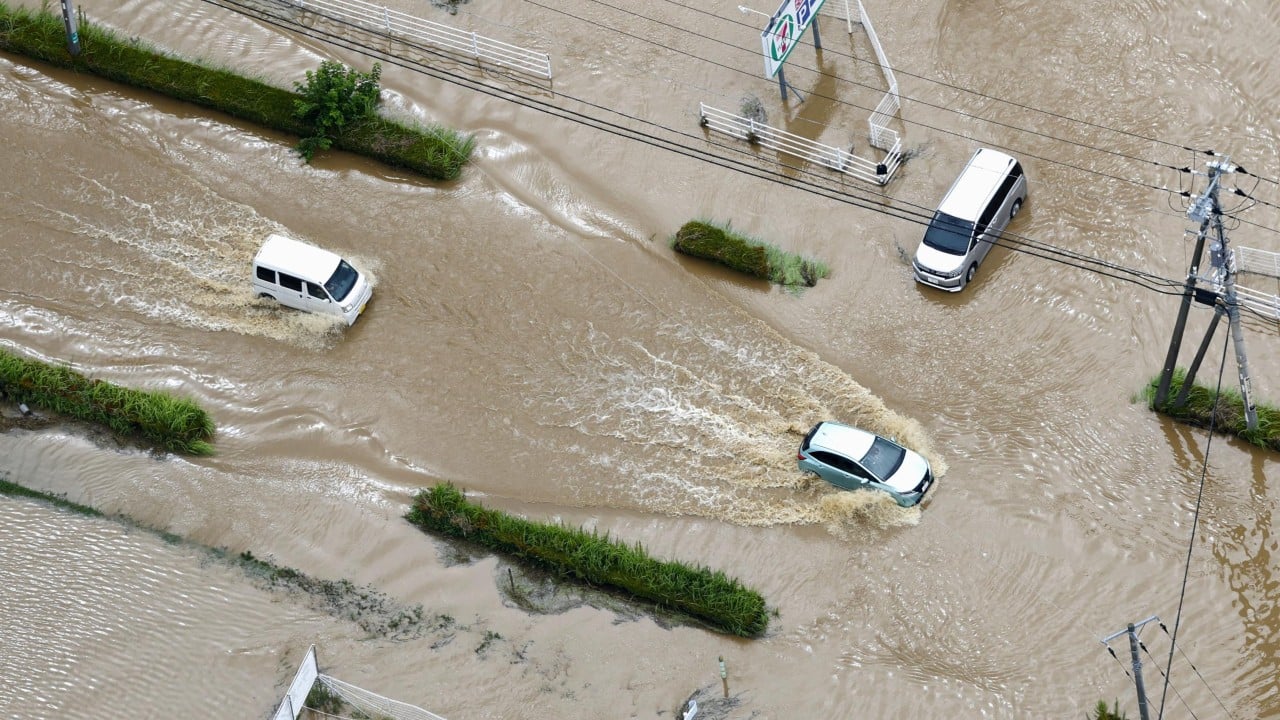
Record-breaking rainfall slammed eastern Japan's Chiba prefecture, turning major roadways into rivers, knocking out power to tens of thousands of homes, and leaving roughly 7,000 travelers stranded overnight at Narita International Airport. The sudden deluge, which peaked late Thursday and stretched into Friday, caught seasoned disaster management officials by surprise. Chiba Governor Toshihito Kumagai admitted that despite responding to numerous natural disasters over the years, he had never witnessed a flooding scenario quite this severe.
When weather alerts escalate to maximum levels, you expect infrastructure to buckle, but the speed of this crisis was shocking. Over 360 millimeters of rain fell within a single 24-hour window in parts of Chiba, with some local observation stations recording roughly 450 millimeters over a punishing six-hour stretch. That equals nearly triple the region's typical rainfall for the entire month of August, dropping all at once.
The Human Toll and Infrastructure Breakdown
The human cost of the storm has been devastating. Authorities confirmed at least four deaths as floodwaters surged through neighborhoods and highways. Victims included a 66-year-old woman trapped inside her submerged vehicle and a man found floating on a flooded road. Rescue crews deployed military personnel to assist with relief operations, searching for missing residents while dealing with widespread utility failures.
Nearly 26,000 households across Chiba prefecture woke up without electricity. Floodwaters breached dozens of homes in cities like Ichikawa, Kashiwa, and Sakura, forcing families to seek emergency shelter in local government buildings.
The Japan Meteorological Agency (JMA) issued its highest-level Level 5 warning for the region for the first time, pointing to highly unstable atmospheric conditions fueled by moisture-laden air colliding with cold air aloft.
Chaos at Narita Airport
If you were caught traveling through Tokyo during this holiday week, your plans were likely derailed. Around 7,000 passengers found themselves trapped inside Narita's terminal buildings after connecting rail services and major highways shut down completely.
Airport staff scrambled to distribute emergency supplies, handing out water bottles, snacks, and foil blankets to stranded travelers. Videos from public broadcaster NHK showed passengers camping out on sleeping bags across terminal floors. Major highway operators like NEXCO East closed key routes connecting Narita to central Tokyo, causing massive traffic snarls as drivers tried to find alternative paths through flooded terrain.
While flight operations and airport services slowly began to normalize by Friday afternoon, the disruption exposed vulnerabilities in how major transport hubs handle sudden, hyper-localized extreme weather events.
Staying Safe During Sudden Flash Floods
If you live in or travel through regions prone to rapid downpours, traditional evacuation timelines might not save you. Flash floods move faster than official warnings can always update.
- Monitor local meteorological agency alerts directly rather than relying solely on delayed translation apps.
- Never attempt to drive through flooded roadways. As this event tragically proved, water depth is deceptive, and vehicles can quickly submerge or float.
- Keep an emergency kit with portable power banks, bottled water, and cash, because digital payment systems often fail during widespread power outages.
Check your transit routes twice before heading toward international hubs during peak storm seasons, and heed Level 5 warnings immediately by moving to higher ground before local roads cut off access entirely.