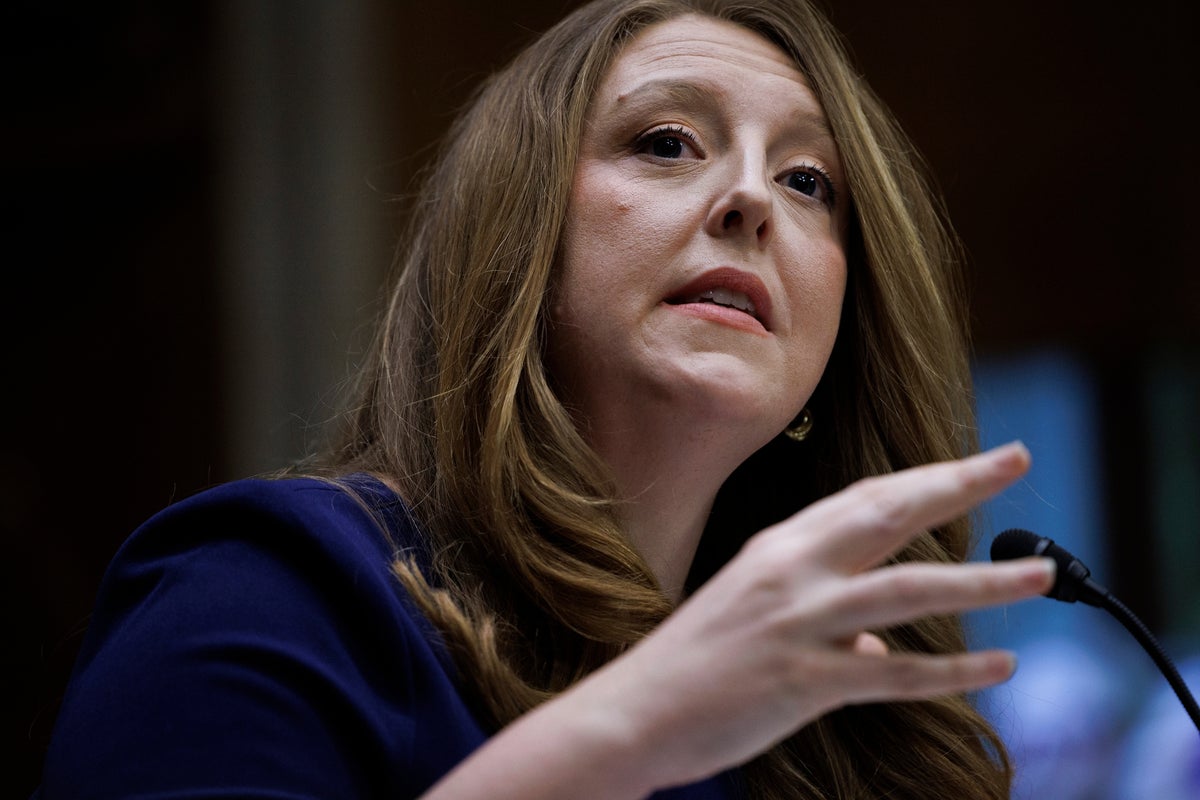
The phone calls that change the trajectory of a nation’s health usually happen in quiet rooms, far away from the glare of television cameras. They are the culmination of whispered vetting processes, political calculus, and the sudden, jarring realization that a chosen path has hit a dead end. This week, the trajectory shifted. Donald Trump moved the pieces on his internal chessboard, pulling back the nomination of Casey Means and instead pointing toward Dr. Nicole Saphier to serve as the nation’s Surgeon General.
It is a pivot that tells a story far deeper than a simple change in personnel.
To understand the stakes, consider a hypothetical patient named Sarah. Sarah lives in a rural town where the local hospital just shuttered its maternity ward. She is overwhelmed by conflicting nutritional advice, rising insurance premiums, and a nagging sense that the medical establishment views her as a data point rather than a person. For Sarah, the Surgeon General isn't just a figurehead in a white uniform; they are the chief messenger of the American health gospel. When that messenger changes, the message changes.
Casey Means represented a specific, radical kind of hope for many. Her background in metabolic health and her vocal criticism of the "sick care" system suggested a frontal assault on the ultra-processed food industry and the pharmaceutical status quo. Her nomination was a signal to the "Make America Healthy Again" crowd that the roots of the system were about to be pulled up. But political momentum is a fragile thing. Nominations stall for a thousand tiny reasons—vetting hiccups, internal friction, or a shift in the legislative weather. When the momentum died, the President didn't wait. He pivoted.
Dr. Nicole Saphier enters this frame not as a placeholder, but as a seasoned navigator of the public eye.
A board-certified radiologist at Memorial Sloan Kettering and a familiar face to anyone who watches cable news, Saphier brings a different kind of armor to the role. If Means was the revolutionary at the gates, Saphier is the practitioner who knows exactly how the gates are built. She has spent years articulating a philosophy of individual responsibility and medical transparency. She understands the camera. She understands the cadence of a policy debate.
The Surgeon General has no power to pass laws. They cannot set prices for insulin or mandate the removal of seed oils from school lunches. Their power is purely atmospheric. They set the "vibe" of American wellness. They issue the warnings that end up on the side of cigarette cartons and the advisories that define how we talk about mental health or social media usage.
When a nomination is pulled, it usually signifies a desire for a smoother path through the Senate. The political machinery in Washington loathes friction. Saphier, with her established platform and clear-eyed communication style, represents a tactical recalibration. It is the choice of a known quantity over a wildcard.
But for the millions of people watching from their living rooms, the "why" matters less than the "what." What will change for the father trying to navigate his son’s ADHD diagnosis? What will change for the grandmother wondering if her heart medication is truly necessary or just a symptom of an over-prescribed culture?
The transition from Means to Saphier suggests a move toward a more traditional, yet still改革-minded, approach to public health. While Means focused on the molecular—the glucose spikes and the mitochondrial decay—Saphier often focuses on the systemic and the personal. She has been a vocal advocate for cancer screening and early detection, bringing the focus back to the clinical tools we already have, even as she calls for a more common-sense approach to healthcare delivery.
The invisible stakes are found in the trust gap. For decades, the gap between the medical elite and the average citizen has widened into a canyon. People feel lectured to, rather than listened to. They feel like the victims of a system that profits from their chronic illness. The Surgeon General’s primary job in this era isn't just to provide facts; it’s to bridge that canyon.
Consider the sheer weight of the uniform. It carries the legacy of C. Everett Koop, who stared down the tobacco giants and the AIDS crisis with a stubborn, moral clarity. It carries the weight of every public health victory and every catastrophic oversight of the last century. When Nicole Saphier steps into that light, she isn't just representing an administration; she is inheriting the anxieties of a country that is physically and mentally exhausted.
The shift happened quickly. One day, the conversation was about metabolic revolution; the next, it was about a trusted media physician taking the reins. This is the nature of the modern political machine. It moves with a cold, brisk efficiency that often ignores the emotional whiplash felt by those who had invested their hopes in a specific vision.
There is a certain irony in the fact that the most personal aspect of our lives—our health—is so often dictated by the most impersonal of processes. A nomination "stalls." A name is "put forth." These are the bloodless terms of the political reporter. But behind those terms are actual philosophies that determine whether we focus on the food on our plates or the machines in our hospitals.
Saphier's challenge will be to prove that she is more than just a polished communicator. She will have to prove that she can take the energy of the "health freedom" movement and channel it into something that actually lowers the rate of childhood obesity and heart disease. She will have to navigate a world where a single tweet can carry more weight than a peer-reviewed study.
History is littered with nominations that were meant to be "safe" but became transformative. Conversely, many "revolutionary" picks never made it past the committee stage. The reality is that the office of the Surgeon General is only as powerful as the person’s ability to tell a story that the American people are willing to believe.
We are currently a nation of skeptics. We have been told too many things that turned out to be half-truths. We have seen the "experts" be wrong and the "fringe" be right, and vice versa, until the very concept of expertise feels like a political weapon.
http://googleusercontent.com/image_content/216
Dr. Saphier's task is to rebuild that expertise from the ground up, starting with the most basic unit of healthcare: the truth. If she can do that, the "stalled" nomination of her predecessor will be remembered as a mere footnote. If she cannot, it will be seen as the moment a movement lost its nerve.
The transition isn't just about switching one doctor for another. It is about the tension between the desire for a total system reboot and the pragmatic need to keep the wheels of government turning. It is about the difference between a firebrand and a navigator.
As the news cycle moves on to the next crisis, the quiet work of preparing for a Senate confirmation begins. There will be hearings. There will be deep dives into old social media posts and past television appearances. The "dry facts" of the nomination will be chewed over by pundits and policy wonks.
But the real story remains with Sarah in her rural town. She doesn't care about the internal politics of the transition team. She doesn't care about the "stalled" status of a previous name. She cares about whether her children will grow up in a world that makes it easy to be healthy or a world that makes it profitable to be sick.
The scalpel has been passed. The person holding it has changed. Now, we wait to see where the first incision will be made.