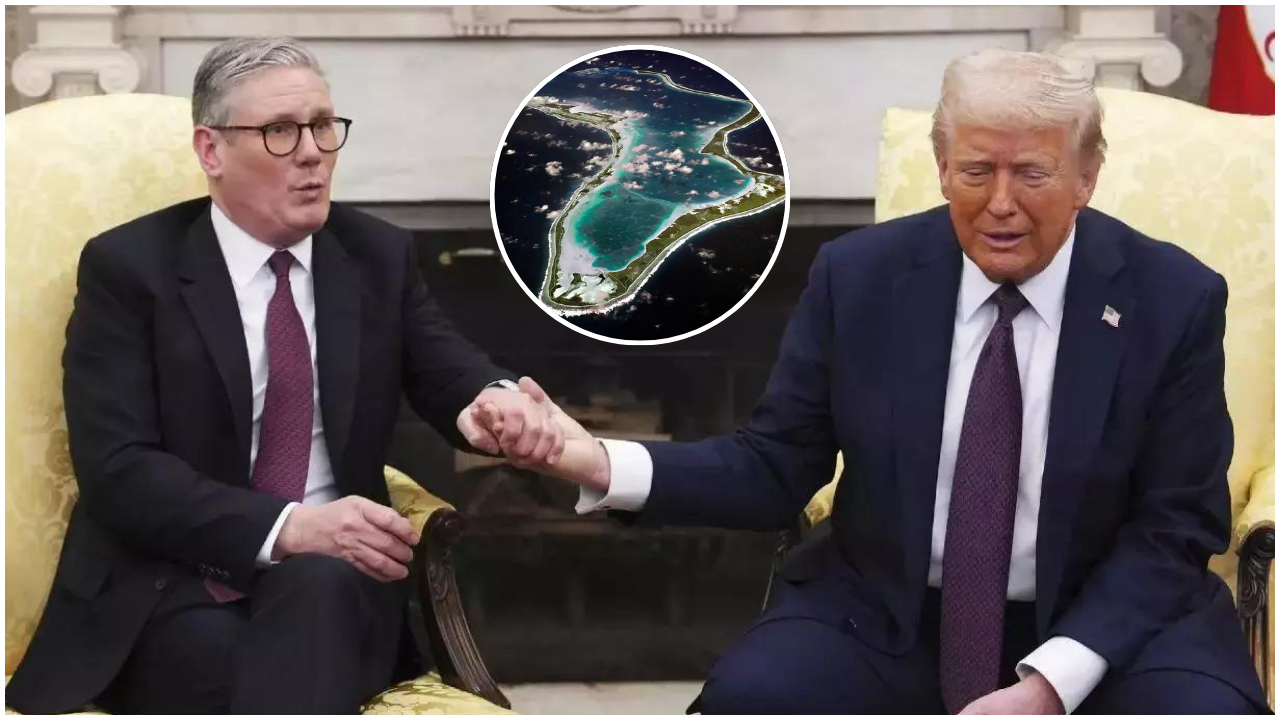
Keir Starmer’s plan to hand over the Chagos Islands just hit a massive, orange-colored wall. After months of diplomatic legwork and a signed agreement in May 2025, the UK government has effectively killed its own deal to cede sovereignty of the archipelago to Mauritius. The reason isn't a sudden change of heart in Whitehall. It's because Donald Trump decided it was an "act of great stupidity," and without Washington’s blessing, the British government simply doesn't have the stomach to move forward.
This isn't just a minor diplomatic hiccup. It’s a total collapse of a cornerstone policy that was supposed to settle a decades-old colonial dispute. By pulling the legislation from the upcoming King’s Speech, the Labour government has admitted that the "Special Relationship" currently looks more like a one-way street where the US holds all the maps.
The Diego Garcia Factor
To understand why this fell apart, you have to look at a tiny speck of land called Diego Garcia. It’s the largest island in the Chagos chain and home to one of the most secretive and strategically vital US military bases on the planet. For decades, the US has used this "unsinkable aircraft carrier" to project power across the Middle East, South Asia, and East Africa.
The deal Starmer’s team negotiated was supposed to be a win-win. Mauritius would get sovereignty—satisfying international court rulings—while the UK would lease back Diego Garcia for 99 years to keep the Americans happy. It looked solid on paper. But Trump, ever the skeptic of multilateral handovers, saw it as a surrender. He argued that giving the islands to Mauritius—a country with growing ties to China—would put the base at risk. Once he withdrew formal US support, the UK’s legal and political standing evaporated.
Why Starmer Blinked
You might wonder why the UK can't just ignore Trump and finish the deal. After all, the International Court of Justice (ICJ) ruled back in 2019 that British administration of the islands was illegal. But in the real world of geopolitics, legal moral high ground doesn't fuel B-52 bombers.
- Military Dependency: The base at Diego Garcia is technically a joint UK-US facility, but the US provides the vast majority of the hardware and funding. If Washington says the deal is a security risk, the UK can't realistically force it through.
- The Greenland Tension: There’s a weird subtext here. Trump has been vocal about wanting the US to acquire Greenland. When Starmer called that idea "completely wrong" earlier this year, the relationship soured fast. Many insiders think the Chagos veto is partly a retaliatory move to show Starmer who’s actually in charge of Western security.
- Domestic Pressure: Kemi Badenoch and the Conservatives have been hammering the government, calling the deal a "betrayal of British territory." With Trump adding fuel to that fire, Starmer was facing a PR nightmare he couldn't win.
The Human Cost of the Stalemate
While the politicians in London and Washington argue over "strategic assets," the people who actually belong there—the Chagossians—are once again left in limbo. In the 1960s and 70s, the UK forcibly removed around 2,000 residents to make way for the base. It was a dark chapter of British history that involved literally gassing the islanders' pets to force them to leave.
The now-dead deal included a resettlement fund to help displaced families move back to the outlying islands. Now that the agreement is on ice, those people are stuck. They aren't pawns in a Great Power game, but that's exactly how they're being treated. Human Rights Watch has been loud about this, pointing out that both the UK and US are ignoring the fundamental rights of the inhabitants in favor of military posturing.
What Happens to the Special Relationship Now
Honestly, this looks bad for Starmer. He tried to play the role of the sensible internationalist, following court rulings and tidying up colonial loose ends. Instead, he’s been publicly overruled by a US President who prefers bilateral "deals" over international law.
The UK government’s official line is that they’re "continuing to engage" with the US and Mauritius. Translation: they’re waiting to see if they can talk Trump into a version of the deal that he can slap his name on and call a victory. But for now, the legislation is dead. There will be no handover, no lease payments to Mauritius, and no resettlement for the islanders.
If you’re looking for the next move, watch the defense budget. The UK was set to pay Mauritius about £101 million a year for that lease. That money stays in the Treasury for now, but the legal headaches aren't going away. Mauritius isn't going to stop claiming the territory, and the UN will likely continue to view the UK as an illegal occupier.
If you want to stay informed on how this impacts UK-US relations, keep an eye on the upcoming diplomatic summits. The "Greenland vs. Chagos" debate is likely just the beginning of a very friction-filled era between Downing Street and the White House. For the Chagossian community, the best path forward remains legal advocacy in the UK courts, though the political window for a real homecoming just slammed shut.