Thermometers across Central Europe crossed a dangerous threshold as Austria and Slovakia recorded their highest temperatures in modern history, with readings surging past 41 degrees Celsius under an unyielding atmospheric heat dome.
This is not a seasonal anomaly. This is a structural systemic failure of regional infrastructure coping with a climate that is shifting faster than institutions can adapt. While standard meteorological reports focus on the numbers—41.2C in Bad Deutsch-Altenburg and 41.4C in Kamenica nad Hronom—they gloss over the catastrophic cascading failures occurring right beneath the surface.
The Mechanics of the Heat Dome
A sprawling high-pressure ridge parked over Central Europe acts like an atmospheric lid. This heat dome traps hot air near the surface, preventing normal convective cooling and blocking cloud formation.
As solar radiation pounds down day after day through clear skies, the ground dries out entirely. Without moisture in the soil, incoming solar energy cannot be used for evaporation. Instead, all that energy goes directly into heating the air.
This creates a self-reinforcing feedback loop. Hotter air dries the soil faster, and drier soil supercharges the air even more.
The Quiet Crisis Beneath the Rivers
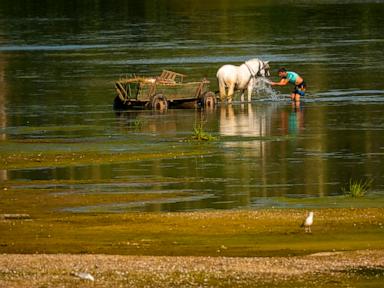
The most severe danger of this heatwave is invisible to most urban residents. Major waterways, including the Danube, are plunging toward historical lows.
Low water levels cripple more than barge traffic and shipping logistics. Industrial plants and energy facilities rely on massive volumes of cool river water for operational cooling. When river temperatures spike and water volumes shrink, power plants face mandatory shutdowns or severe output throttles to prevent environmental boiling of aquatic ecosystems.
Nuclear and thermal power facilities across the region operate on razor-thin margins during these thermal spikes. If a facility cannot pull enough cold water to shed waste heat, operators must throttle generation precisely when residential and commercial air conditioning demand hits maximum capacity.
Agriculture on the Brink
Farmers in eastern Austria and southern Slovakia face a severe precipitation deficit, with some local weather stations reporting a 90 percent drop in expected rainfall over the summer. Pastures are turning to dust.
Livestock producers struggle to keep animals cool and fed as traditional grazing lands wither away months ahead of schedule. For crops like corn and fruit orchards, the extreme heat stress forces premature ripening and catastrophic yield losses.
We are watching the structural limits of continental food and energy security test themselves against a new thermal reality. The numbers on the weather map are just the beginning.